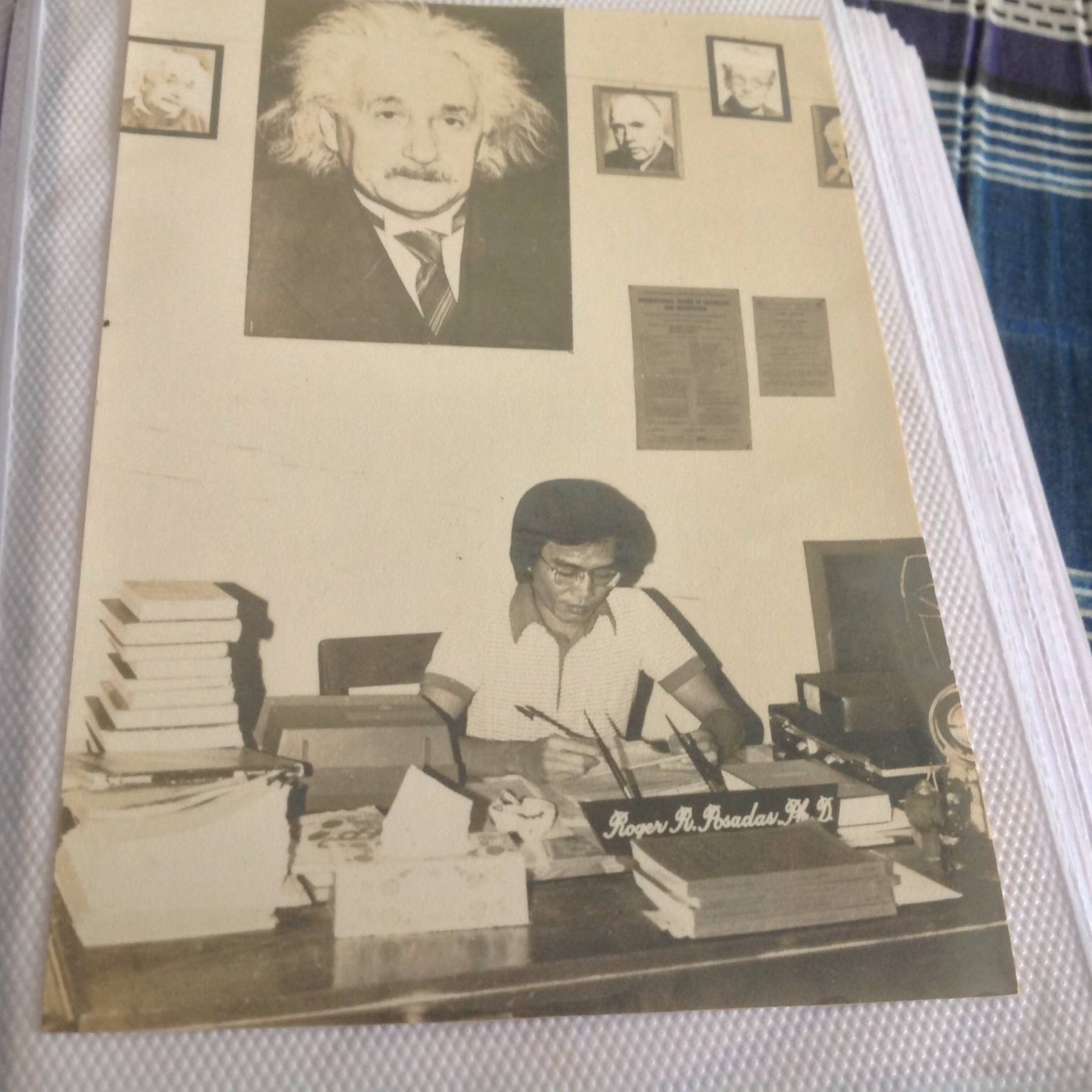
Dad
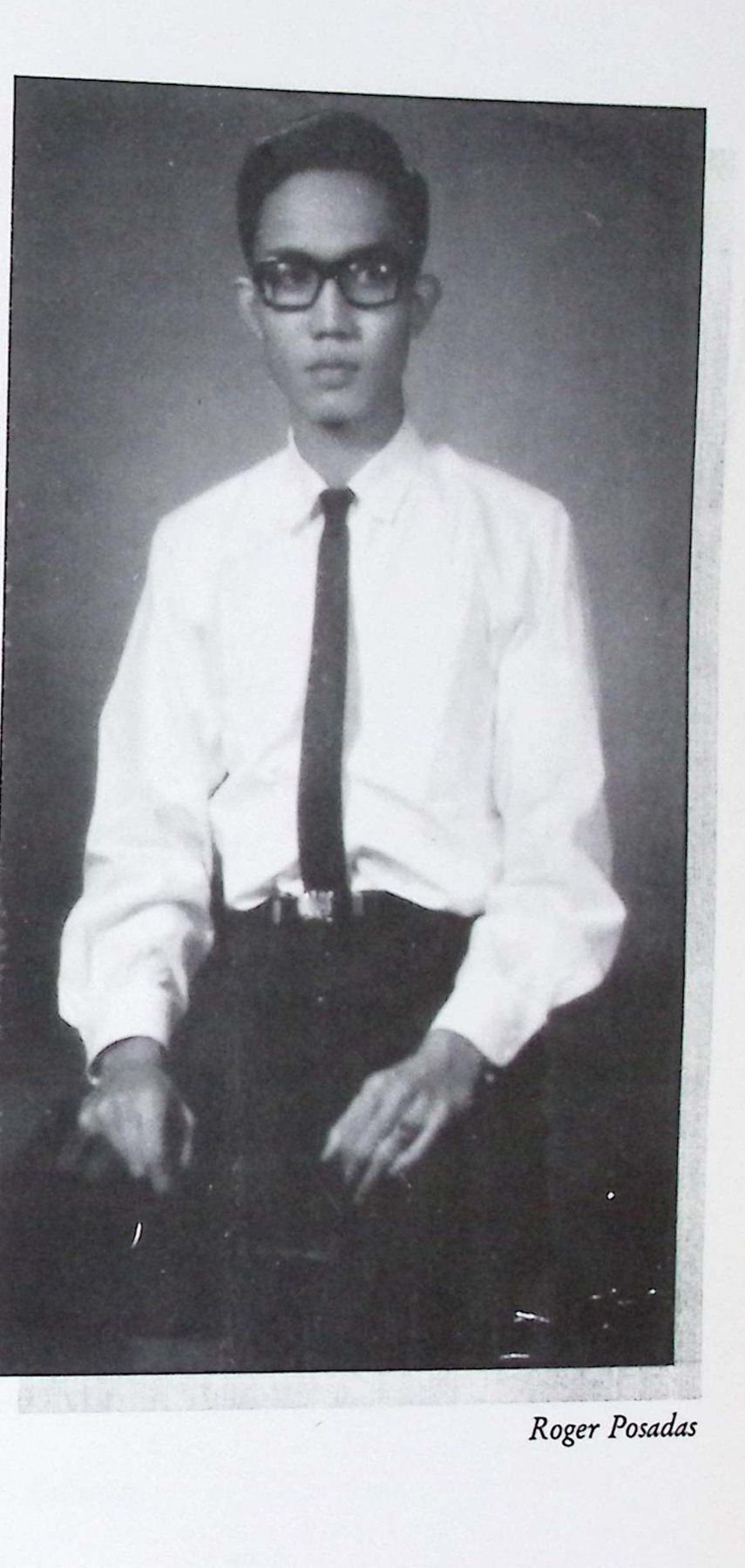
Dr. Roger Dela Rosa Posadas · October 17, 1944 to August 20, 2017
Relativity physicist, activist, political prisoner, and builder of Philippine science. This is a professional website, and he is the reason I have a profession.
Why this page
My dad was a physicist and a teacher who believed that science should serve the people, and that a country builds itself with the people who know how to build. He went to prison for acting on that belief, and he spent the rest of his life building the institutions that let Filipino scientists train and work at home. He died in August 2017. Everything I have done since, from enlisting to pay for an engineering degree to starting a PhD on how water reaches Filipino households, traces back to him.
As far as I know, this is the first attempt to bring his whole story together in one place. If you knew him, worked with him, or have documents or photographs, please write to me.
His line
Terms with a dotted underline are explained: hover over one, or tap or select it.
- The capital of Pangasinan province, on Lingayen Gulf in northwestern Luzon, about 200 km north of Manila. Learn more (opens in a new tab) · 1944Born October 17, 1944, under the Japan invaded the Philippines in December 1941 and held the islands until its surrender in September 1945. Its rule was harsh, and guerrilla resistance was widespread. Learn more (opens in a new tab), the eldest of seven children of Col. Rolando Posadas of the Philippine Army and Carmen de la Rosa. Our family's story is that he was born in hiding in the jungle during the war, and that his father later had to swear an affidavit before he could be registered, once civil offices reopened.
- A port city on the northern coast of Mindanao, the large southern island of the Philippines. Learn more (opens in a new tab) · 1960Changed schools wherever his father was posted. Graduated valedictorian of the A Jesuit school in Cagayan de Oro, Mindanao, founded in 1933. It became Xavier University in 1958. Learn more (opens in a new tab) (now Xavier University) High School in April 1960, set on following his father into the The country's academy for military officers, in Baguio, modeled on West Point. Learn more (opens in a new tab). His eyesight weakened from studying, and he never went. Instead he won the first The government science agency created in 1958, which funded scholarships for promising science students. It is the forerunner of today's Department of Science and Technology (DOST). Learn more (opens in a new tab) scholarship in physics ever given to a high school graduate from Mindanao.
- UP Diliman · 1960 to 1964Entered the The national university, founded in 1908. Its flagship campus is Diliman, in Quezon City, Metro Manila. Learn more (opens in a new tab) on a National Science Development Board scholarship, writing simply "Physics" on the form. Einstein's relativity took hold of him in his third year. Founding president of the UP Physics Society. B.S. Physics, 1964, then a year as an instructor.
- Pittsburgh · 1965 to 1970A Rockefeller Foundation grant took him to the University of Pittsburgh and its relativity group under
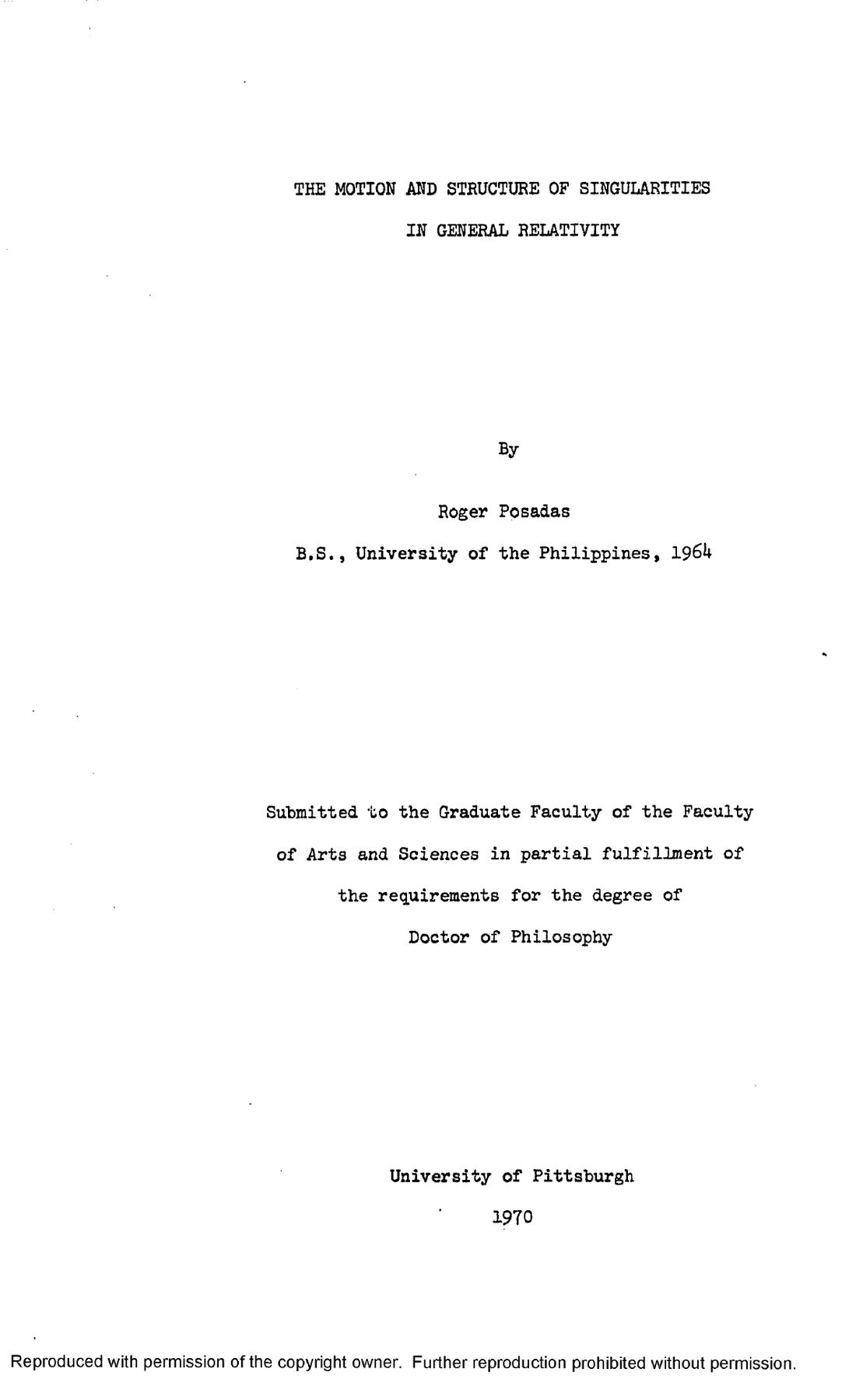
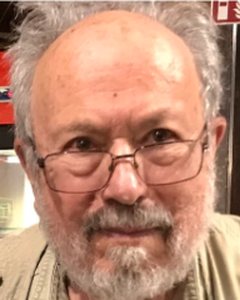 American physicist at the University of Pittsburgh and Roger's doctoral advisor. He co-created the Newman–Penrose formalism, a standard tool in general relativity, and found the Kerr–Newman solution for a charged, spinning black hole. Learn more (opens in a new tab)Photo: Kecchina, 2019 (opens in a new tab) · CC BY-SA 4.0 (cropped). He skipped the master's degree and defended his Ph.D. on April 2, 1970, at 25 and in four and a half years, with the dissertation The Motion and Structure of Singularities in General Relativity (opens in a new tab). Much of the work was done in London, at King's College, as a guest of British physicist (1928–2015) at King's College London, one of the founders of the modern theory of gravitational waves. Learn more (opens in a new tab). He published in Physical Review Letters, Physical Review and the Journal of Mathematical Physics, visited the relativity groups in London and Cambridge, and kept the scholarship's promise to come home.
 - UP Physics · 1970Assistant professor in June 1970 and chair of the physics department a month later, at 25. He founded the Filipino for “Society of Nationalist Scientists”: an activist group of scientists and engineers in the early 1970s who believed science should serve the Filipino people. Roger was its president. (SMS), the country's first organization of nationalist scientists and science students, and co-founded the activist teachers' union Samahan ng mga Guro sa Pamantasan ng Pilipinas (Association of Teachers of the University of the Philippines), a group of progressive UP faculty. The student council thanked it for its part in the Diliman Commune. Learn more (opens in a new tab).
- From February 1 to 9, 1971, students, faculty and residents barricaded the UP Diliman campus and ran it themselves. It began in support of a jeepney drivers' strike against fuel price hikes and became a stand against police and soldiers entering the campus. Learn more (opens in a new tab) · 1971When students and faculty barricaded the campus in February 1971, SMS scientists made the self-igniting molotovs its defenders used against the The Metropolitan Command of the Philippine Constabulary, a military police force for Greater Manila that was used against protesters. Learn more (opens in a new tab), and SMS produced the first serious study of the 1970 oil price hikes. After the On August 21, 1971, grenades thrown at an opposition rally in Manila killed 9 people and wounded about 95. Marcos blamed communists and suspended habeas corpus. Learn more (opens in a new tab) and the suspension of The right to have a judge decide whether your detention is lawful. Marcos's Proclamation No. 889 suspended it in August 1971, so suspects could be held without charge. Learn more (opens in a new tab) that August, his name was on a list of activists wanted for subversion. He went underground, and stayed there through Marcos put the country under military rule in September 1972 (Proclamation No. 1081). Congress was shut, the press was silenced and thousands of opponents were jailed. It was formally lifted in January 1981, but he kept ruling by decree until 1986. Learn more (opens in a new tab).
- Arrested · January 1976Captured in January 1976 and branded by the regime as head of the The Communist Party of the Philippines, founded in 1968, which wages an armed revolution through the New People's Army. The regime used the label to justify arresting activists. Learn more (opens in a new tab)'s military research. He was tortured during interrogation, held Held in secret, with no contact with family or lawyers. for more than two months, and then detained at The Bicutan Rehabilitation Center in Taguig, Metro Manila, one of the main prison camps for political detainees under martial law. It is now Camp Bagong Diwa. Learn more (opens in a new tab) and Headquarters of the Philippine Constabulary, and now of the Philippine National Police, in Quezon City. It held political prisoners under martial law. Learn more (opens in a new tab). He was never formally charged.
- The campaign · 1976 to 1978Amnesty International took up his case.
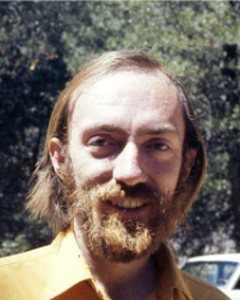 Caltech theoretical physicist who shared the 2017 Nobel Prize in Physics for the first detection of gravitational waves by LIGO. Learn more (opens in a new tab)Photo: A. T. Service, 1972 (opens in a new tab) · CC BY-SA 3.0 (cropped),
 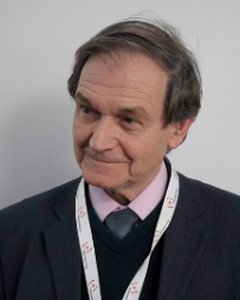 British mathematical physicist and Newman's collaborator, who won the 2020 Nobel Prize in Physics for showing that general relativity predicts black holes. Learn more (opens in a new tab)Photo: Cirone-Musi, Festival della Scienza, 2011 (opens in a new tab) · CC BY-SA 2.0 (cropped) and
 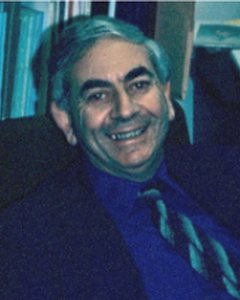 British cosmologist, then at Oxford, who supervised Stephen Hawking, Martin Rees and George Ellis. Learn more (opens in a new tab)Photo: Woodruff T. Sullivan III, NRAO/AUI Archives, 1981 (opens in a new tab) · CC BY 4.0 (cropped), Physicist at the University of Alberta in Canada, whose 1967 theorem showed that a black hole is described by just a few properties. He chaired the program committee of GR8, the 1977 international conference on general relativity. Learn more (opens in a new tab), Italian physicist at the University of Pavia and one of Erwin Schrödinger's last students, later known for a precise test of general relativity using the Cassini spacecraft. Learn more (opens in a new tab), Swiss theoretical physicist at the University of Bern who helped lay the foundations of quantum chromodynamics, the theory of the strong nuclear force. Learn more (opens in a new tab), his Pittsburgh teachers Physics professor at the University of Pittsburgh and one of Roger's teachers, known for the Newman–Janis method in general relativity. Learn more (opens in a new tab) and Ezra Newman, and the George Pake, president in 1977 of the American Physical Society, the main professional society for physicists in the United States. He had founded Xerox PARC, the lab where much of the modern personal computer was invented. Learn more (opens in a new tab) wrote to
 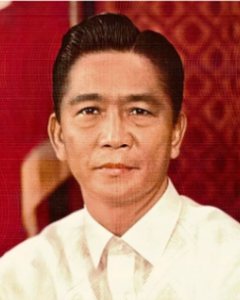 Ferdinand Marcos, president from 1965 to 1986, who ruled as a dictator under martial law until the People Power Revolution forced him out. Learn more (opens in a new tab)Photo: Malacañang Press, 1969 (opens in a new tab) · Public domain (cropped). The The leading international conference on relativity and astrophysics, held every two years since 1963. Learn more (opens in a new tab) passed a resolution regretting his absence. From prison he supervised a UP student's master's thesis by passing calculations back and forth.
 - Released · October 1978Freed after two years and nine months. That same year he was invited onto the organizing committee of the Events held around the world in 1979 to mark 100 years since Einstein's birth, including symposia in Princeton and Jerusalem., the only physicist from Southeast Asia.
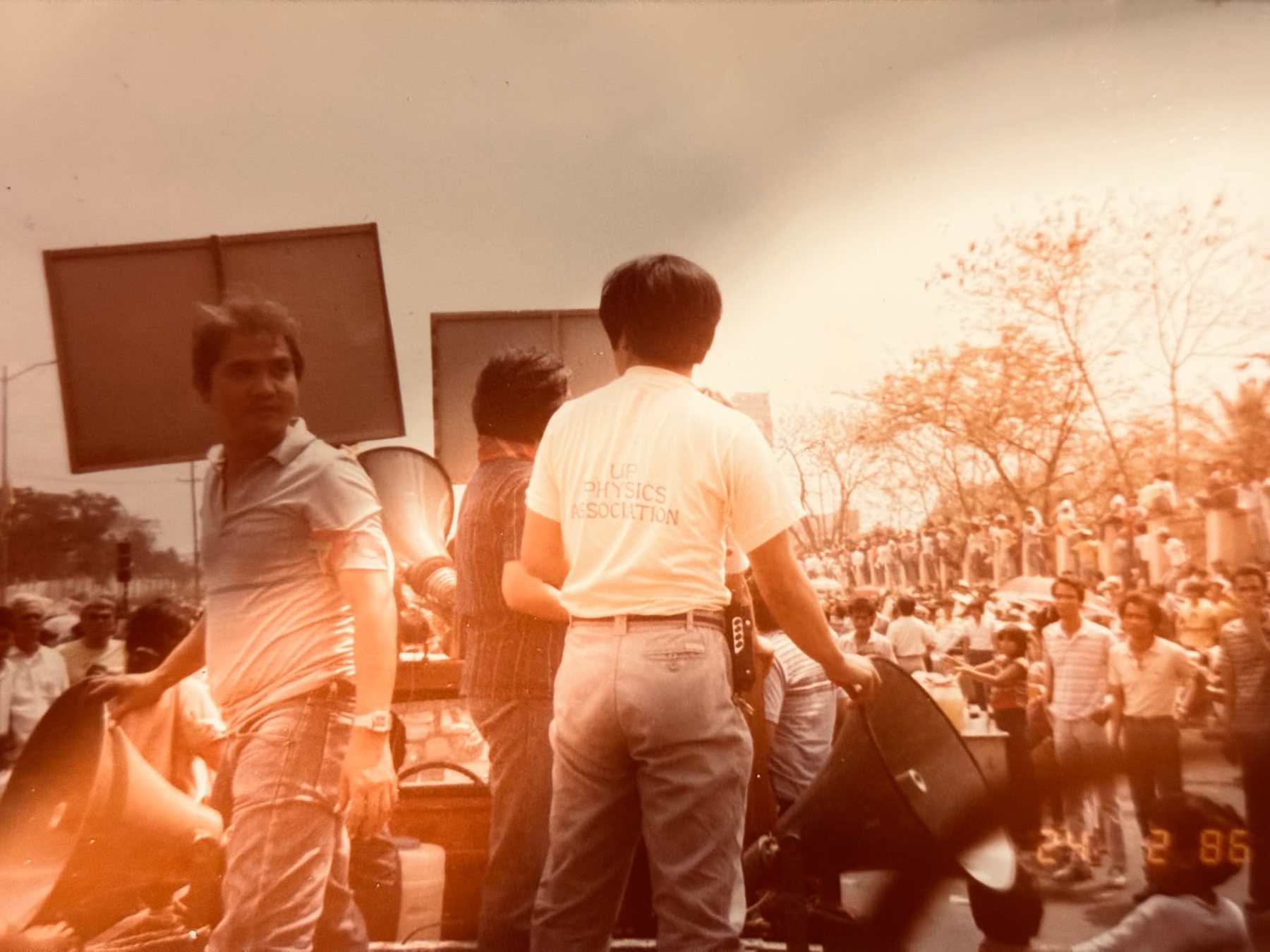
- UP · 1980 to 1993In 1979 he founded the The Physics Society of the Philippines, the national society of Filipino physicists, established in 1979. Learn more (opens in a new tab), the country's first national society of physicists, as its first president. He was chair of physics again from January 1980 and founded the UP Diliman's physics institute, the country's leading center for physics research and graduate training. Learn more (opens in a new tab) in 1982. He lengthened the B.S. to five years with a required thesis and started the country's first Ph.D. program in physics; his physics curricula became the national standard, and he created UP's first interdisciplinary course, Science, Technology and Society. In 1981 he helped found the Filipino for “Movement of Filipino Scientists”, a group that pushed for a UP College of Science and a national research council. UP's obituary of Roger calls it the Kapisanan ng mga Siyentipikong Pilipino. Learn more (opens in a new tab). As associate dean he turned physics, geology and the Natural Sciences Research Center into national centers of excellence, then split the sciences off into a new College of Science in 1982 and led it as founding dean for three terms, from 1983 to 1993. Its Ph.D. faculty grew from 44 to 104, and its new buildings became the start of the UP Science Complex. With Ateneo and La Salle he set up a joint Ph.D. consortium that sent students to finish their research in Japan and Australia, and from 1983 to 1989 he led the Philippine side of the The United Nations' academic and research arm, headquartered in Tokyo, founded in 1972. Learn more (opens in a new tab)'s six-country study of self-reliance in science and technology. He was named an Outstanding Young Scientist in 1984 and stood with the UP physicists in the crowds at The People Power Revolution of February 22 to 25, 1986, when huge crowds on Epifanio de los Santos Avenue (EDSA) in Metro Manila peacefully ended Marcos's rule. Learn more (opens in a new tab) in February 1986.
- Chancellor · 1993 to 1996Appointed The head of the Diliman campus. The UP President runs the whole university system, and each campus has its own chancellor, much like a campus chancellor in a US state university system. Learn more (opens in a new tab) on November 1, 1993, and installed on July 22, 1994, under the banner "Nationalistic Culture, Futuristic Technology." He pushed Teaching university courses in Filipino, the national language, instead of English. He argued that students learn science best in their own language., founded the A UP graduate center, created in 1995, that teaches how firms and countries acquire and manage technology. It offers a Master of Technology Management. Learn more (opens in a new tab) in 1995, and set up the UP Diliman Information Office, the Center for Environmental Research, Education and Services, the Archaeological Studies Program and the Materials Science and Engineering Center. He also launched the country's first interdisciplinary degree programs in molecular biology and biotechnology, brought in DILNET (the campus fiber-optic network), computerized registration and a land use plan for the campus, started its Engineering Complex and Arts and Culture Complex, and won a Canadian aid grant to design the Master of Technology Management. He also stood up for students when The National Bureau of Investigation, the Philippine counterpart of the FBI. Learn more (opens in a new tab) agents tried to make arrests on campus without warrants (the story is below).
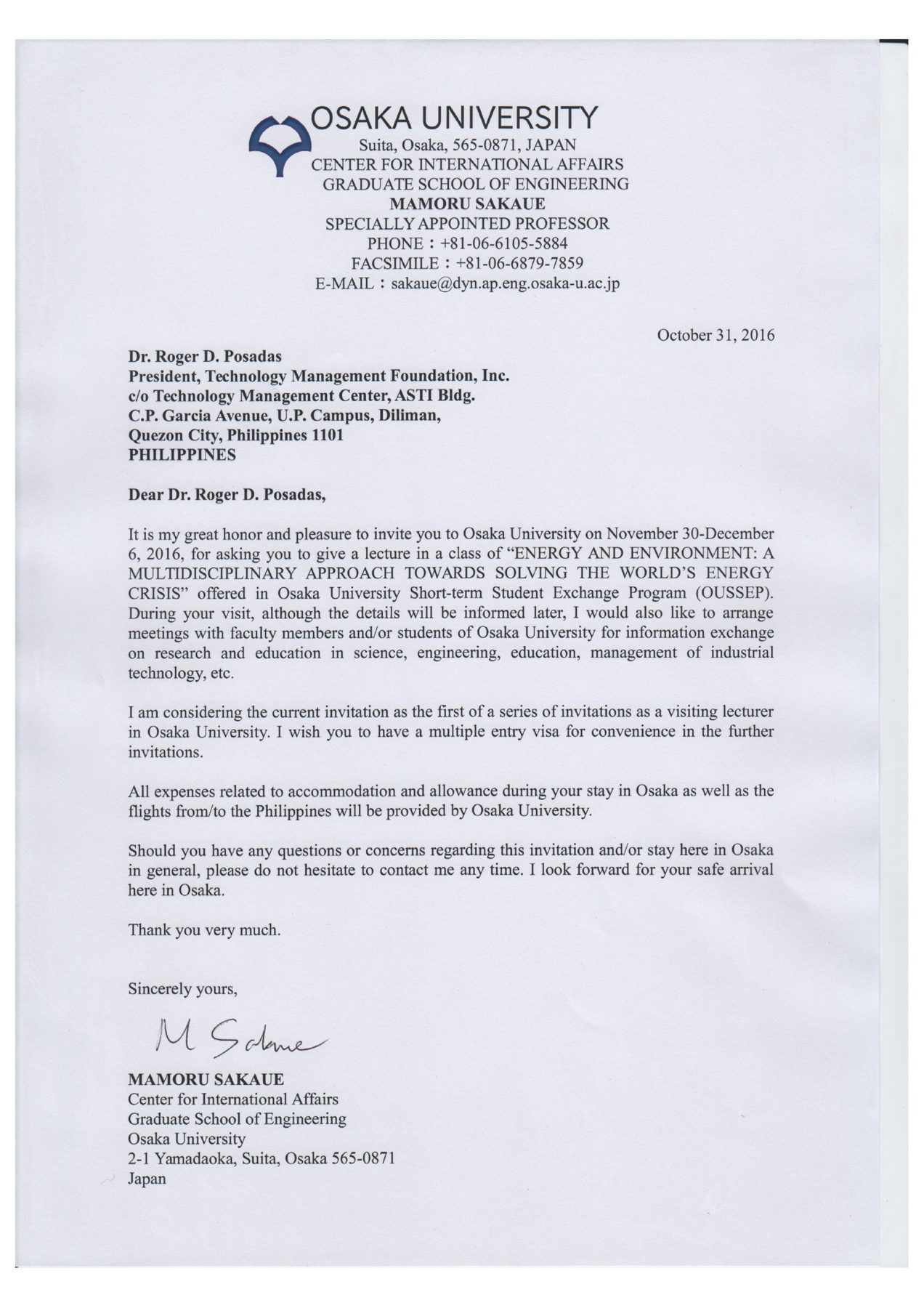
- Technology management · 1996 to 2016Turned to how countries catch up: technology management, industrial policy, and what the Philippines could learn from South Korea and Taiwan. He began arguing for The view that a nation's security and prosperity depend on building and controlling its own technology rather than relying on foreign suppliers. Learn more (opens in a new tab) in 1998 and taught in the Technology Management Center. He was academic director of STI (1999–2003), chief academic officer of AMA (2003–04), vice president for academic affairs at the University of the East (2004–05), a cluster dean at Arellano University (2014–15) and executive director for research and innovation at Lyceum of the Philippines University–Cavite (2015–16). He consulted for the Department of Energy, the Department of Budget and Management, The National Economic and Development Authority, the government's central economic planning agency. Learn more (opens in a new tab), The Commission on Higher Education, created in 1994, which regulates the country's colleges and universities. Learn more (opens in a new tab) and the Philippine National Oil Company, at 69 he was nominated for UP Diliman chancellor again, and at 71 for president of the University of the Philippines. In his last years he campaigned for nuclear power, and in September 2016 he sent the Department of Energy a first draft of a national nuclear energy policy. That December, Osaka University flew him in to lecture on energy and the environment, the first of a planned series of visits, and he brought the whole family along. In all, he taught for 45 years and advised close to 100 master's and doctoral students.
- Cleared · 2013In 2005 the The Philippines' special court for corruption cases against public officials, created in 1978. Learn more (opens in a new tab), the anti-graft court, convicted him over pay he received in 1995 as project director of the Technology Management Center he had created. In November 2013 the Supreme Court acquitted him, finding that he had acted in good faith. The full story is below.
- 2017Died on August 20, 2017, at 72.
Before physics
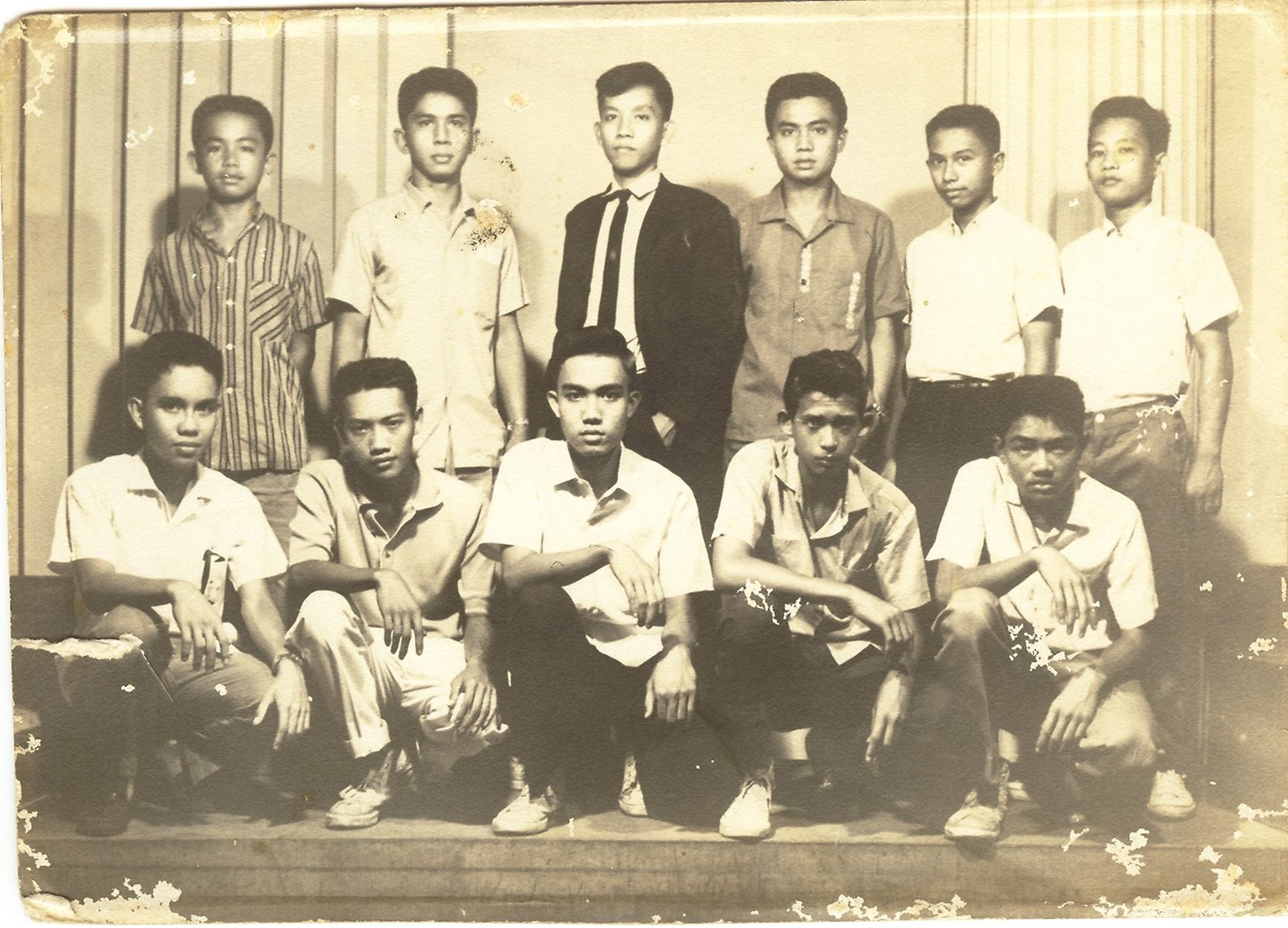
He grew up wanting to be a general. The son of an army officer, he moved from school to school with his father's postings and spent his boyhood on make-believe battlefields, reading about Napoleon rather than magnets and batteries. He planned two years of engineering at UP and then the Philippine Military Academy. Relativity got to him first, and studying it cost him the eyesight the academy required.
Two lines back to Einstein
In physics, students are counted by who trained them. Roger's line runs back to Albert Einstein twice.
- Albert Einstein recommended Philipp Frank as his successor in Prague, 1912.
- Frank supervised Peter G. Bergmann's Ph.D. in Prague, 1936. Bergmann then became Einstein's research assistant at the An independent research center in Princeton, New Jersey, founded in 1930. Einstein worked there from 1933 until his death. Learn more (opens in a new tab) in Princeton, 1936 to 1941, and co-wrote papers with him.
- Bergmann supervised Ezra T. Newman's Ph.D. at Syracuse, 1956. Newman went on to co-create the A mathematical toolkit for Einstein's general relativity, introduced by Ezra Newman and Roger Penrose in 1962. It simplifies calculations about black holes and gravitational waves. Learn more (opens in a new tab) and to discover the The solution of Einstein's equations for a black hole that both spins and carries electric charge, found by Newman and colleagues in 1965. Learn more (opens in a new tab) black hole.
- Newman supervised Roger D. Posadas's Ph.D. at Pittsburgh, 1970.
Who they were: Austrian physicist and philosopher who took over Einstein's professorship in Prague in 1912, on Einstein's recommendation. He later taught at Harvard. Learn more (opens in a new tab), German-born American physicist who was Einstein's assistant at Princeton from 1936 to 1941, then built one of the first US research centers for general relativity at Syracuse University. Learn more (opens in a new tab) and American physicist at the University of Pittsburgh and Roger's doctoral advisor. He co-created the Newman–Penrose formalism, a standard tool in general relativity, and found the Kerr–Newman solution for a charged, spinning black hole. Learn more (opens in a new tab)Photo: Kecchina, 2019 (opens in a new tab) · CC BY-SA 4.0 (cropped). Newman's collaborator British mathematical physicist and Newman's collaborator, who won the 2020 Nobel Prize in Physics for showing that general relativity predicts black holes. Learn more (opens in a new tab)Photo: Cirone-Musi, Festival della Scienza, 2011 (opens in a new tab) · CC BY-SA 2.0 (cropped) was one of the physicists who wrote to Marcos for Roger Posadas's release. Sources: Einstein recommending Frank, from Frank's biography (opens in a new tab); Frank to Bergmann to Newman, from the An online database, hosted at North Dakota State University, that traces scholars' academic family trees through their doctoral advisers. Learn more (opens in a new tab) (Bergmann (opens in a new tab), Newman (opens in a new tab)); Bergmann's years with Einstein, from the Institute for Advanced Study (opens in a new tab) and his biography (opens in a new tab); Newman to Roger, from Roger's own CV, which names Newman as his doctoral adviser, and from the chancellor's book and Roger's papers with Newman, both on this page.
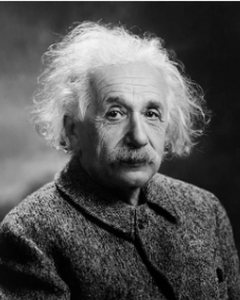
Albert EinsteinCreated Einstein's theory of gravity (1915), in which mass and energy curve spacetime and that curvature tells matter how to move. Learn more (opens in a new tab), 1915Photo: Oren Jack Turner, 1947 (opens in a new tab) · Public domain (cropped) Ezra T. NewmanRoger's doctoral adviser at PittsburghPhoto: Kecchina, 2019 (opens in a new tab) · CC BY-SA 4.0 (cropped)
His dissertation, 1970
Roger's doctoral thesis took on one of the oldest problems in general relativity: how Einstein's equations themselves dictate the way a body moves. In Newton's physics you need one law for how masses make gravity and a second law for how things move. In Einstein's theory the first law already contains the second, but turning that into usable equations is hard.
Think of a boat on a still lake. Even without seeing the shore, you could tell how it moved from the ripples it leaves: they crowd together ahead of it and spread apart behind. Working with Ezra Newman, Roger did something like that with light. He treated a particle as a In general relativity, a place where quantities such as the strength of the gravitational field become infinite. Physicists often model a point particle this way. Learn more (opens in a new tab) in the gravitational field and read its motion from the All the paths a flash of light could take from one point in spacetime. Since nothing travels faster than light, it marks out everything that event can influence. Learn more (opens in a new tab) spreading out from its path, instead of measuring it against a fixed grid.
Two results stood out. The particle turned out to have an internal structure of its own. And for a charged particle, the equations produced the The equation of motion for an accelerating charged particle that includes the recoil from the radiation it gives off. Paul Dirac gave its relativistic form in 1938. Learn more (opens in a new tab), including the small backward push a charge feels when it gives off light, without the extra assumptions that derivation usually needs.
He defended it on April 2, 1970, at 25, after doing much of the work as a guest at King's College London, and it became three papers with Newman in Physical Review Letters, Physical Review and the Journal of Mathematical Physics. The animations are pictures of the ideas, not of his mathematics.
Activist and political prisoner
Roger did not think a scientist could be neutral. In his view, refusing to take sides only meant your work would end up serving whoever already held power, so he chose the side of the people and organized other scientists to do the same. The Samahan ng Makabayang Siyentipiko took science out of the laboratory: to the barrios, to the oil-price hearings, and to the barricades of the Diliman Commune.
Martial law made that a crime. He spent most of the 1970s underground, and when the military caught him in January 1976 they tortured him and held him for two years and nine months without ever filing charges, first in a safe house, then at Bicutan and Camp Crame.
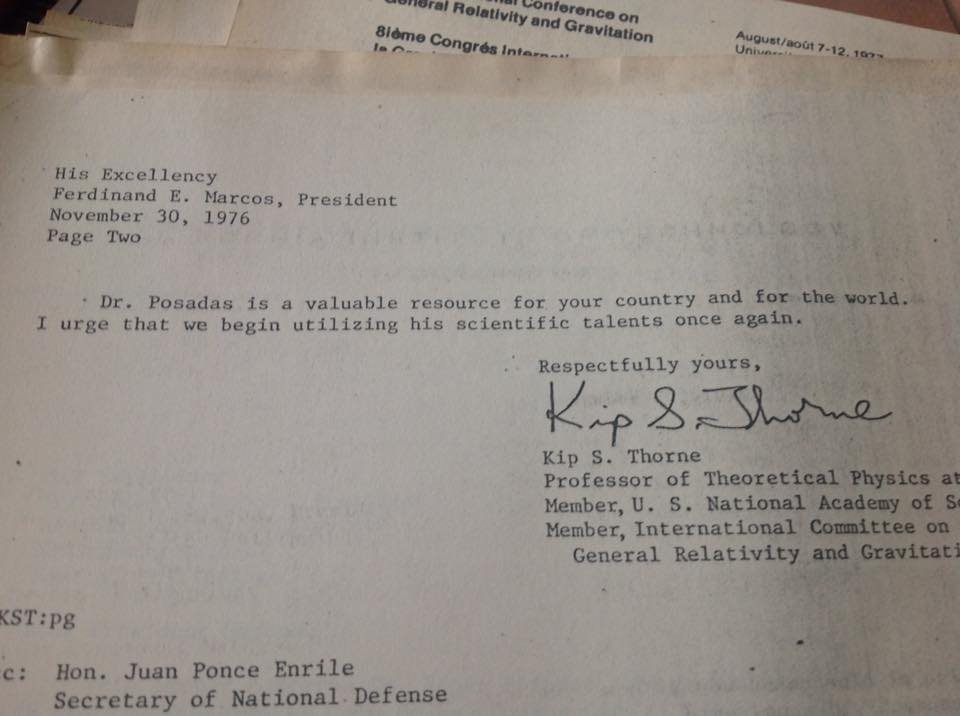
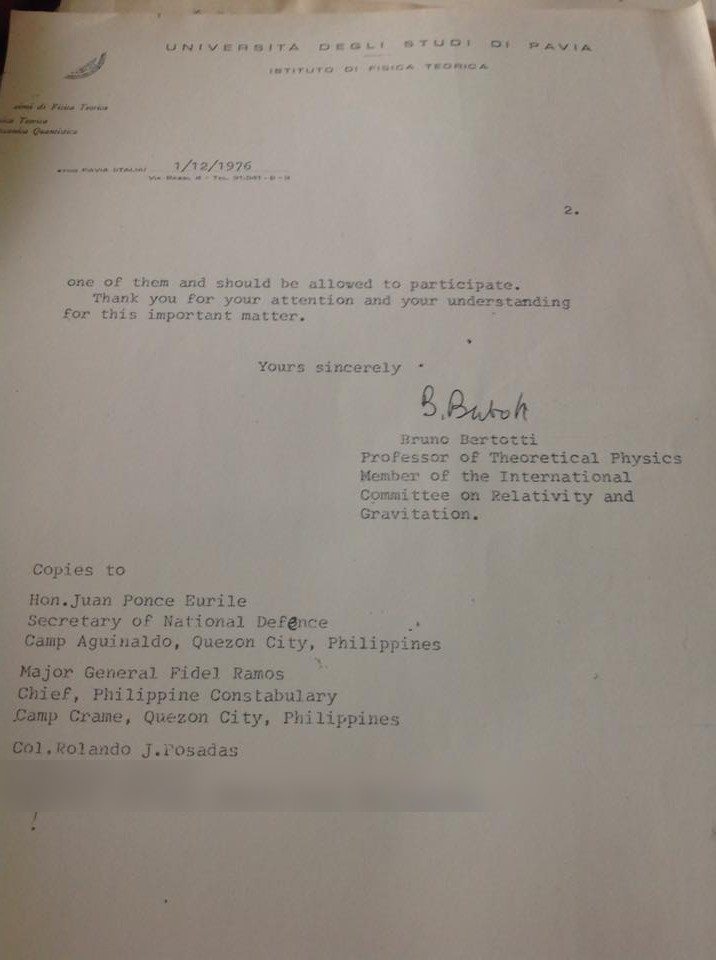
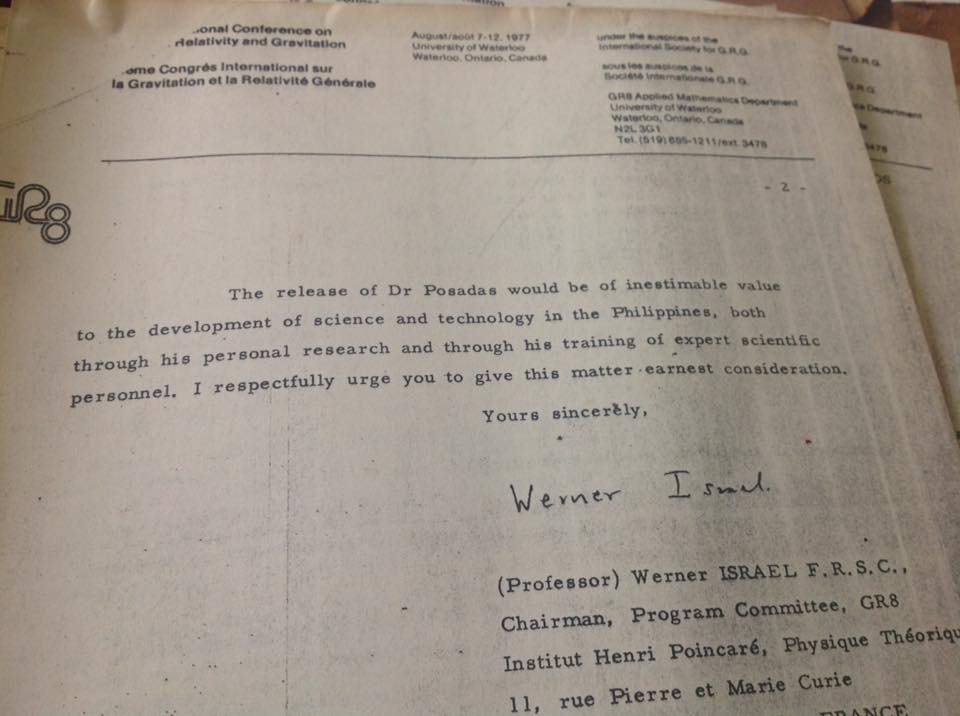
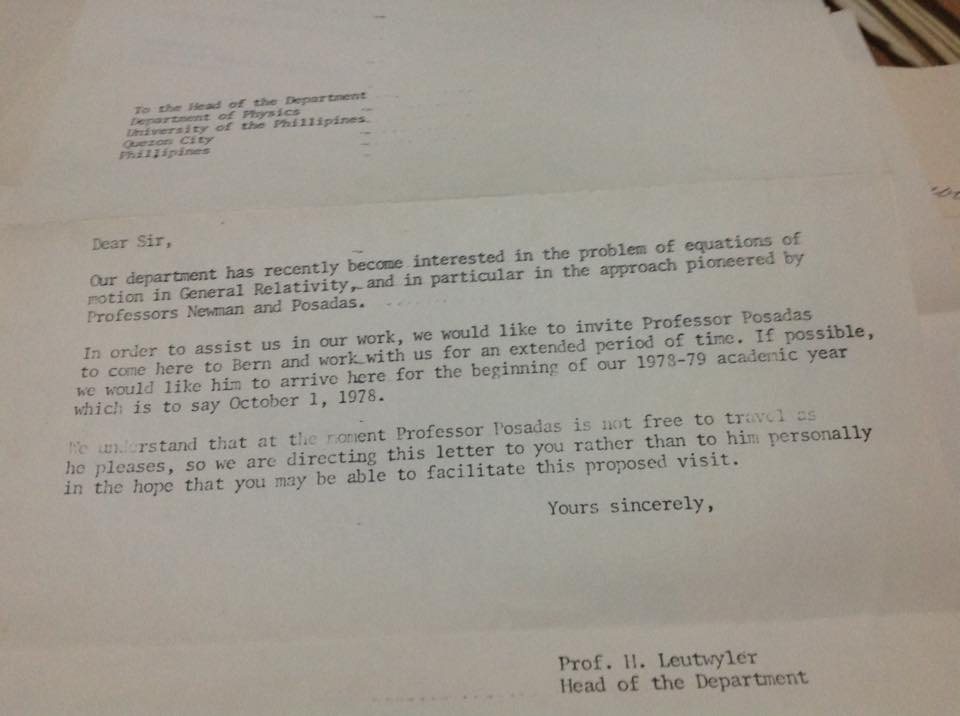
The world's physicists would not let him disappear. Letters reached Marcos from Caltech, Oxford, Brussels, Pavia, Bern, Waterloo and Pittsburgh, and from the president of the American Physical Society. Amnesty International took up his case, physics conferences passed resolutions in his name, and The monthly magazine of the American Institute of Physics, published since 1948. Learn more (opens in a new tab) was still asking its readers to write to The presidential palace in Manila. The name is often used to mean the president or the national government. Learn more (opens in a new tab) in 1978. Inside, he kept teaching, guiding a student's thesis through the prison walls. He was released in October 1978 and went straight back to work at the same university.
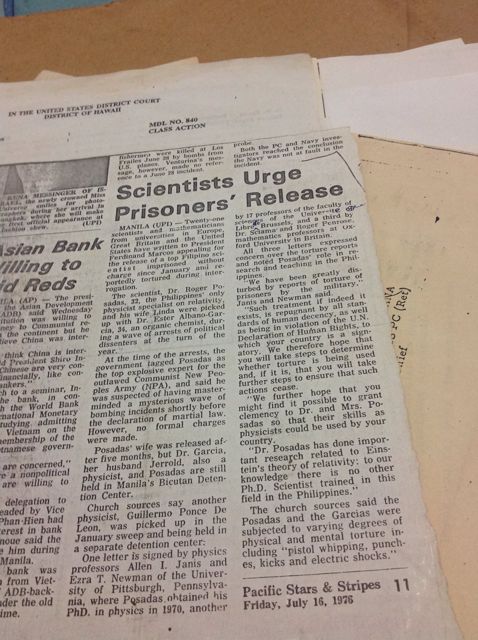
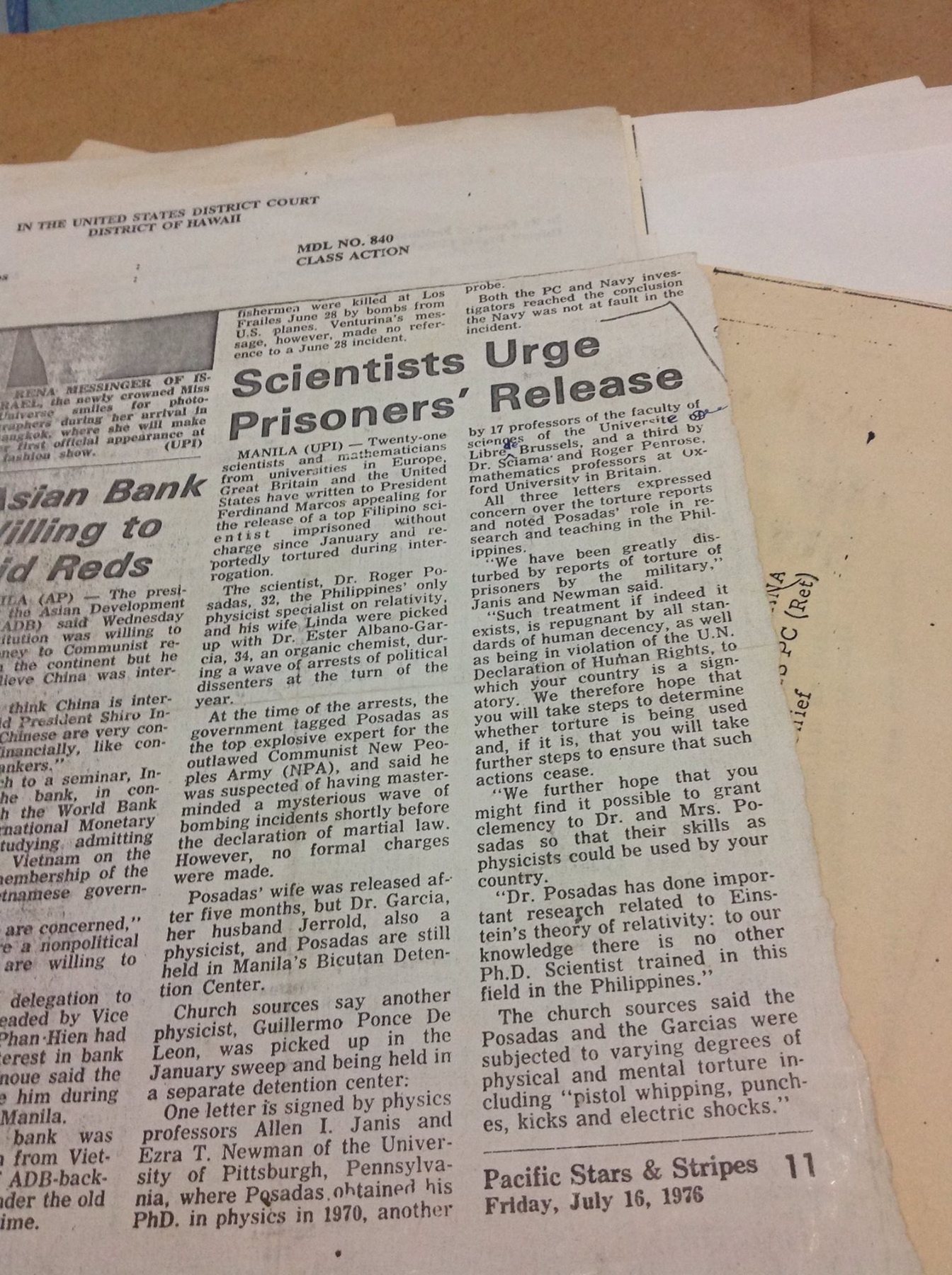
Pacific Stars and Stripes, July 16, 1976: scientists abroad demand his release. 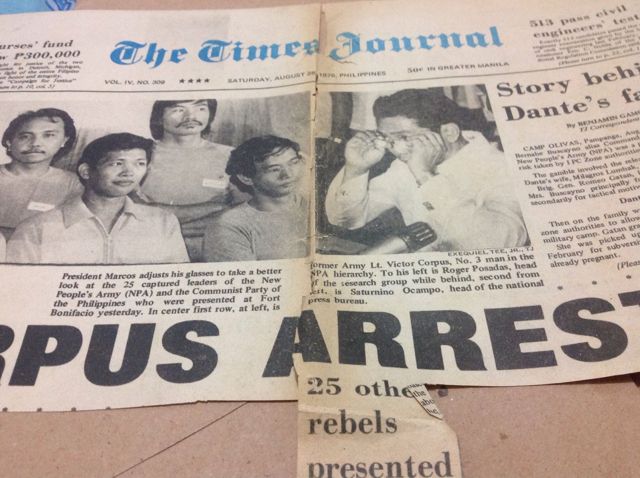
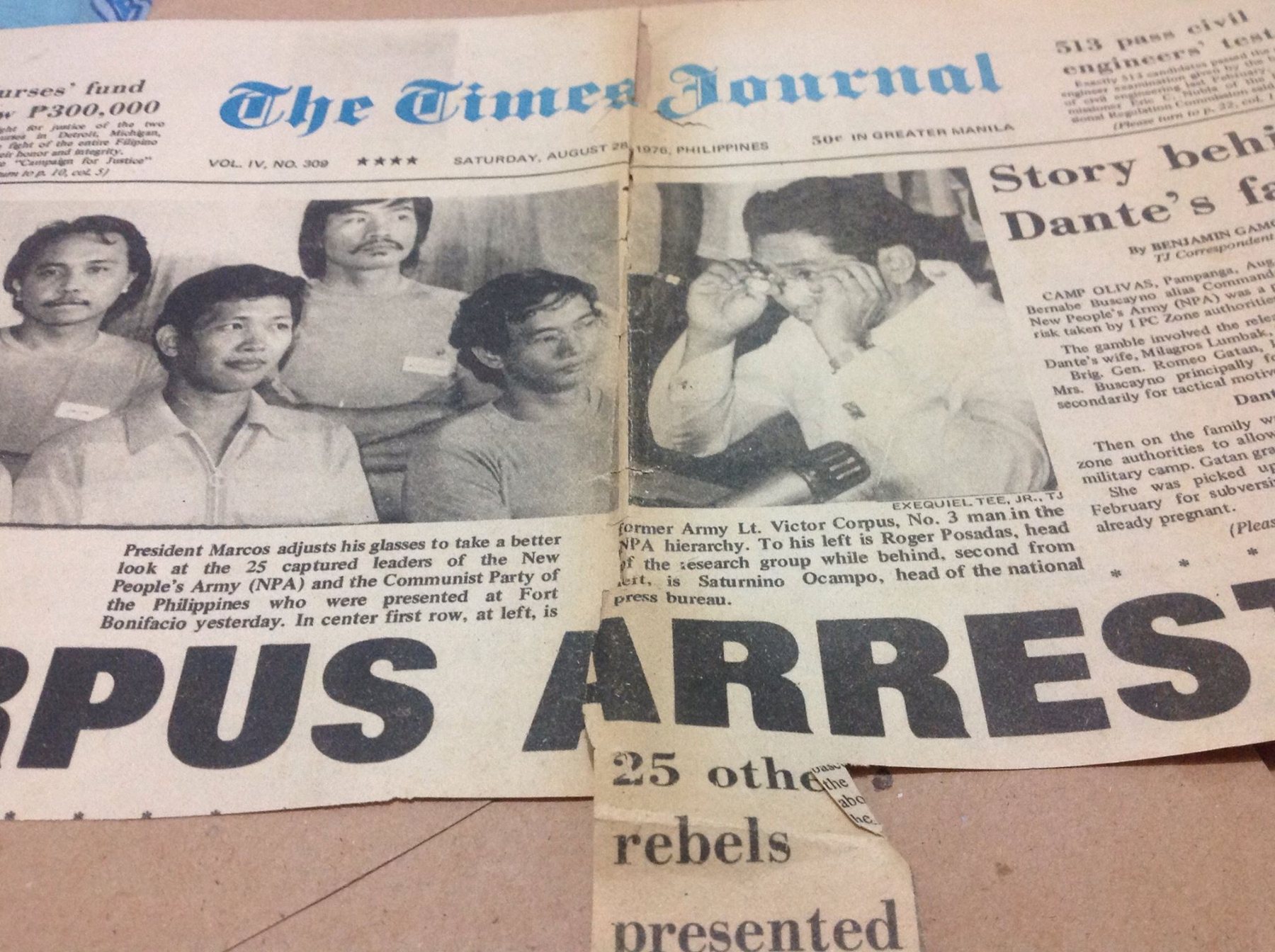
The Times Journal, August 28, 1976: the regime parades him before the press. 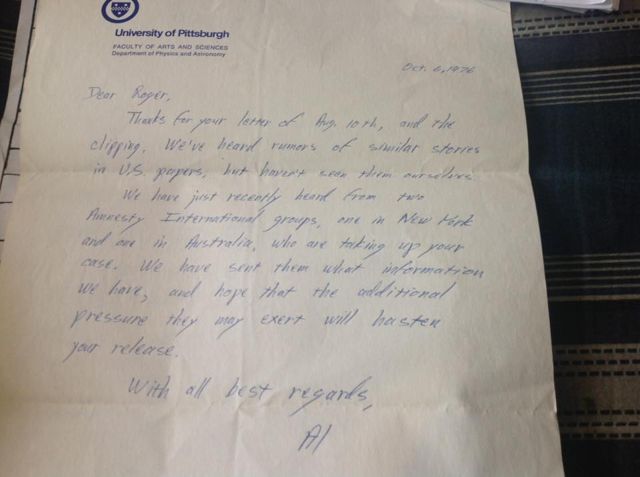
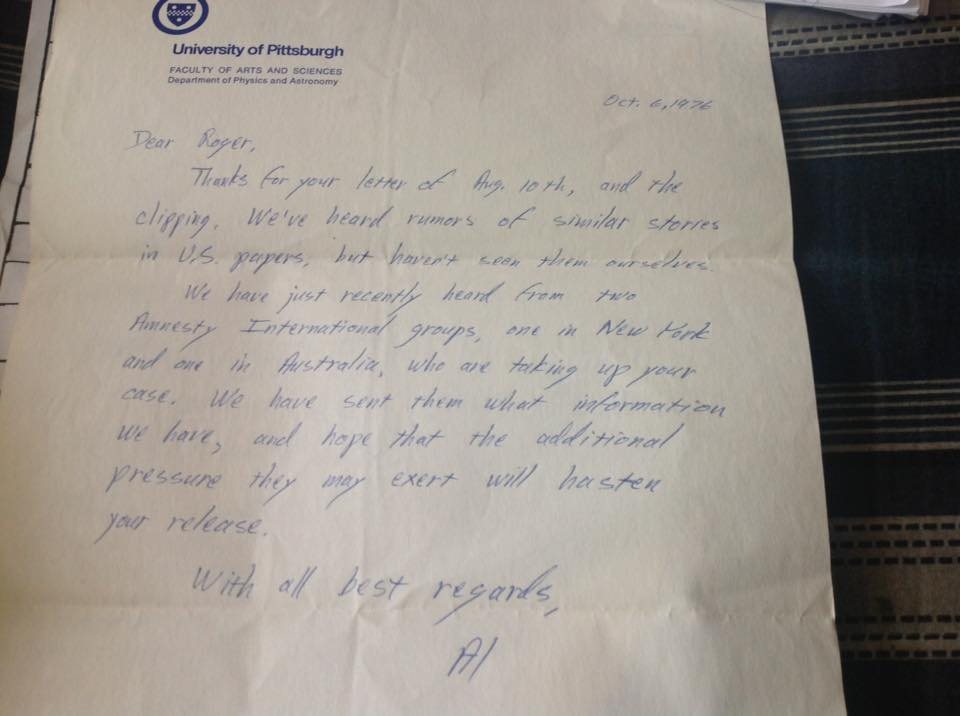
From Allen Janis at Pittsburgh, October 1976: Amnesty International takes up his case. 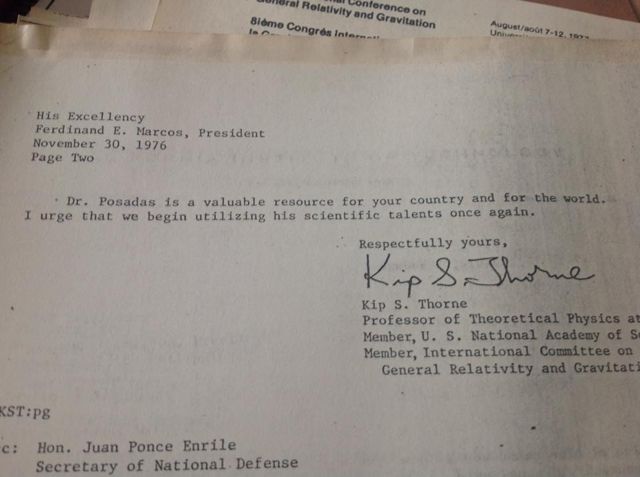
From Kip Thorne to President Marcos, November 30, 1976. 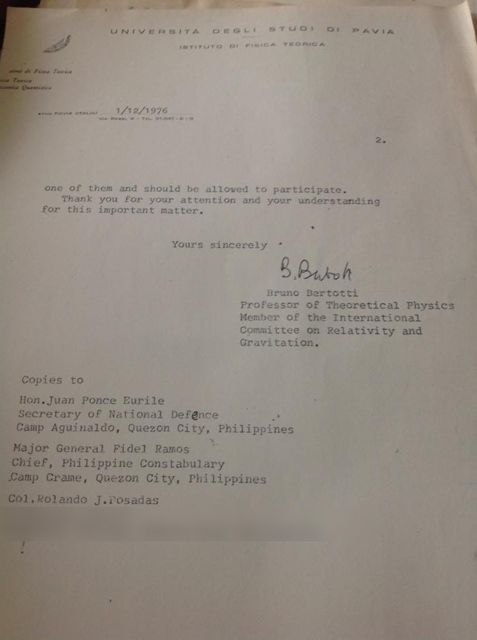
From Bruno Bertotti in Pavia, December 1976, copied to the defense secretary and to his father. Street address blurred. 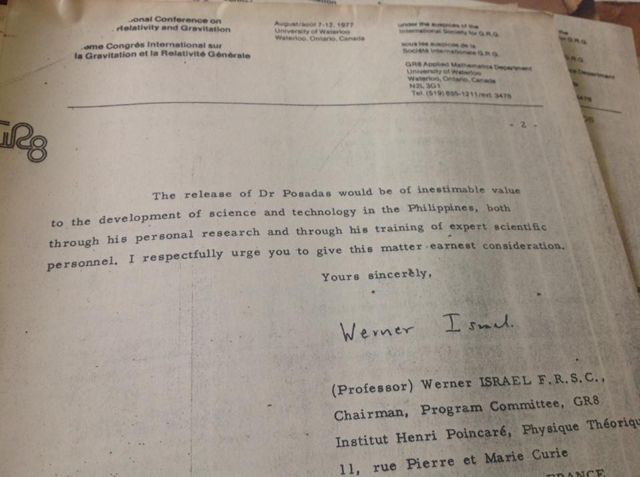
From Werner Israel, chair of the GR8 program committee, 1977. 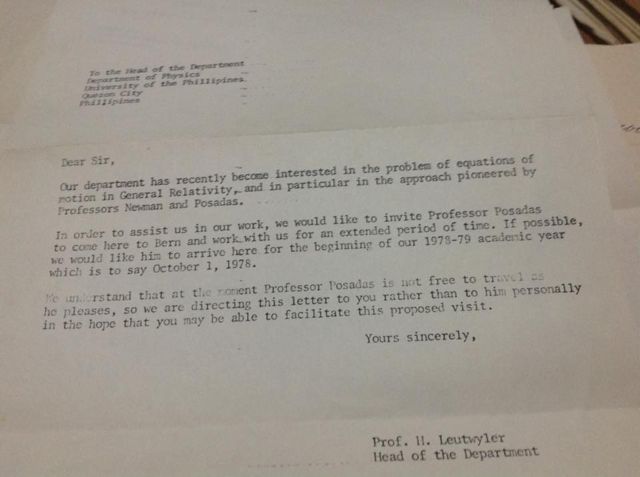
From Heinrich Leutwyler in Bern, 1978: an invitation sent to his department, because he could not travel.
Kip ThorneCaltech; wrote to Marcos in November 1976Photo: A. T. Service, 1972 (opens in a new tab) · CC BY-SA 3.0 (cropped) Roger PenroseNewman's collaborator; wrote to MarcosPhoto: Cirone-Musi, Festival della Scienza, 2011 (opens in a new tab) · CC BY-SA 2.0 (cropped) Dennis SciamaOxford; wrote to Marcos with PenrosePhoto: Woodruff T. Sullivan III, NRAO/AUI Archives, 1981 (opens in a new tab) · CC BY 4.0 (cropped)
Some of the physicists who wrote to Marcos for his release. Photos from Wikimedia Commons; the 1972 photo of Kip Thorne is from around the time he wrote.
Each document opens at full size. They come from our family's papers.
Captured, 1976
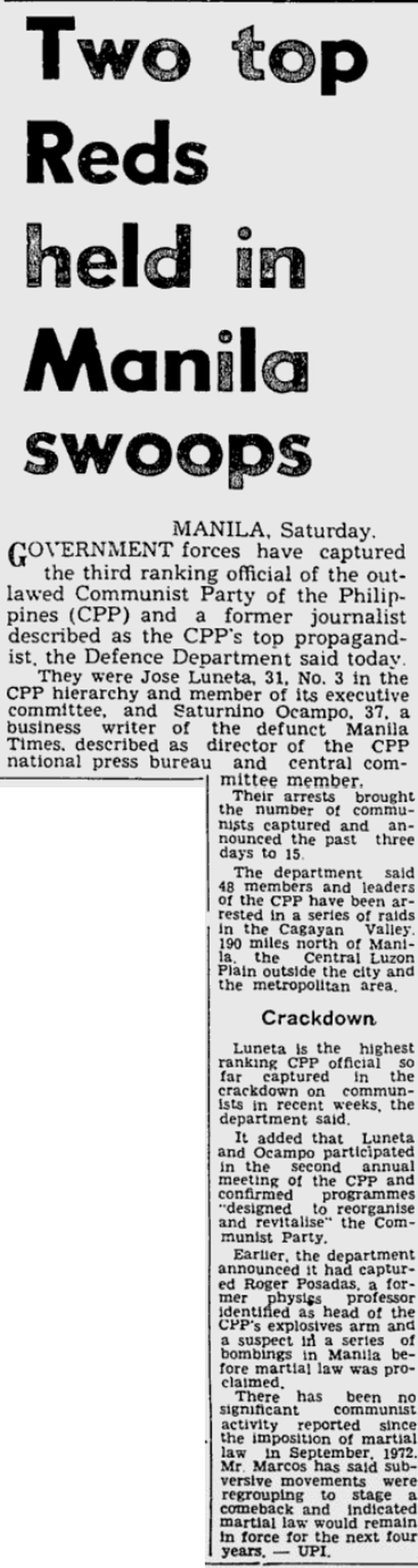
On Sunday, January 25, 1976, Malaysia's New Sunday Times ran a United Press International dispatch from Manila under the headline “Two top Reds held in Manila swoops.” It passed on the Marcos government's version. The Department of National Defense said it had captured Jose Luneta and the journalist 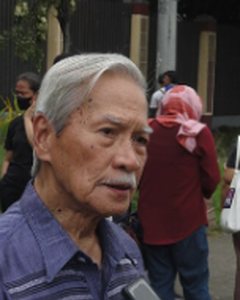 Journalist and leader of the underground left, arrested in 1976 and detained and tortured for nine years before escaping in 1985. He later served in Congress from 2001 to 2010. Learn more (opens in a new tab)Photo: Kej Andrés, 2024 (opens in a new tab) · CC BY-SA 4.0 (cropped), and that it had earlier
captured Roger Posadas, a former physics professor identified as head of the CPP's explosives arm and a suspect in a series of bombings in Manila before martial law was proclaimed.
He was never charged with any of it.
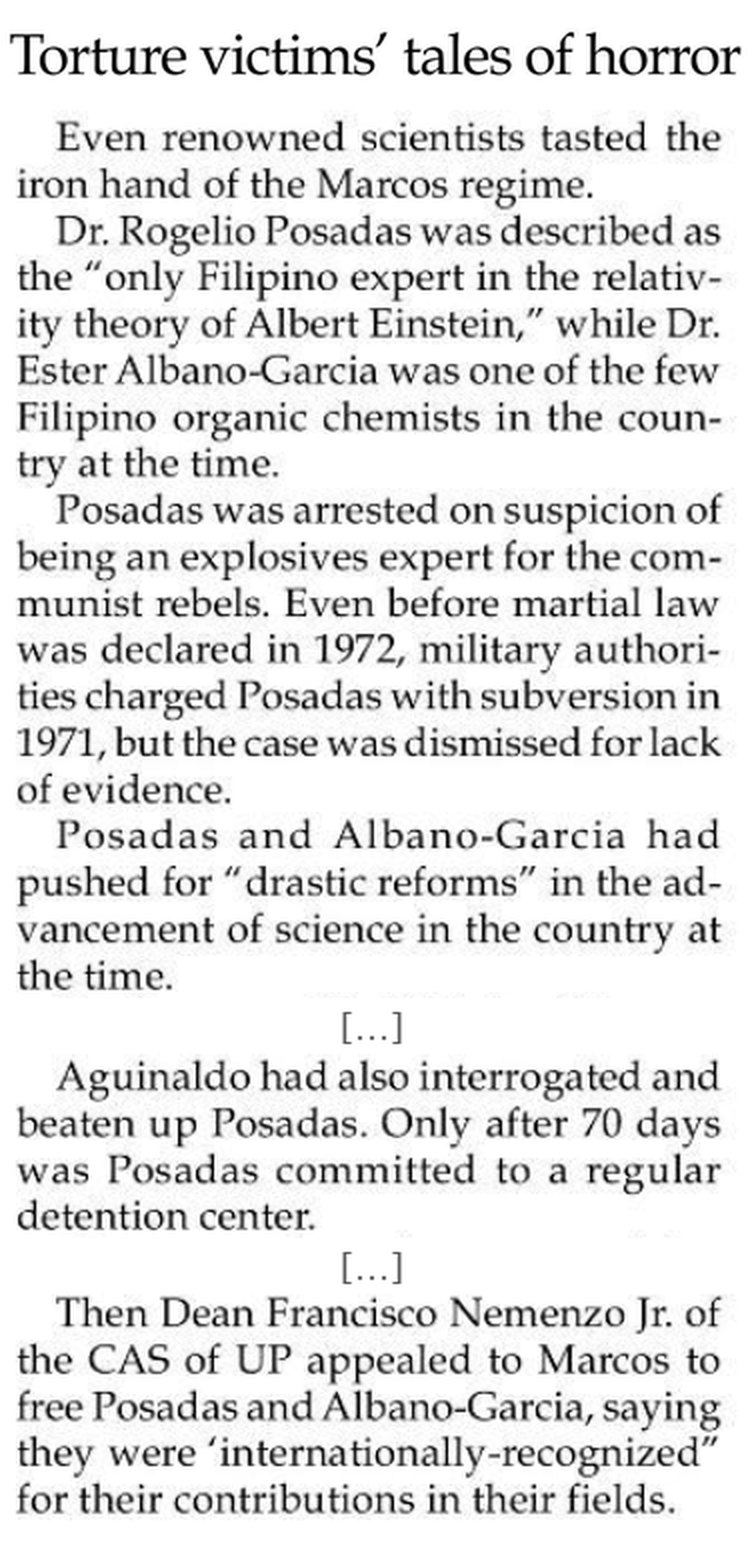
In February 2005 The Manila Times retold the arrests from the claims that martial-law victims had filed for compensation. It called him the “only Filipino expert in the relativity theory of Albert Einstein,” and noted that a 1971 subversion charge against him had been dismissed for lack of evidence. Intelligence agents took him on January 12, 1976, and held him at a safe house of the The national police force under the Philippine military until 1991. Under martial law its intelligence units ran the safe houses where many detainees were tortured. Learn more (opens in a new tab)'s 5th Constabulary Security Unit. According to a report by the A human rights group founded in 1974 by Catholic religious orders to document and help political detainees under martial law. Learn more (opens in a new tab) included in the claims, the detainees were held incommunicado for more than a month and subjected to “pistol whipping, body punches, kicks and electric shocks.” The article names A Philippine Constabulary intelligence officer under martial law, accused by many detainees of torture. He later became governor of Cagayan and a congressman, and was killed by the New People's Army in 2001. Learn more (opens in a new tab), then a Constabulary lieutenant, as one of the officers who interrogated and beat him. Only after 70 days was he moved to a regular detention center. 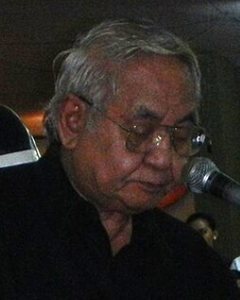 Political scientist, dean of UP's College of Arts and Sciences from 1976 to 1981 and later president of the University of the Philippines (1999–2005). Learn more (opens in a new tab)Photo: Ramon F. Velasquez, 2013 (opens in a new tab) · CC BY-SA 3.0 (cropped), dean of UP's College of Arts and Sciences, appealed to Marcos to free him and the chemist Ester Albano-Garcia, calling them “internationally-recognized” in their fields.
Missed in Boston, 1976
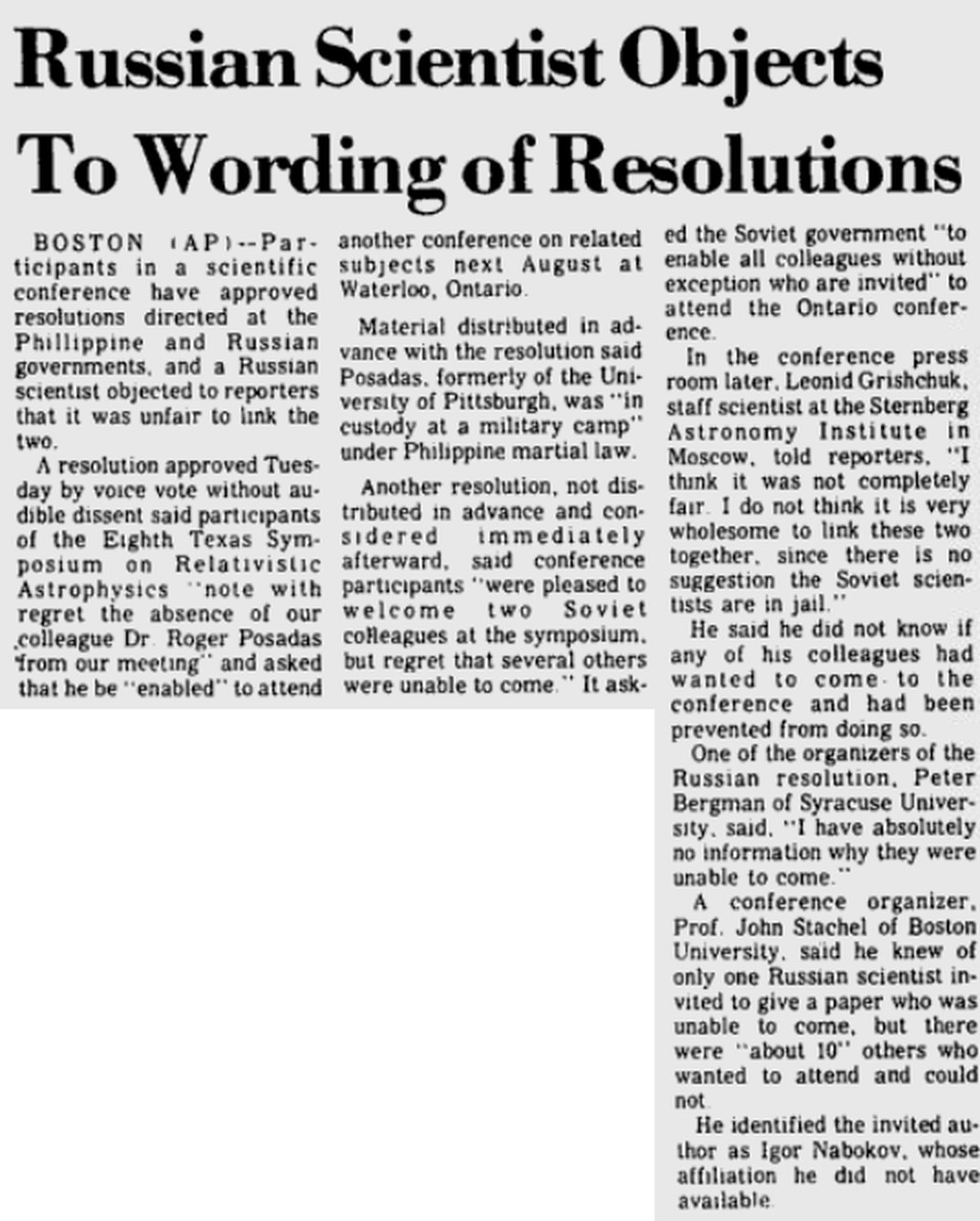
That December, while he was still in detention, the Eighth Texas Symposium on Relativistic Astrophysics met in Boston. An Associated Press report, carried by New Hampshire's Nashua Telegraph on December 15, said the participants approved by voice vote, “without audible dissent,” a resolution that would
note with regret the absence of our colleague Dr Roger Posadas from our meeting
It asked that he be “enabled” to attend the next international relativity conference, in Waterloo, Ontario, the following August. That was GR8, whose program chair, Werner Israel, wrote to him in 1977 (his letter is among the documents above). Material handed out with the resolution said he was “in custody at a military camp” under Philippine martial law.
A second resolution asked the Soviet government to let all of its invited scientists attend. A Soviet astronomer, Soviet theoretical physicist and cosmologist at Moscow's Sternberg Astronomical Institute, known for work on gravitational waves. Learn more (opens in a new tab), objected to the pairing: “there is no suggestion the Soviet scientists are in jail.” One of the organizers of the Soviet resolution was Peter Bergmann, the physicist who had trained Roger's own doctoral adviser.
What he built
When he came back, physics at UP was hollowed out; in 1982 the department lost nearly all of its Ph.D.s to jobs abroad. He rebuilt it by giving people reasons to stay: the country's first doctoral program in physics, a five-year bachelor's with a real thesis, laboratories that could do experimental work, and links with universities in Japan. That department became the National Institute of Physics. Then he did the same for the sciences as a whole, carving the College of Science out of Arts and Sciences in 1982, more than doubling its Ph.D. faculty, and raising the buildings that began the UP Science Complex.
If I had the power, I would lay a simple stone in his name in one remote corner of that magnificent Complex in recognition of the power of his vision.
He never stopped fighting in public. He wrote an indictment of the government's science board under Marcos, led petitions against a science secretary, called out a deuterium hoax as a swindle, argued for teaching physics in Filipino, and spent his last decades on technonationalism: the idea that the Philippines could catch up only by building its own technological capabilities, as South Korea and Taiwan had. He kept saying Filipinos were as capable as anyone of mastering science.
He could be blunt about national pride. Speaking to Philippine Navy officers in 2012, he took aim at a national icon:
Another glaring example of Philippine technological weakness is the The Philippines' most common public transport: long, brightly decorated minibuses first built from surplus US Army jeeps after World War II. Learn more (opens in a new tab), which some Filipinos like to claim as the embodiment of Filipino ingenuity but which to me exemplifies Filipino inability to achieve self-reliance in designing and manufacturing an internal combustion engine – a hundred-year old technology that Koreans, Malaysians, and Chinese have learned to design and produce on their own.
Reporters kept calling him a nuclear physicist, and he kept correcting them: relativity. His colleagues remember a perfectionist who seemed aloof but was fair, who loved coffee and singing, and who served drinks at his parties but never drank.
Believe it or not, Roger was as serious about singing as he was serious about UP.
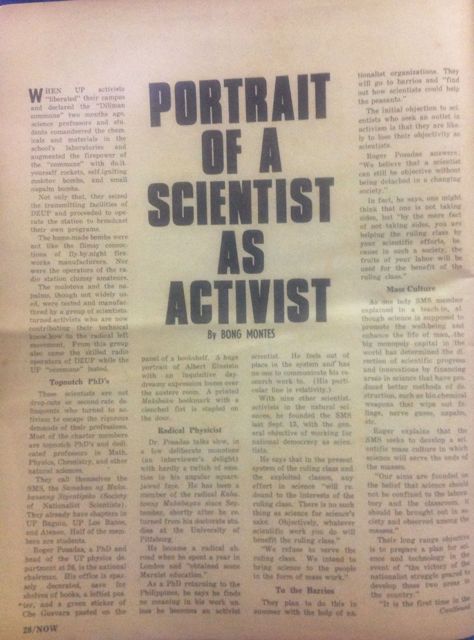
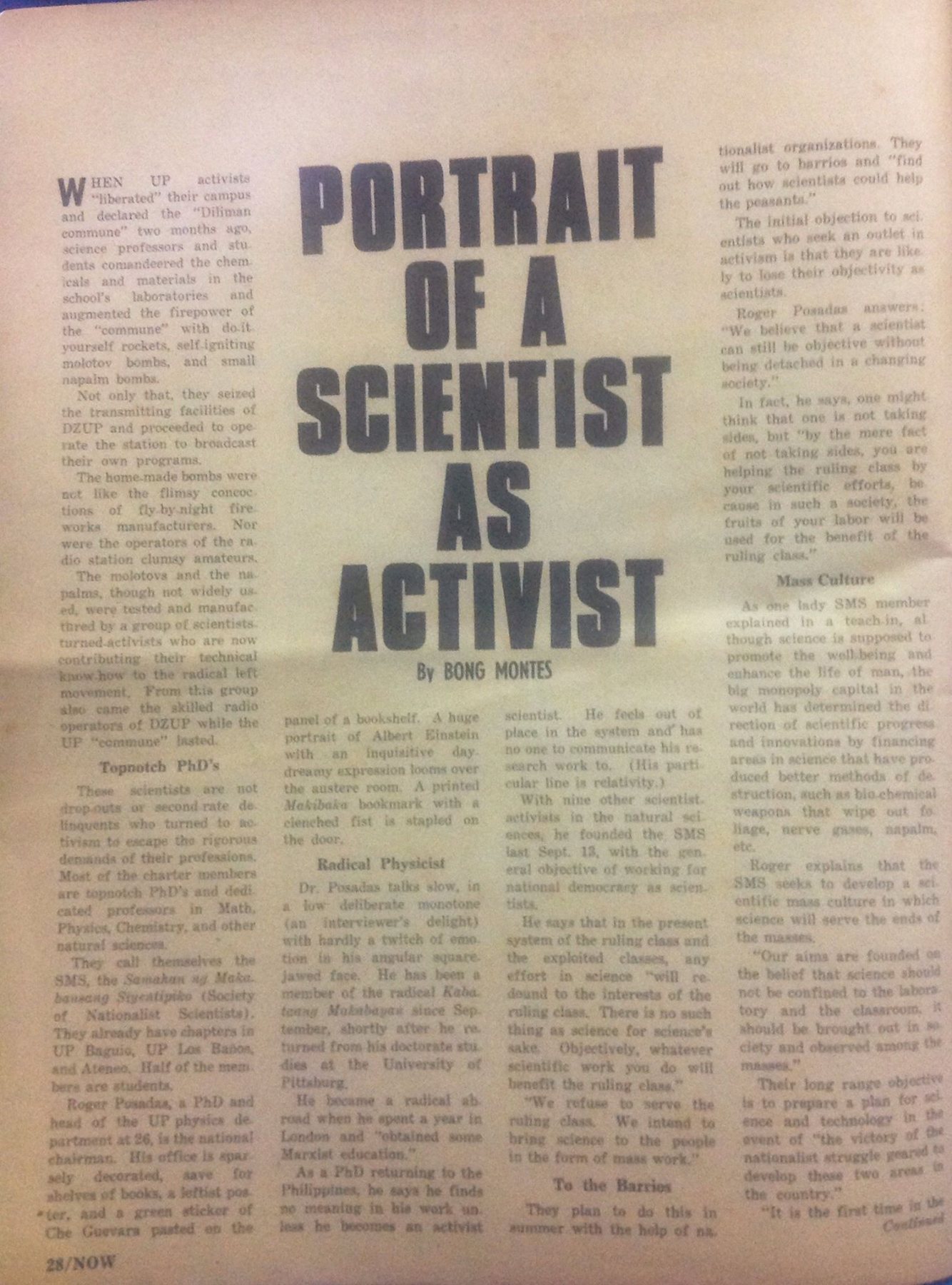
NOW magazine, 1971: the radical physicist and the nationalist scientists he organized. 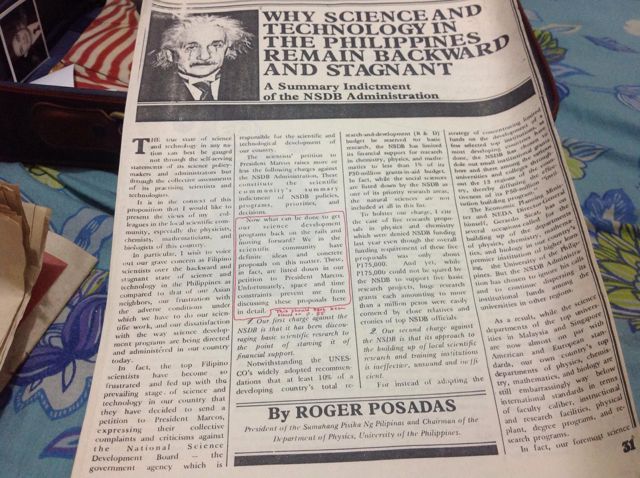
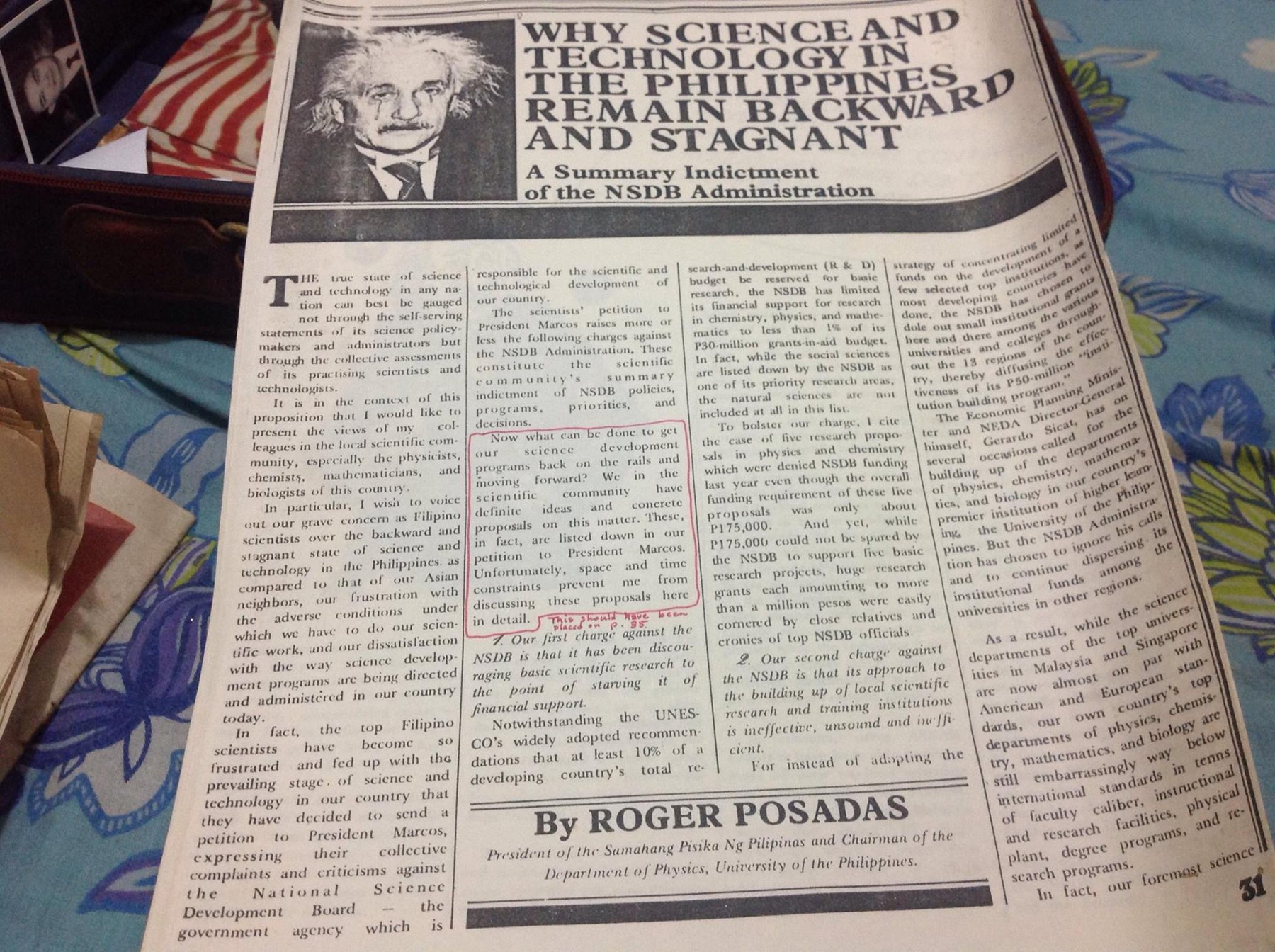
His public indictment of the Marcos-era National Science Development Board. 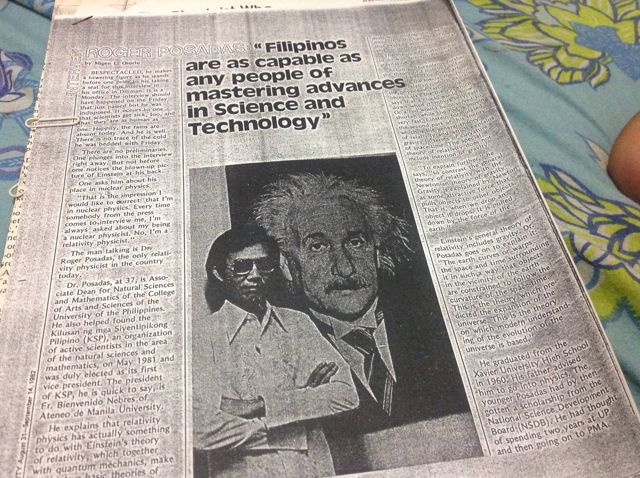
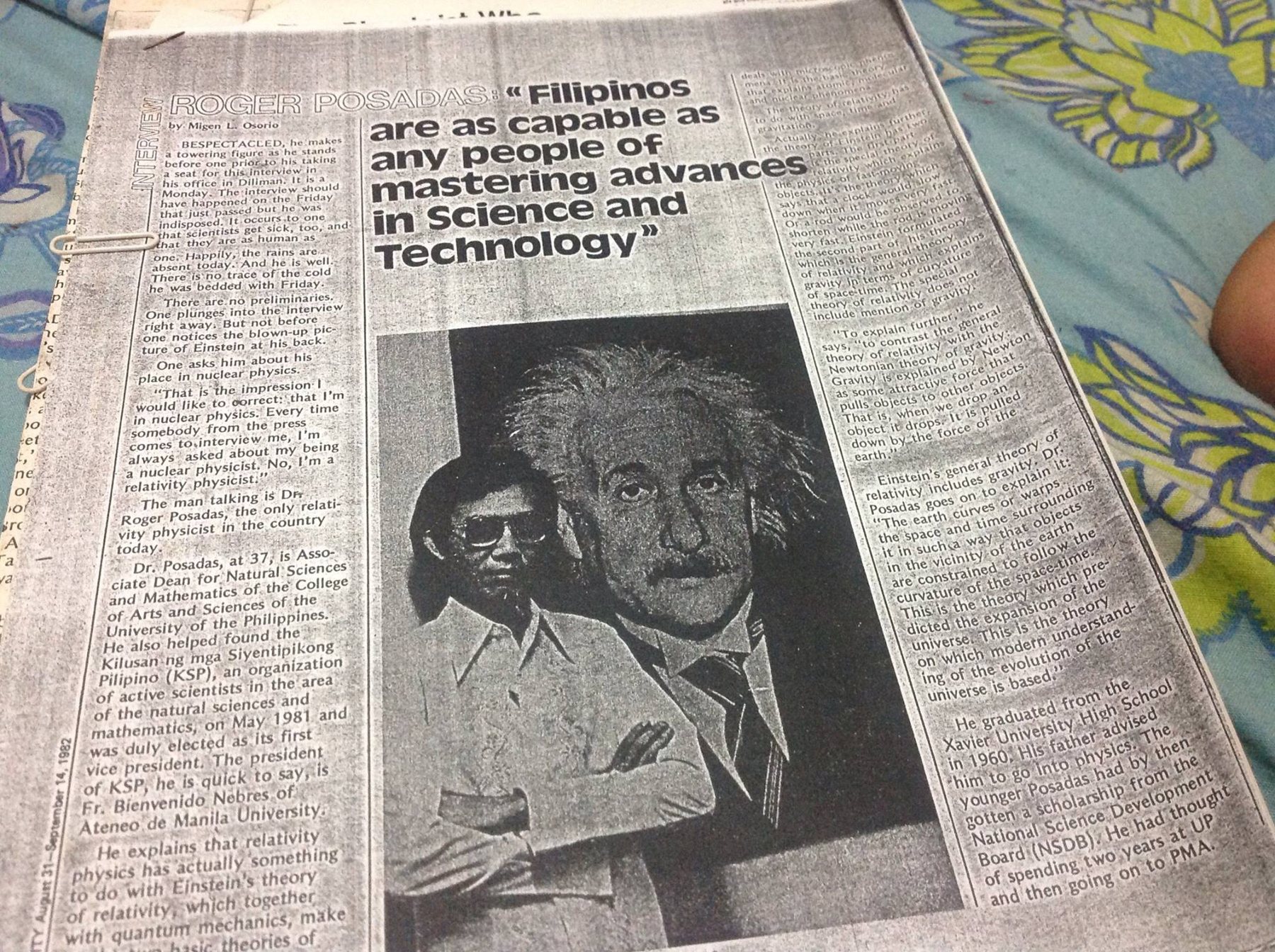
1982 interview, at 37, as associate dean for the natural sciences and mathematics. 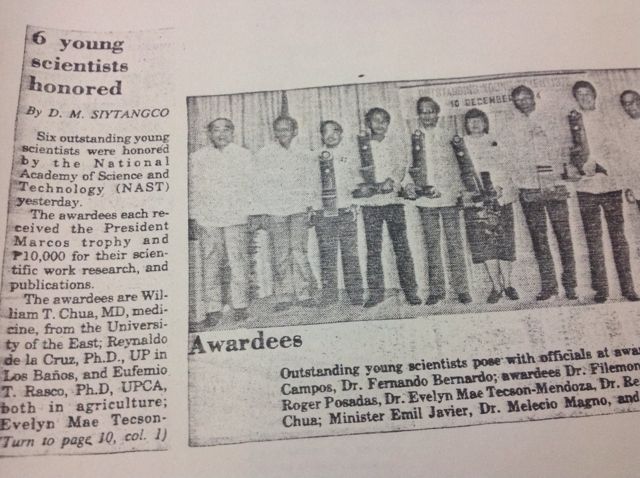
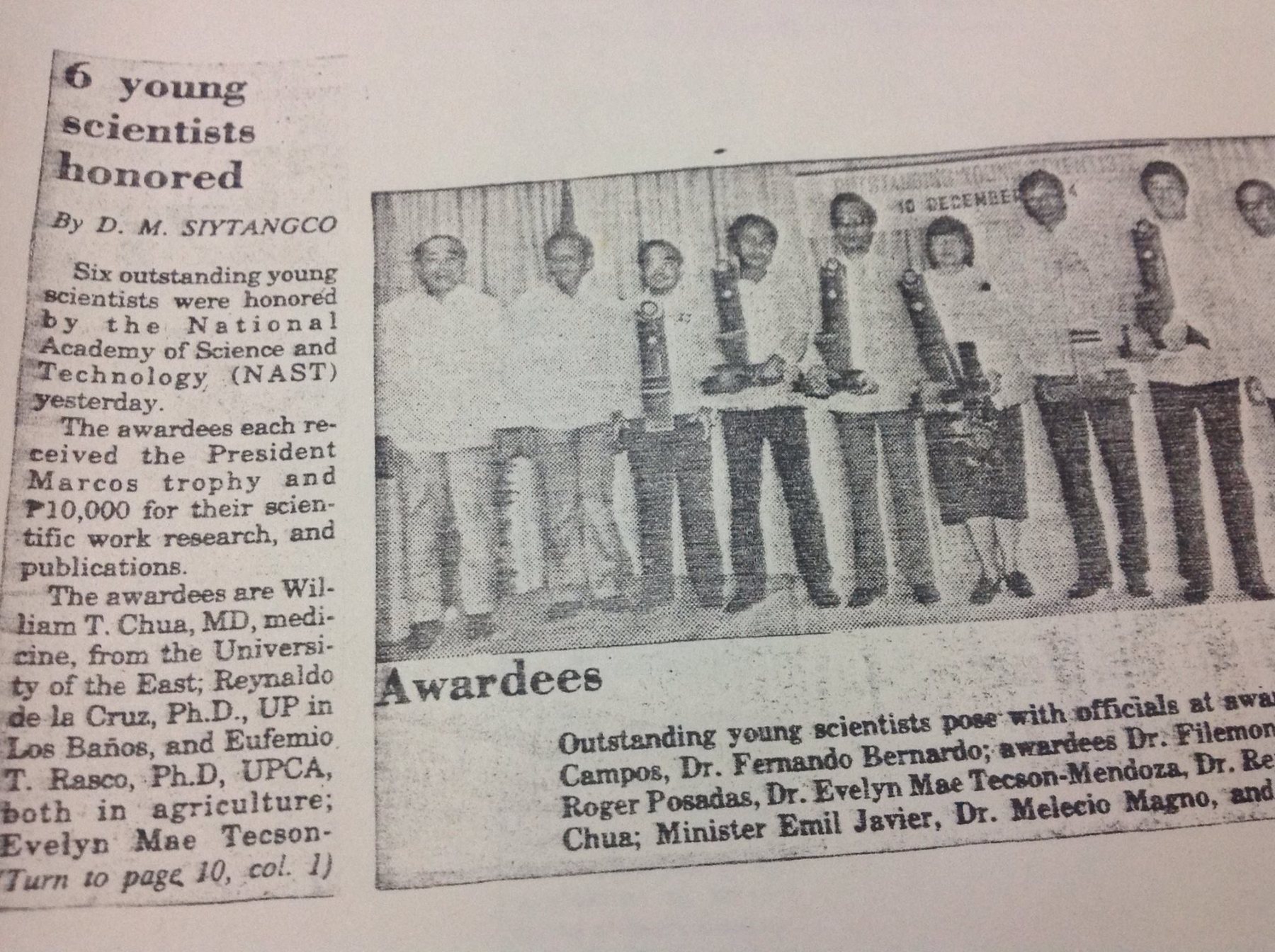
National Academy of Science and Technology, Outstanding Young Scientist, December 10, 1984. 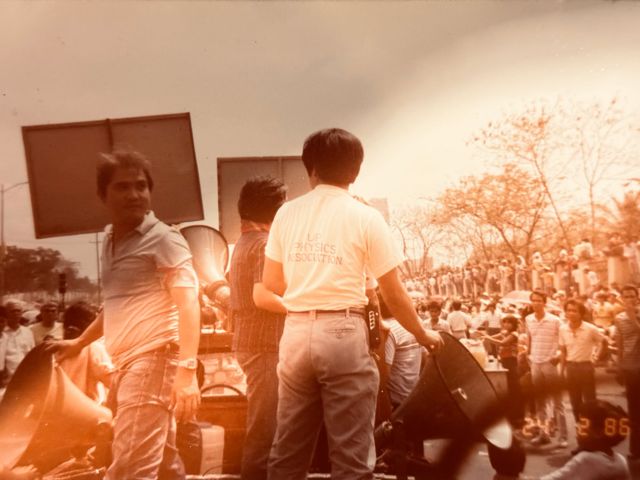
UP physicists in the crowds of the People Power Revolution, February 24, 1986. 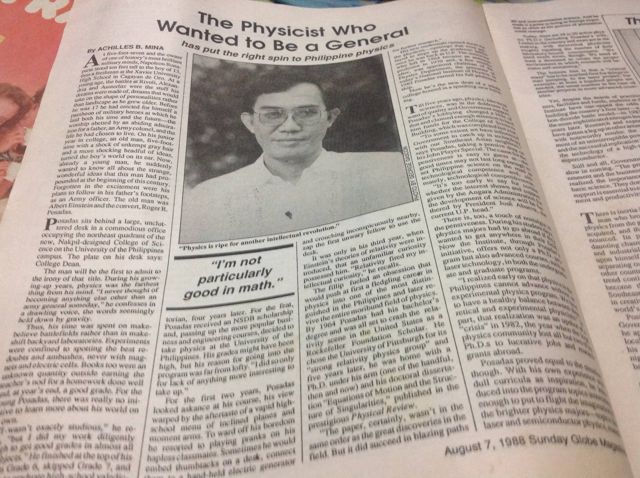
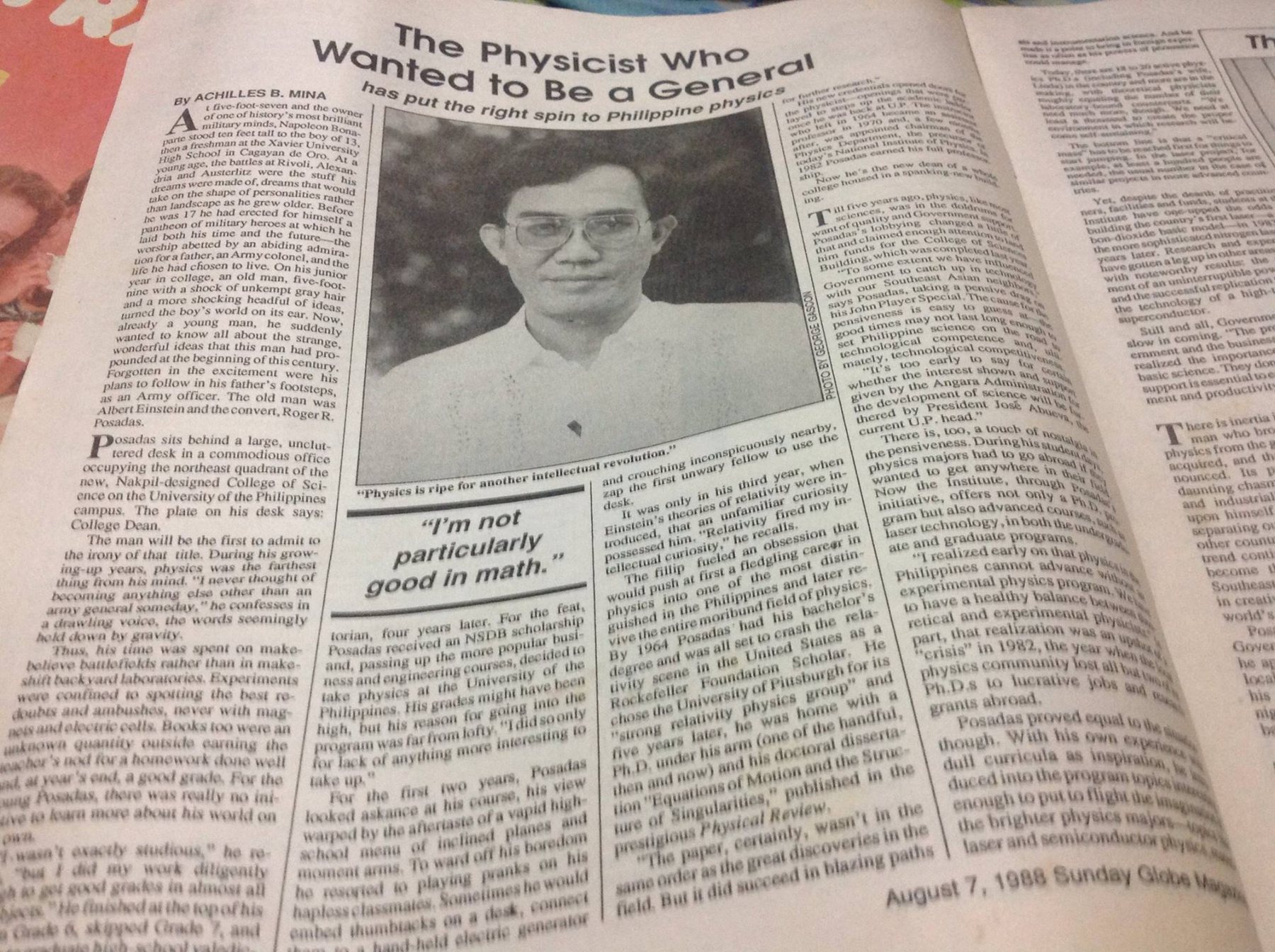
Sunday Globe Magazine, August 7, 1988: the physicist who meant to be a general. 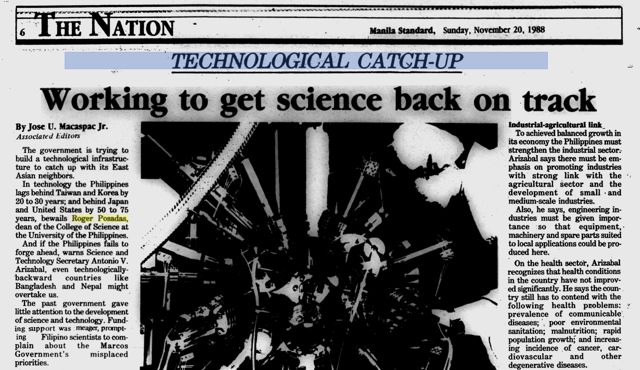
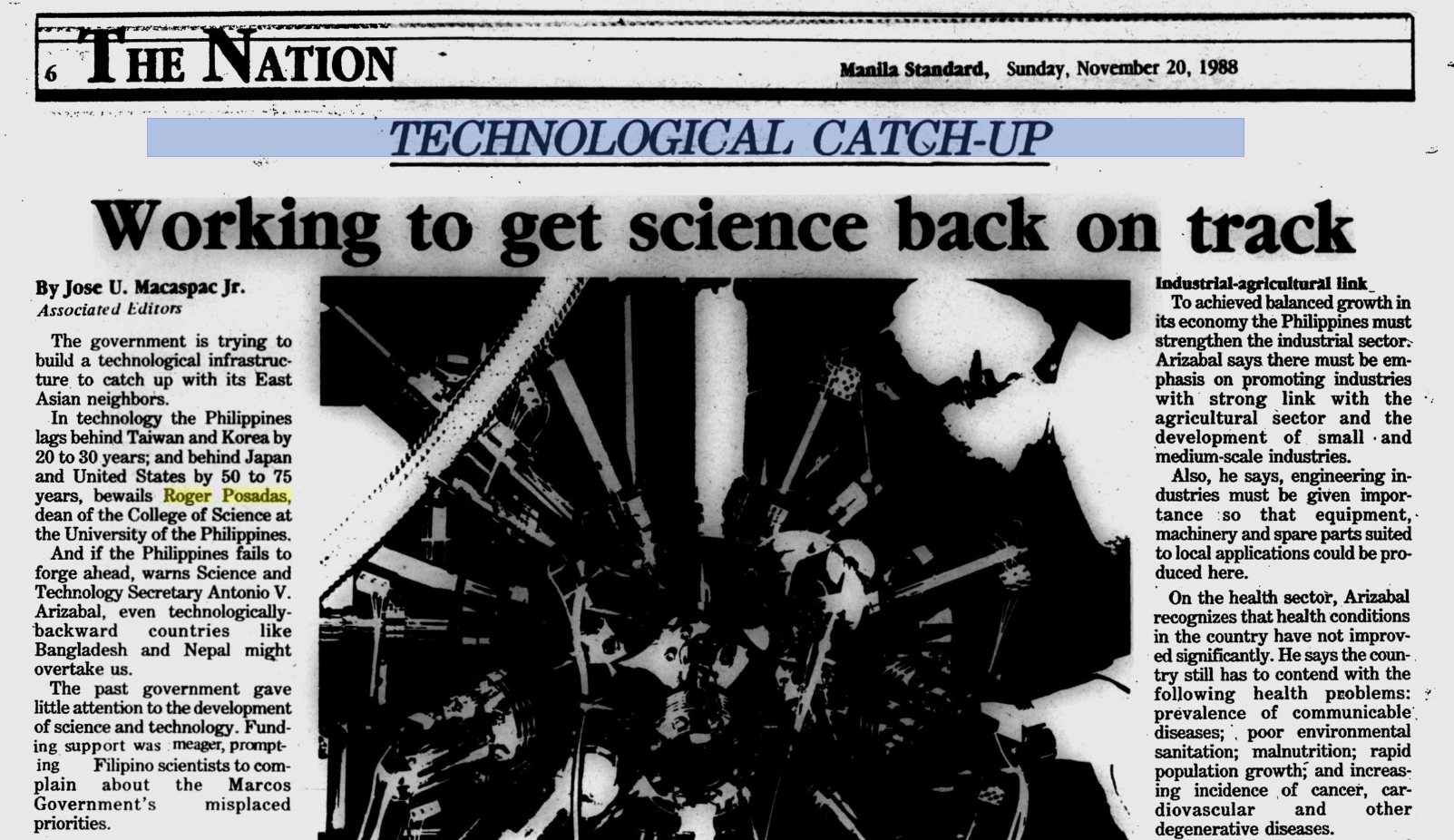
Manila Standard, November 20, 1988: as dean, on getting Philippine science back on track. 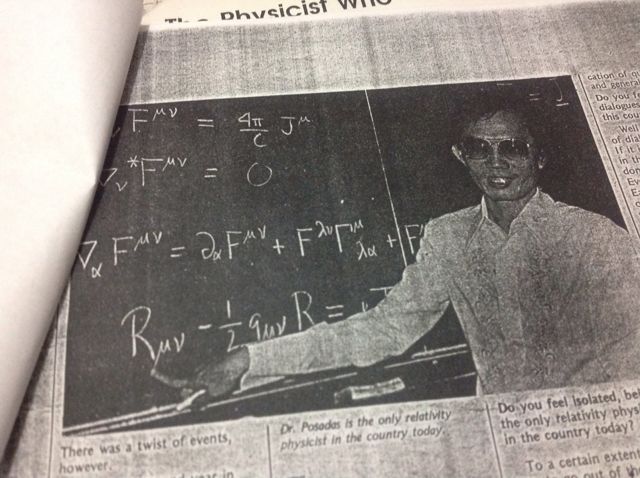
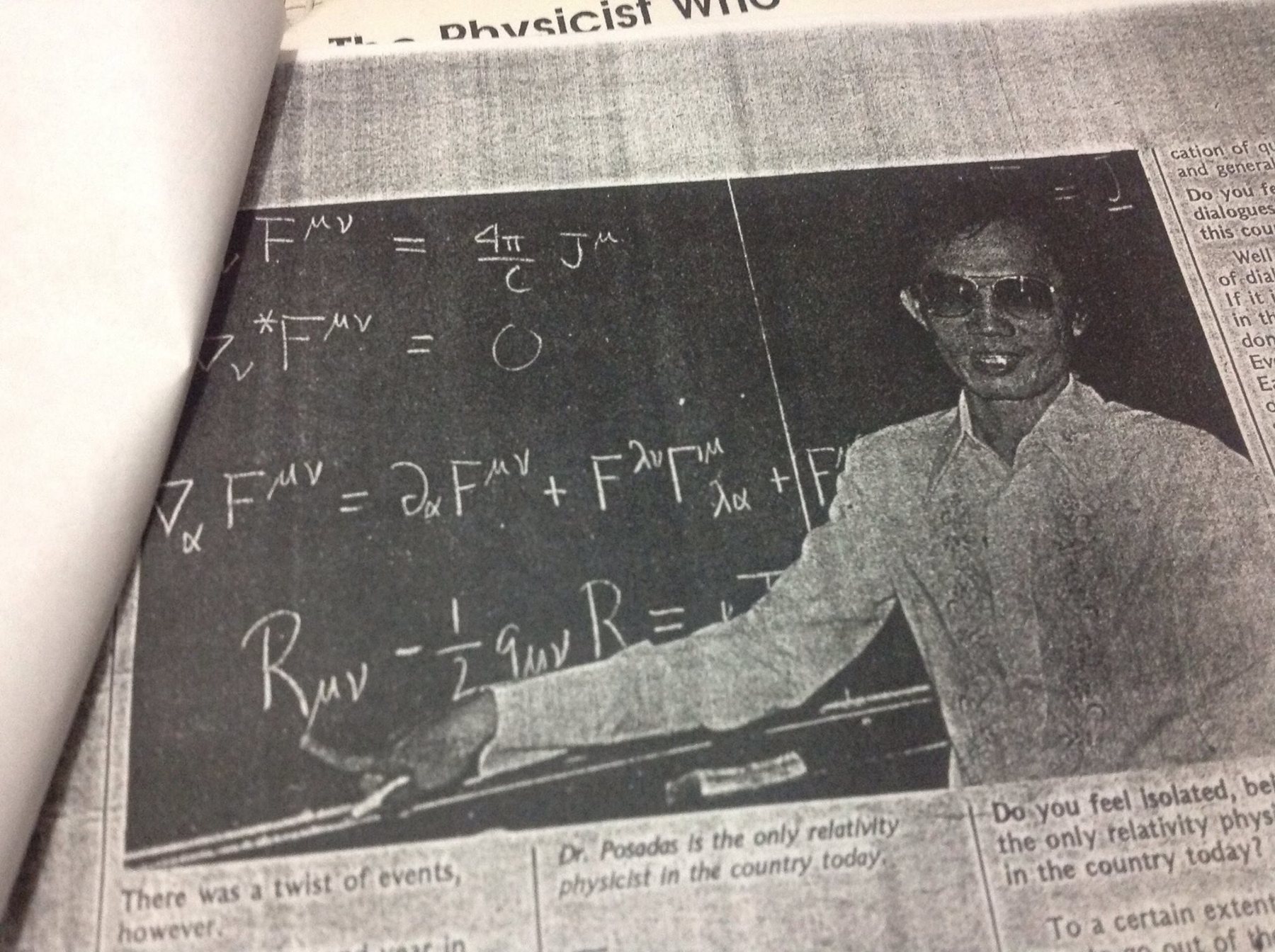
At the blackboard, with Maxwell's and Einstein's field equations. 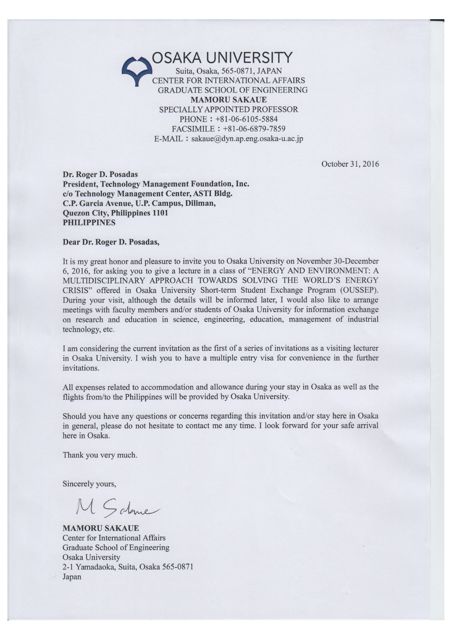
Osaka University's invitation, October 31, 2016: a week of lectures on energy and the environment, meant as the first of a series. He brought the whole family to Japan. 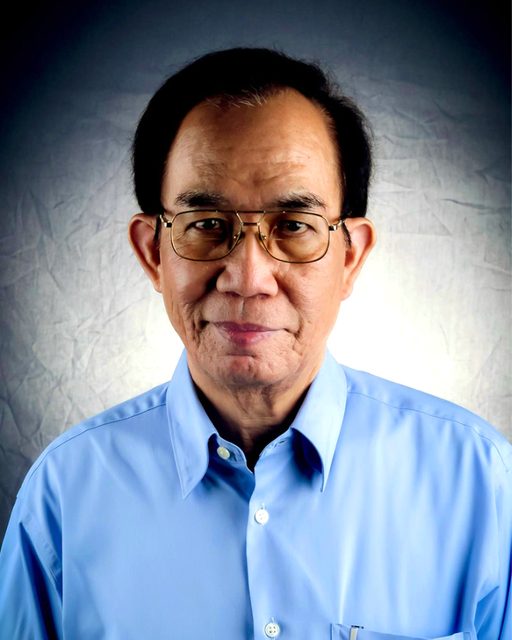
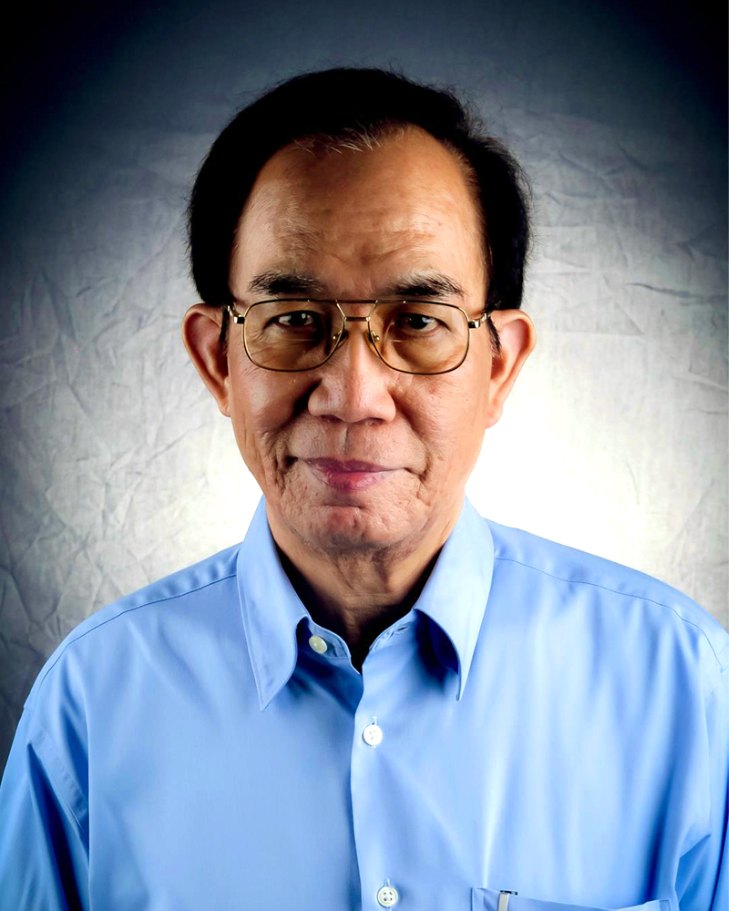
His portrait on UP Diliman's page of past chancellors. Photo: UP Diliman. 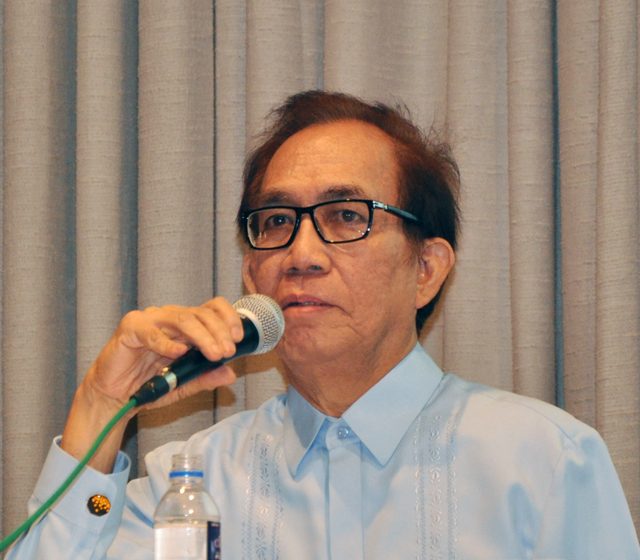
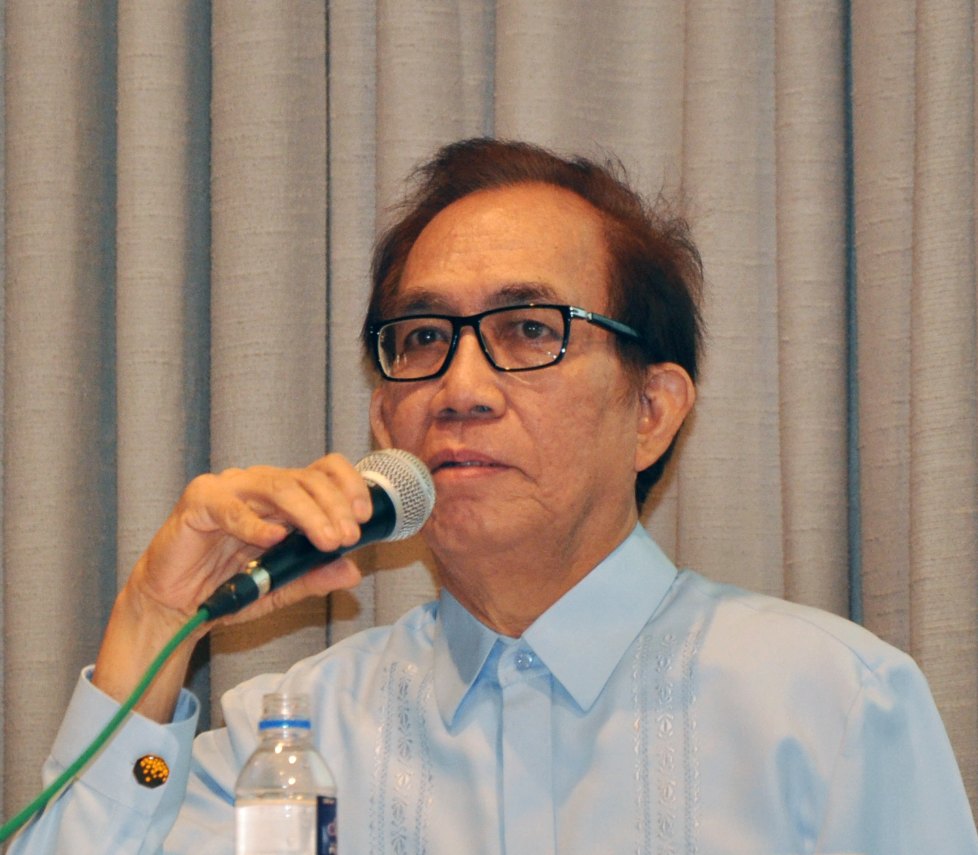
Speaking at a forum in his later years. Photo: UP Diliman, from its 2017 obituary.
Honors
From his curriculum vitae, last updated in August 2016.
| Year | Honor |
|---|---|
| 1960 | Valedictorian, Ateneo de Cagayan (now Xavier University) High School |
| 1960 | First National Science Development Board scholarship in physics for a high school graduate from Mindanao |
| 1965 | Rockefeller Foundation Fellowship for graduate study in the United States |
| 1981 | Achievement Award for Mathematical and Physical Sciences, National Research Council of the Philippines |
| 1984 | Outstanding Young Scientist in Physics, National Academy of Science and Technology |
| 1985 | Outstanding Administrator Award for 1984, University of the Philippines |
| 1988 | Professional Award for Physics, UP Alumni Association |
| 1993 | Presidential Award for Distinguished Service to UP as builder of the College of Science, from UP President  Political scientist and president of the University of the Philippines from 1987 to 1993. Learn more (opens in a new tab)Photo: Ramon F. Velasquez, 2013 (opens in a new tab) · CC BY-SA 3.0 (cropped) Political scientist and president of the University of the Philippines from 1987 to 1993. Learn more (opens in a new tab)Photo: Ramon F. Velasquez, 2013 (opens in a new tab) · CC BY-SA 3.0 (cropped) |
| 2008 | Lifetime Achievement Award, Ateneo de Cagayan (Xavier University) High School Alumni Association |
Public fights
He never stopped arguing in public. Four of those fights, as the newspapers covered them.
Clippings via the Google News Archive. Select a clipping to read it in full; the links open the whole page.
The deuterium hoax, 1988
Clippings from the Manila Standard, via the Google News Archive. Select one to read it full size.
In August 1987, The man behind the 1987 deuterium claim. He presented himself as a scientific investigator but was an accountant; he later tried to run for president and senator and was declared a nuisance candidate. Learn more (opens in a new tab), who called himself a scientific investigator-researcher (he turned out to be an accountant), announced that the The Philippine Trench, an ocean trench east of Mindanao that reaches about 10,500 meters at its deepest point, one of the deepest places on Earth. Learn more (opens in a new tab), the ocean trench off Surigao, held the world's largest deposit of Heavy hydrogen: hydrogen with an extra neutron. About one hydrogen atom in 6,400 in seawater is deuterium, spread almost evenly through the oceans. It is used to make heavy water for some nuclear reactors. Learn more (opens in a new tab). Extracted and sold, he said, it would pay off the country's foreign debt, employ 350,000 Filipinos and make the Philippines one of the richest countries in the world. Congressmen took him seriously. Rep. Congressman for the 1st District of Surigao del Sur from 1987 to 1998. In August 1987 he filed a House resolution calling for studies of the claimed deuterium deposits. Learn more (opens in a new tab) of Surigao del Sur filed a House resolution on it, and Rep. 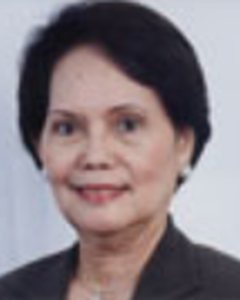 Congresswoman for the 1st District of Surigao del Norte, which then included Dinagat, and later governor of the Dinagat Islands. She was the wife of Ruben Ecleo Sr., founder of a religious group based on Dinagat. Learn more (opens in a new tab)Photo: House of Representatives of the Philippines, 2004 (opens in a new tab) · Public domain (cropped) filed a bill to create a Philippine Deuterium Development Authority.
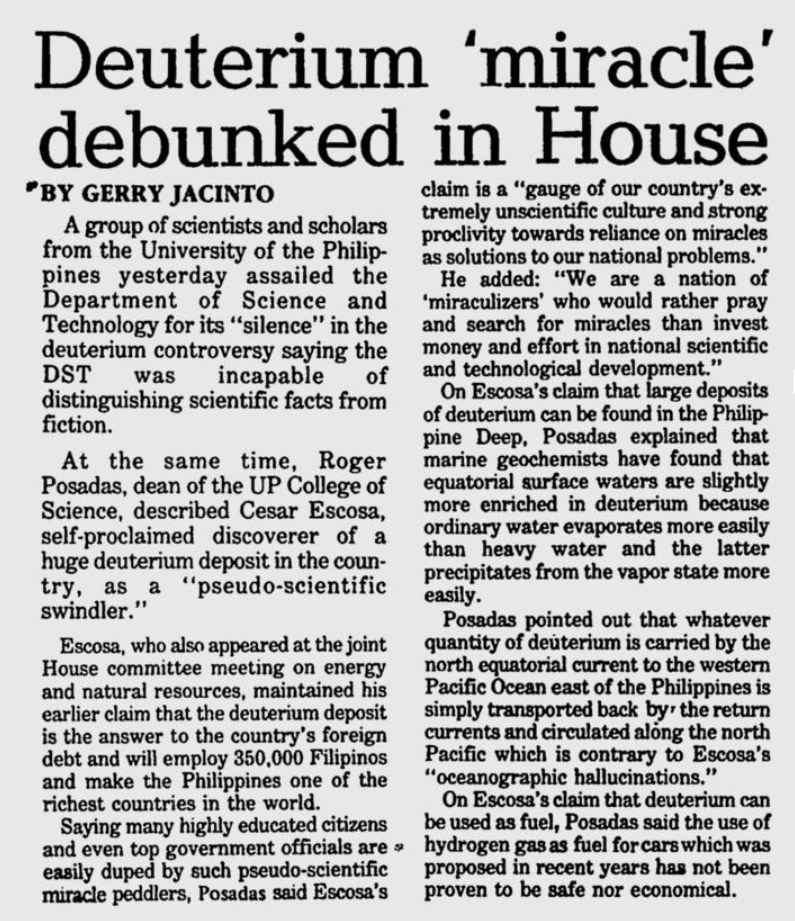
No such deposit exists. Deuterium is found in all water, spread almost evenly through the oceans, and it cannot pool at the bottom of a trench. When the House committees on energy and natural resources took up the claim in a joint hearing in March 1988, with Escosa there to defend it, a group of UP scientists came to debunk it. Roger, then dean of the UP College of Science, did not soften his words. He called Escosa a “pseudo-scientific swindler.”
He explained the science, too. Marine geochemists had found that surface water near the equator is, if anything, slightly richer in deuterium, because ordinary water evaporates more easily than heavy water. Whatever deuterium the North Equatorial Current carries to the Pacific east of the Philippines, the return currents simply carry back. Escosa's deposit, he said, was an “oceanographic hallucination,” and deuterium as a fuel for cars had not been shown to be safe or economical. The UP group also faulted the The Philippine government's science department, created in 1987 from the National Science and Technology Authority. Learn more (opens in a new tab) for staying silent, as if it could not tell scientific fact from fiction.
For Roger, the bigger problem was not one man. Highly educated citizens and even top government officials, he said, were easily duped by “pseudo-scientific miracle peddlers,” and the affair was
a gauge of our country's extremely unscientific culture and strong proclivity towards reliance on miracles as solutions to our national problems. … We are a nation of “miraculizers” who would rather pray and search for miracles than invest money and effort in national scientific and technological development.
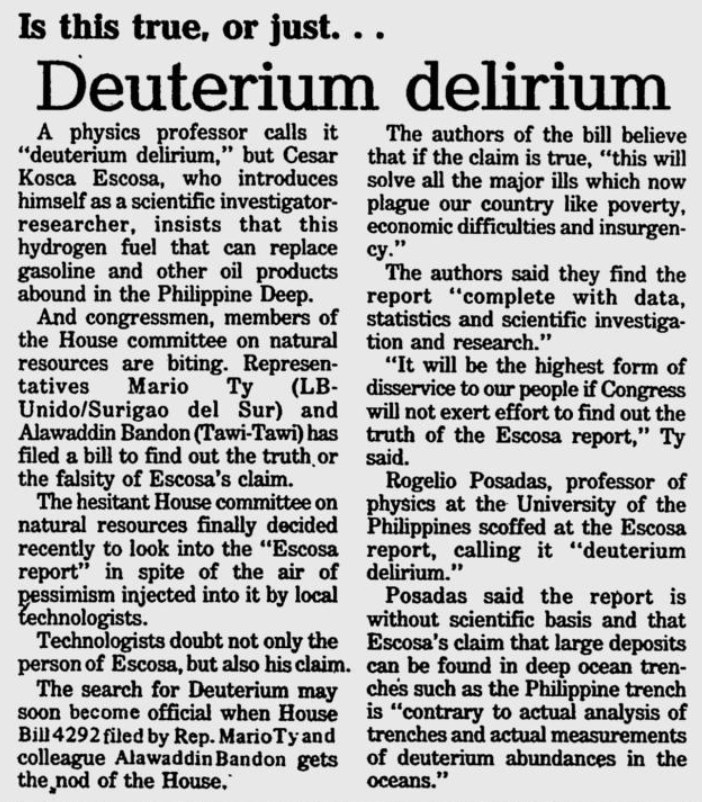
The House did not let go. Four days later the paper reported that Ty and Rep. Congressman for Tawi-Tawi from 1987 until December 1990, when he lost an election protest. His name is also spelled Alawadin. Learn more (opens in a new tab) of Tawi-Tawi had filed House Bill 4292 to find out “the truth or the falsity” of Escosa's report, with Ty warning that it would be “the highest form of disservice to our people” if Congress did not. Roger called it “deuterium delirium”: the report had no scientific basis, and the claim was “contrary to actual analysis of trenches and actual measurements of deuterium abundances in the oceans.” Later that year the government's own The government's energy office from 1986 to 1992, between the Marcos-era Ministry of Energy and today's Department of Energy. Learn more (opens in a new tab) agreed that “scientific facts make it impossible for deuterium deposits to be lodged in the Philippine Deep.” Ty's resolution and Ecleo's bill died in committee.
The myth outlived the hearing. In 1989 another congressman accused Escosa of charging some 10,000 applicants fees for forms and notarization. 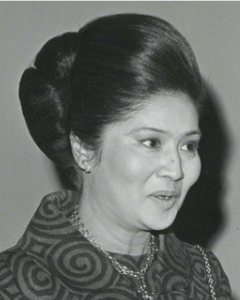 Wife of the dictator Ferdinand Marcos and First Lady from 1965 to 1986, later a congresswoman. She promoted the deuterium claim from the late 1990s. Learn more (opens in a new tab)Photo: Carl Albert Research and Studies Center, 1973 (opens in a new tab) · CC BY-SA 4.0 (cropped) took up the cause in the late 1990s, and the story still circulates online, where fact-checkers have had to debunk it again.
Physics in Filipino, 1988
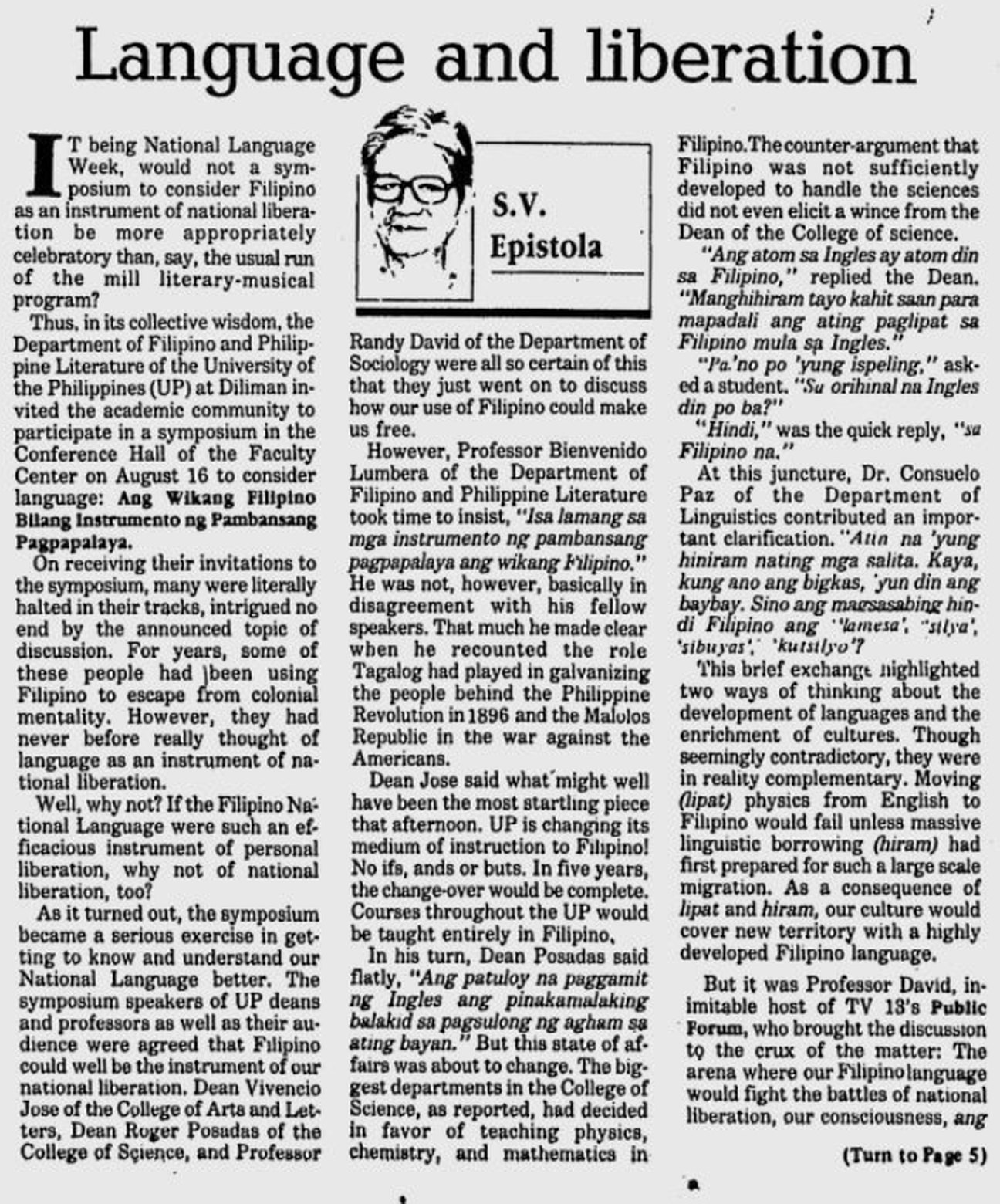
During The national language's annual celebration each August. Since 1997 it has run all month as Buwan ng Wika. Learn more (opens in a new tab) in August 1988, UP's Department of Filipino and Philippine Literature held a symposium on Filipino as an instrument of national liberation, Ang Wikang Filipino Bilang Instrumento ng Pambansang Pagpapalaya. In the Manila Standard a week later, the writer Filipino fiction writer and essayist who taught English, Asian studies and philosophy at the University of the Philippines. Learn more (opens in a new tab) reported that Roger, as dean of the College of Science, “said flatly”:
Ang patuloy na paggamit ng Ingles ang pinakamalaking balakid sa pagsulong ng agham sa ating bayan.
That is: the continued use of English is the biggest obstacle to the advance of science in our country. The college's biggest departments had already decided in favor of teaching physics, chemistry and mathematics in Filipino. To the old objection that Filipino could not handle the sciences, his answer was practical: “Ang atom sa Ingles ay atom din sa Filipino,” an atom in English is an atom in Filipino too, and “manghihiram tayo kahit saan”: we will borrow from anywhere to make the shift easier.
Leapfrogging, 1989
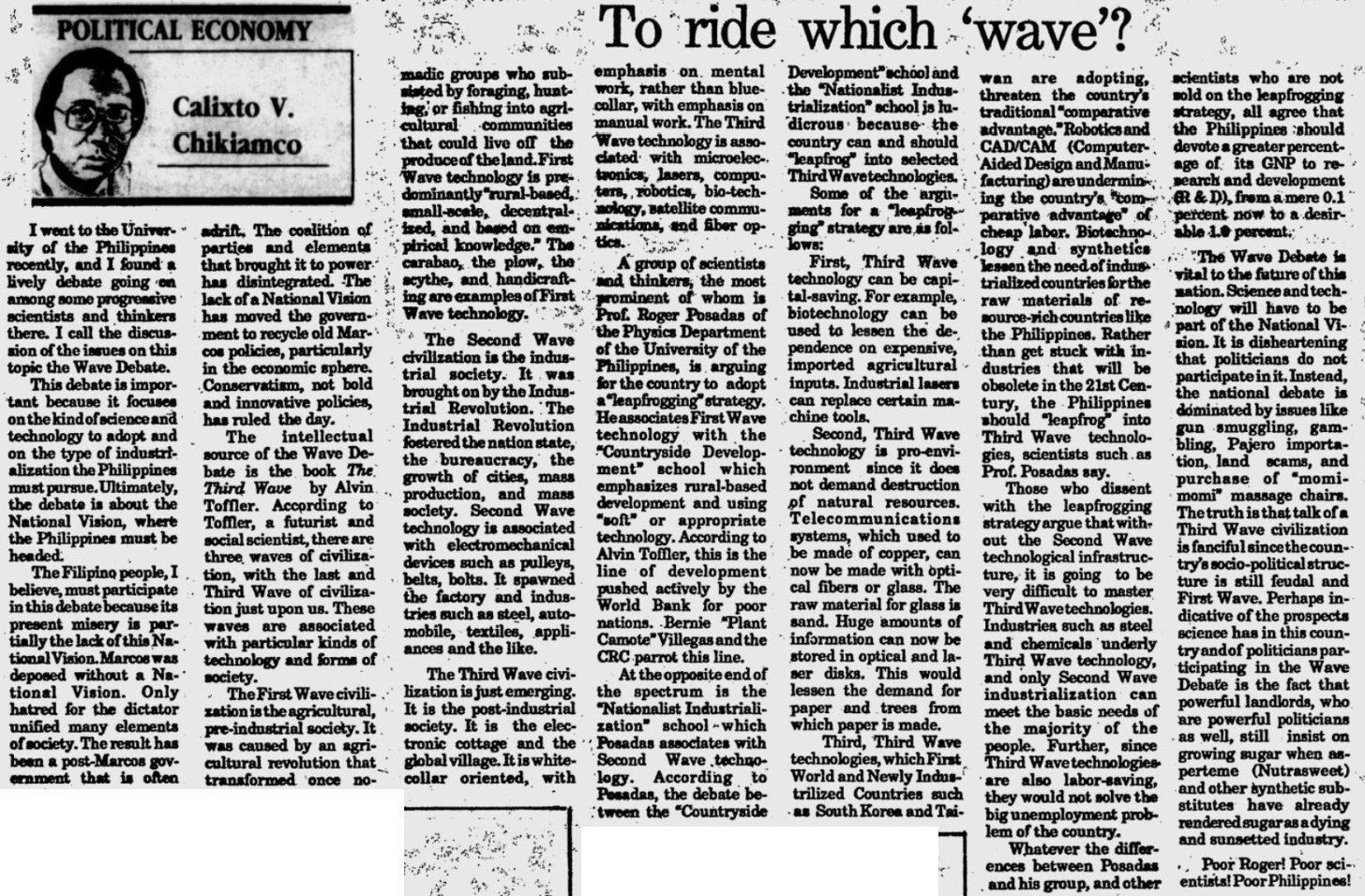
On September 17, 1989, Filipino economist, columnist and businessman, later president of the Foundation for Economic Freedom. In 1988–89 he was the Manila Standard's general manager. Learn more (opens in a new tab), the Manila Standard's general manager, gave his “Political Economy” column, “To ride which ‘wave’?,” to what he called the Wave Debate among UP's scientists. Borrowing 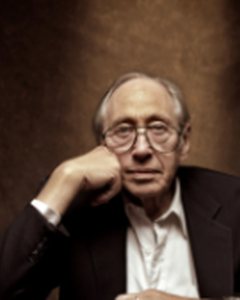 American futurist. His 1980 book The Third Wave described a new information-based civilization following the agricultural and industrial ages. Learn more (opens in a new tab)Photo: Vern Evans, 2006 (opens in a new tab) · CC BY-SA 2.0 (cropped)'s three waves of civilization (agricultural, industrial and post-industrial), he named Roger the most prominent of a group arguing that the Philippines should “leapfrog” into selected Third Wave technologies such as biotechnology, industrial lasers and fiber optics. To Roger, the old quarrel between developing the countryside and building heavy industry was “ludicrous” for that reason.
Chikiamco laid out the case: Third Wave technologies saved capital, did not demand the destruction of natural resources, and were already eroding the cheap-labor advantage that countries like the Philippines relied on. He gave the skeptics' side too: without Second Wave industries such as steel and chemicals, mastering the Third would be very hard. Both camps agreed the country had to raise research spending from 0.1 percent of GNP to 1 percent. What he could not forgive was that politicians ignored the debate for gun smuggling, gambling and land scams. He signed off:
Poor Roger! Poor scientists! Poor Philippines!
The same year, Roger and Celso Roque set out the strategy in “Toward a leapfrogging strategy for national self-reliance in science and technology.”
Between the NBI and his students, 1994–95
As chancellor he twice stood between the National Bureau of Investigation and his students. In December 1994, four days after a UP student was killed in a fraternity rumble, NBI agents led by Orlando Dizon, chief of the bureau's Special Operations Group, came to the campus to arrest two students without a warrant. Roger, Vice-Chancellor Rosario Torres-Yu and university lawyer Marichu Lambino stopped them. The The independent office that investigates and prosecutes Philippine government officials for wrongdoing. Learn more (opens in a new tab) then charged the three with obstruction of justice. In 2000 the Supreme Court ruled that the attempted arrest was illegal, that the officials “had a right to prevent the arrest,” and ordered the case against them dismissed.
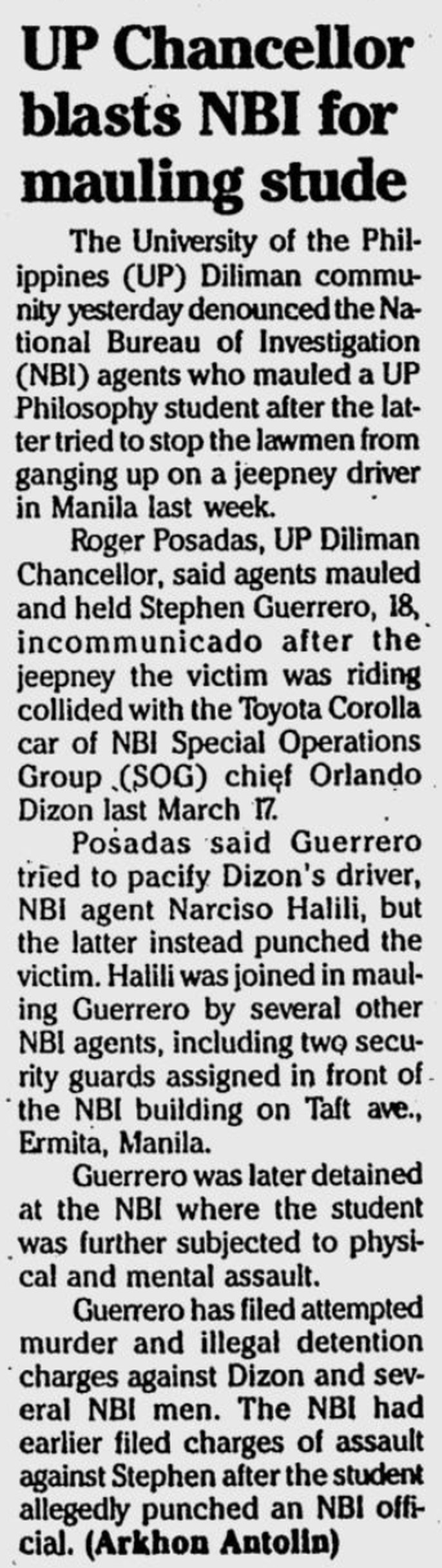
Three months after the rumble, the NBI was back in the news. On March 30, 1995, the Manila Standard reported that Roger had publicly denounced NBI agents who mauled an 18-year-old UP philosophy student and held him incommunicado. The student's jeepney had collided with the car of the same Orlando Dizon on March 17; when he tried to calm Dizon's driver, the driver punched him, other agents joined in, and he was taken to NBI headquarters on Taft Avenue, where, Roger said, he “was further subjected to physical and mental assault.” The student filed charges of attempted murder and illegal detention; the NBI had filed assault charges against him.
The chancellor's book
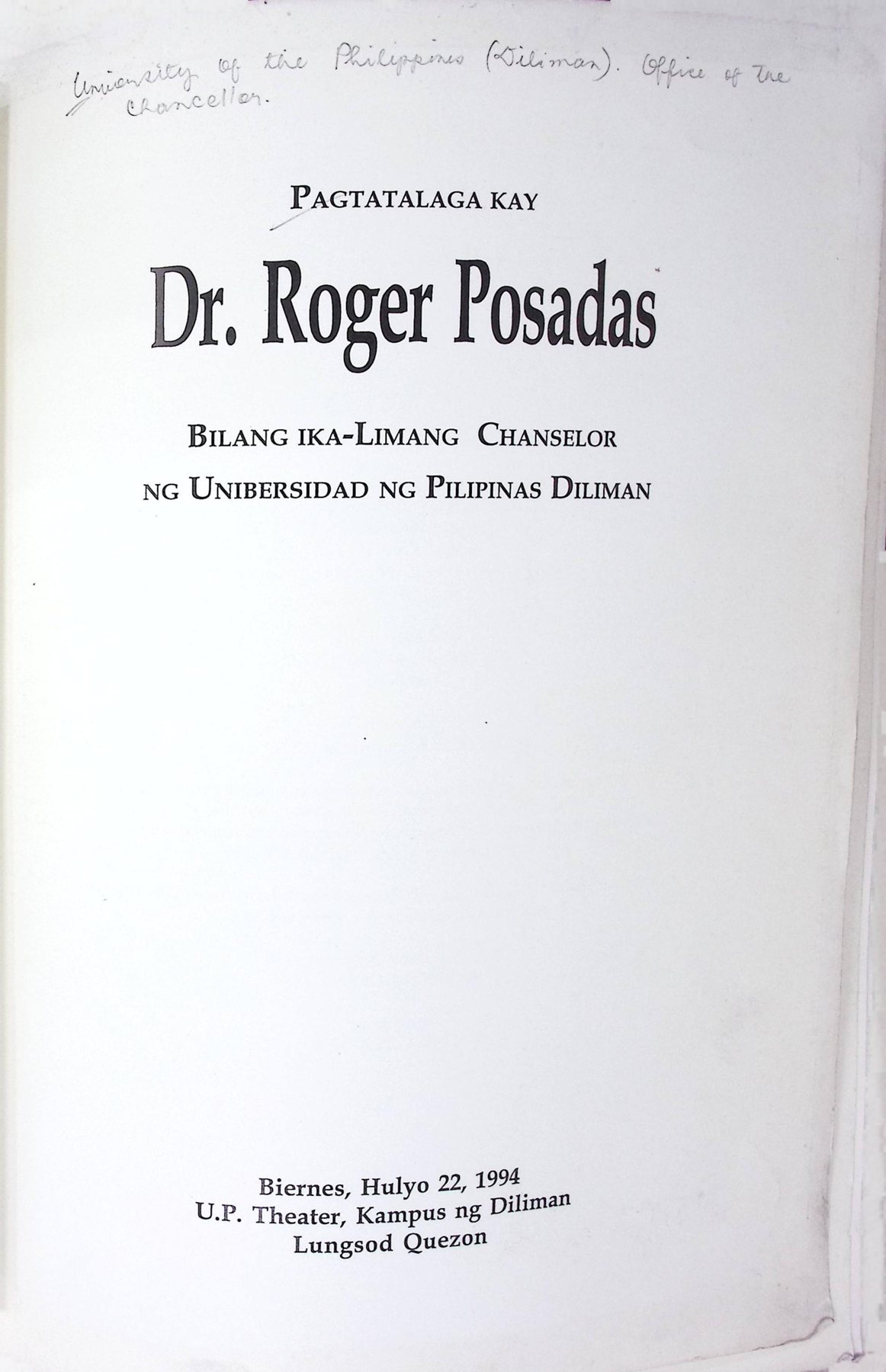
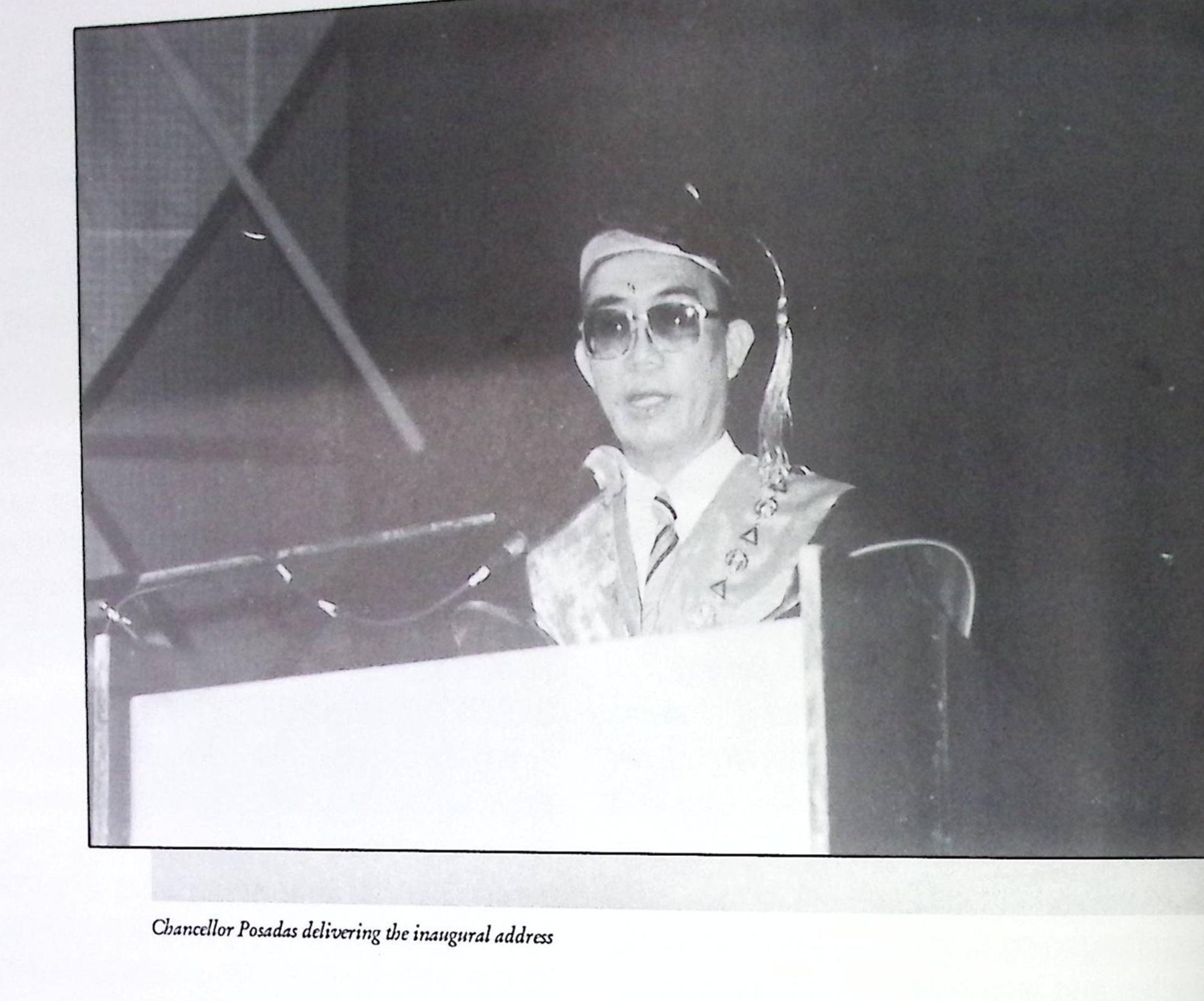
On Friday, July 22, 1994, at the UP Theater, UP President 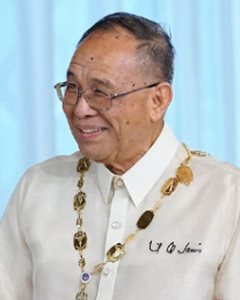 Plant geneticist and president of the University of the Philippines from 1993 to 1999. He was named a National Scientist in 2019. Learn more (opens in a new tab)Photo: King Rodriguez, PCOO, 2018 (opens in a new tab) · Public domain (cropped) invested Roger as the fifth Chancellor of UP Diliman. For the occasion the Office of the Chancellor published a commemorative book of more than a hundred pages, Pagtatalaga kay Dr. Roger Posadas bilang Ika-limang Chanselor ng Unibersidad ng Pilipinas Diliman (“The Investiture of Dr. Roger Posadas as the Fifth Chancellor of the University of the Philippines Diliman”), produced by the UP Diliman Information Office. It holds a biography in Filipino by Dean Filipino fiction writer and playwright, author of the story “Impeng Negro” and the play “Moses, Moses”, and a dean of the UP College of Arts and Letters. Learn more (opens in a new tab), the full program of the ceremony, his inaugural address in English and Filipino, messages from every sector of the university, essays about him, and greetings from universities, government offices and international agencies around the world. It is the source for much of the timeline above, including the date of his release.
The ceremony itself ran in Filipino: honors from the UP ROTC unit and band, the entrance of the flags, the national anthem, a welcome dance by the UP Filipiniana Dance Group, messages from five representatives of the university, a song by the UP Staff Chorale, the investiture, his address, and The University of the Philippines hymn, composed by Nicanor Abelardo. Learn more (opens in a new tab), the university hymn.
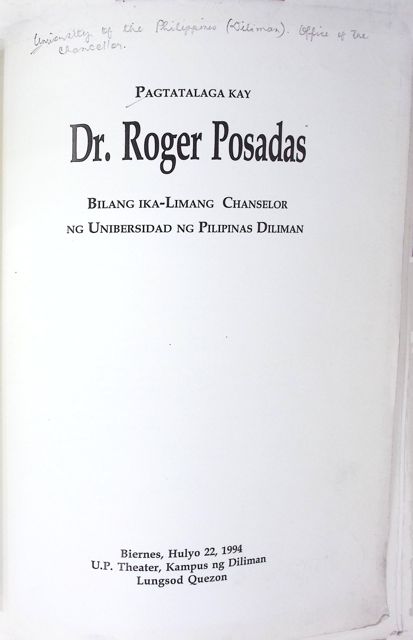
The book's title page. 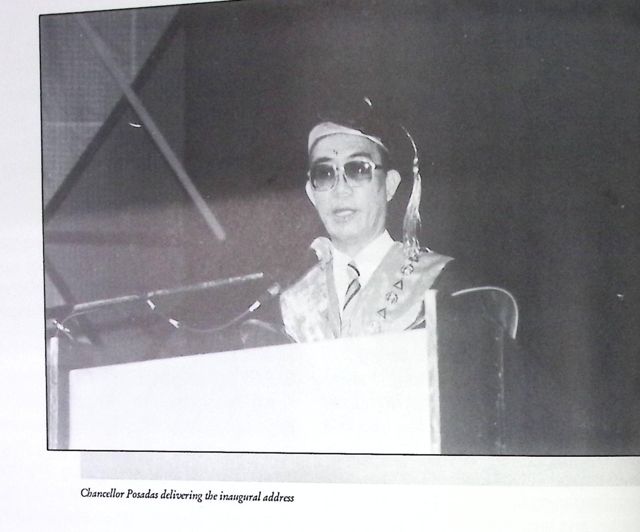
Delivering the inaugural address, July 22, 1994. 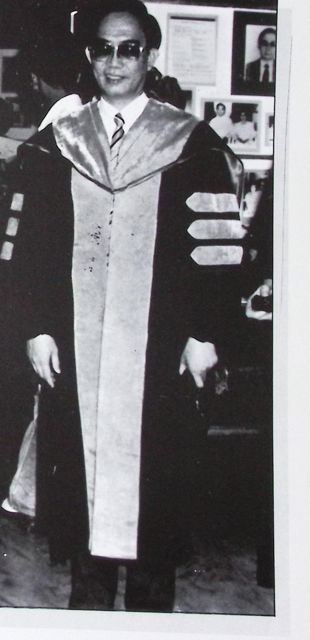
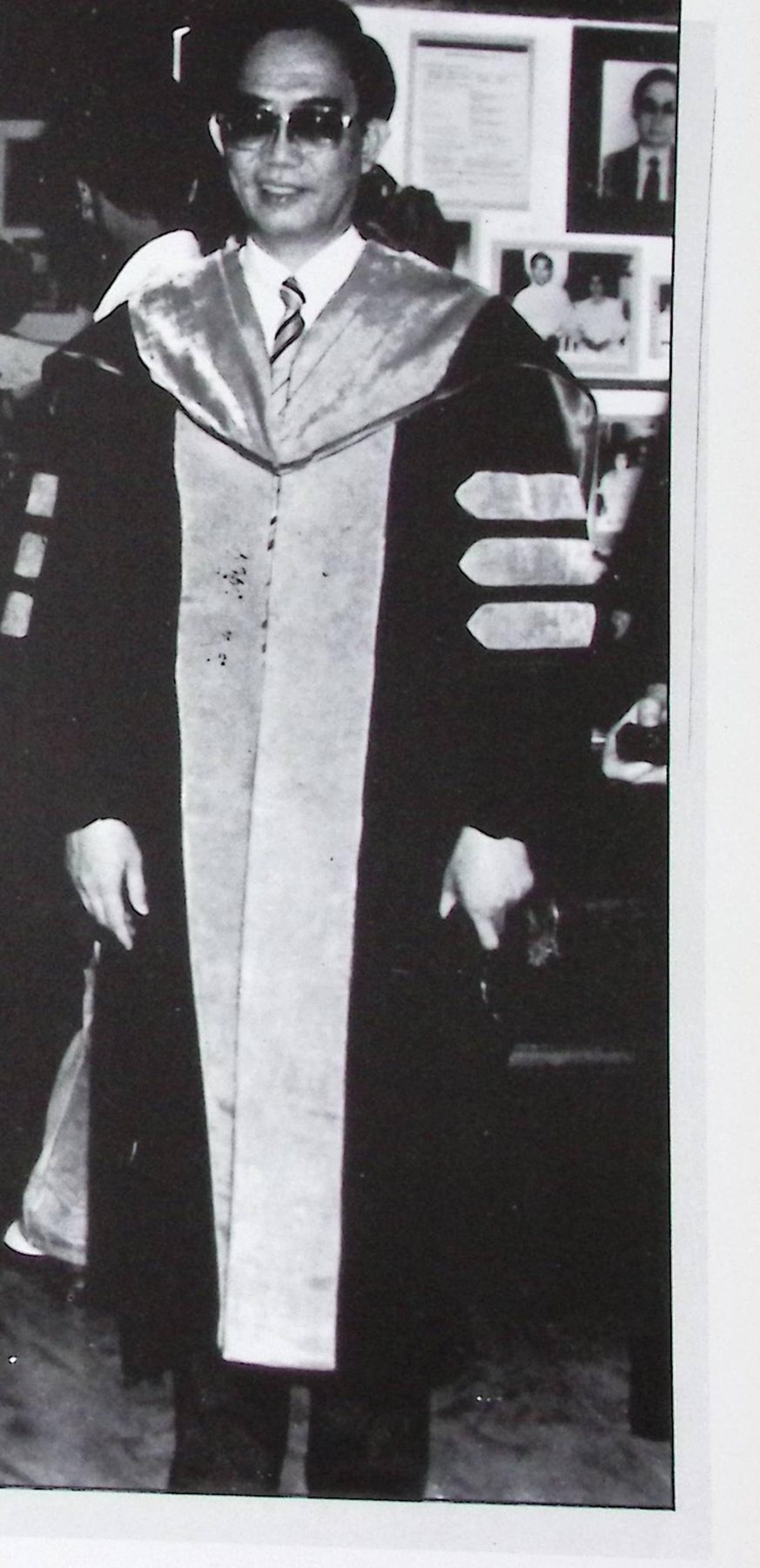
In his chancellor's robes. 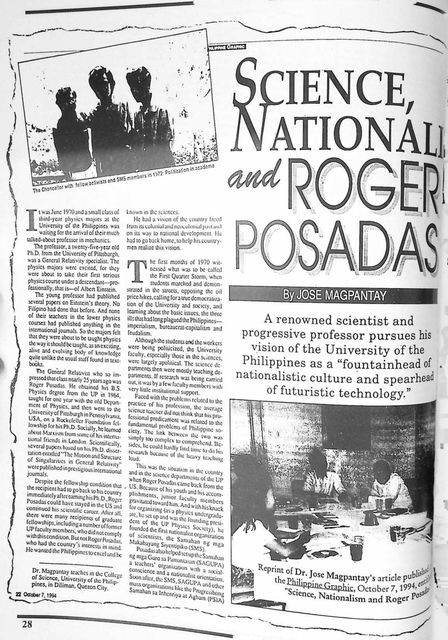
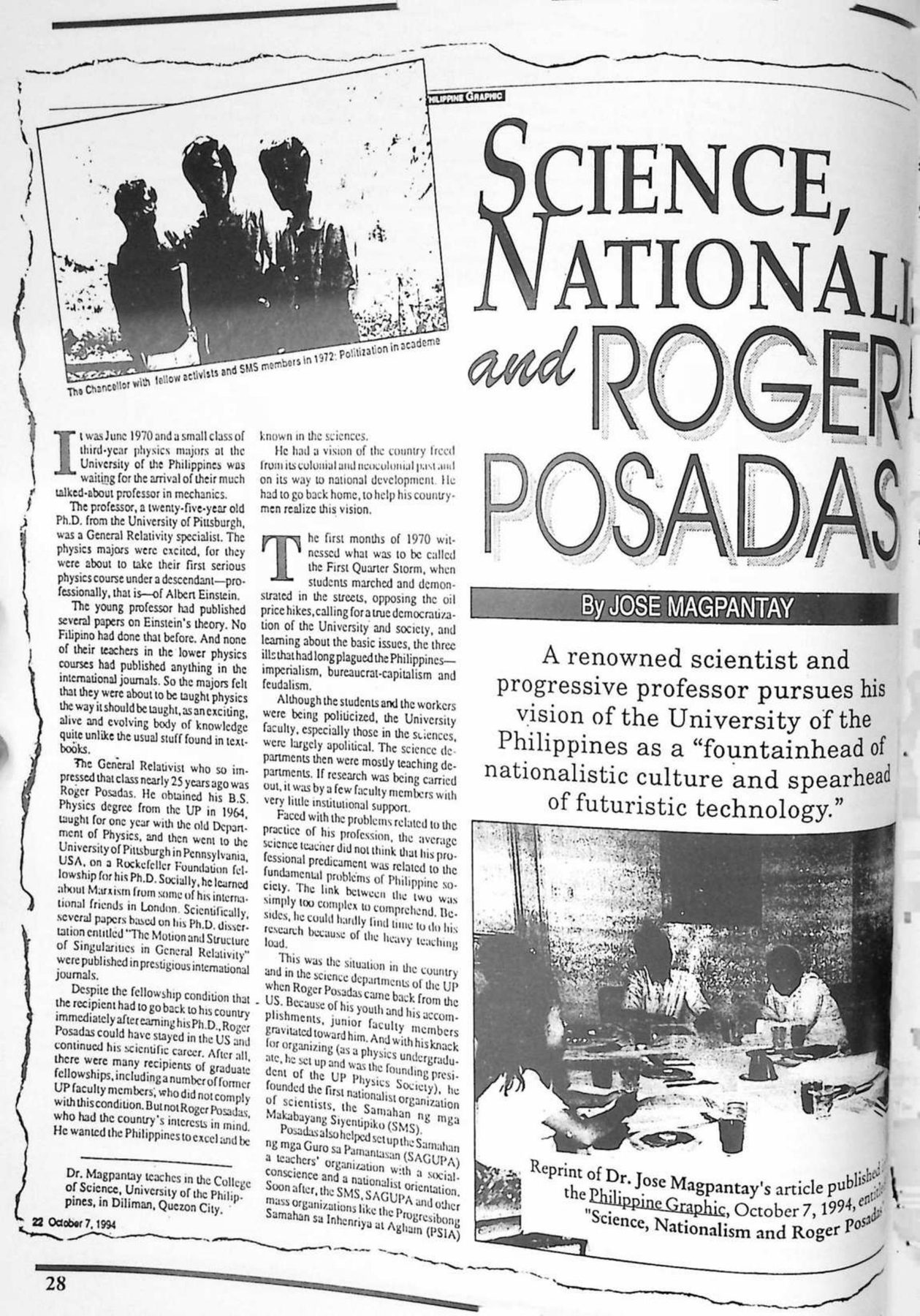
Jose Magpantay, “Science, Nationalism and Roger Posadas,” Philippine Graphic, October 7, 1994. The photo shows him with fellow activists and SMS members in 1972. 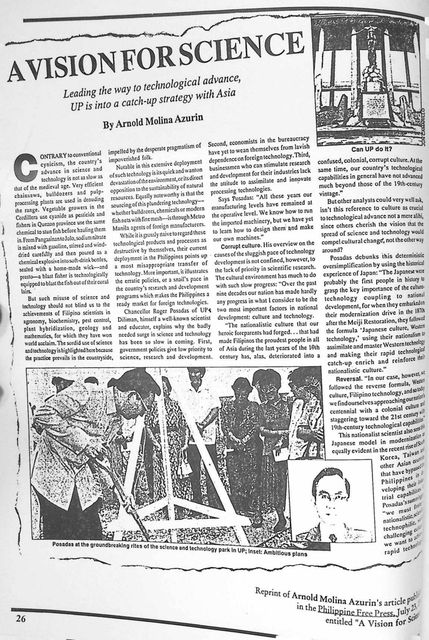
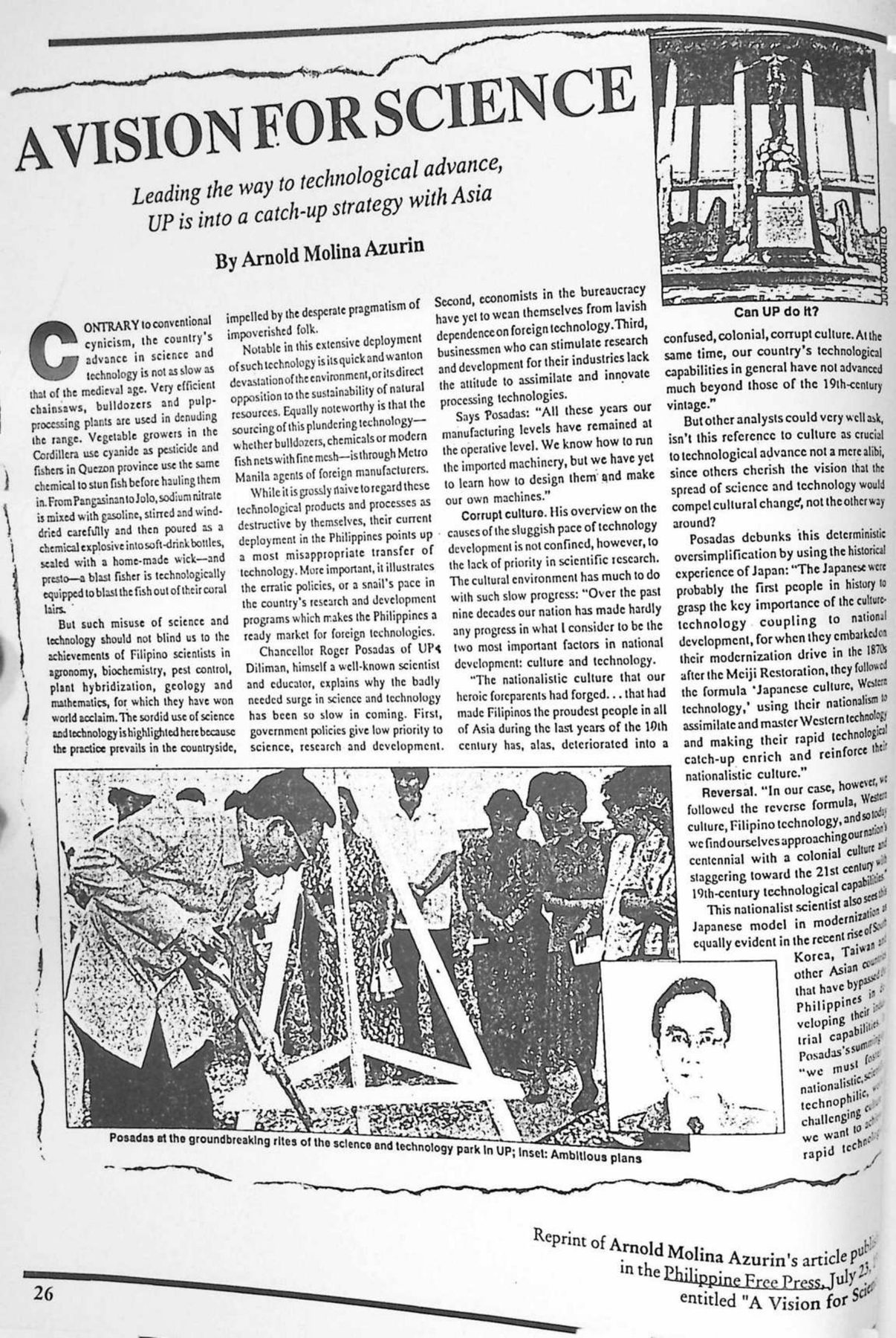
Arnold Molina Azurin, “A Vision for Science,” Philippine Free Press, 1994: Roger at the groundbreaking of UP's science and technology park. 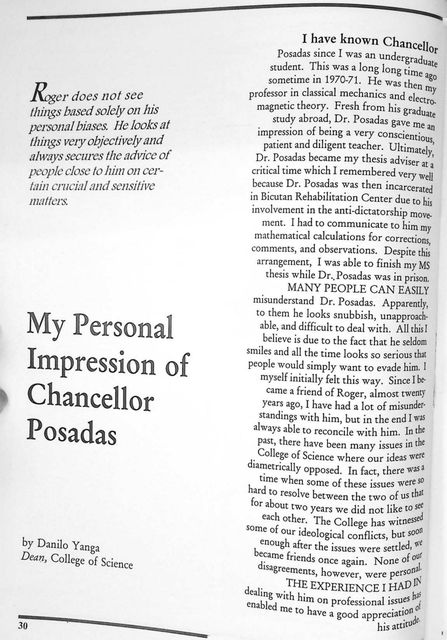
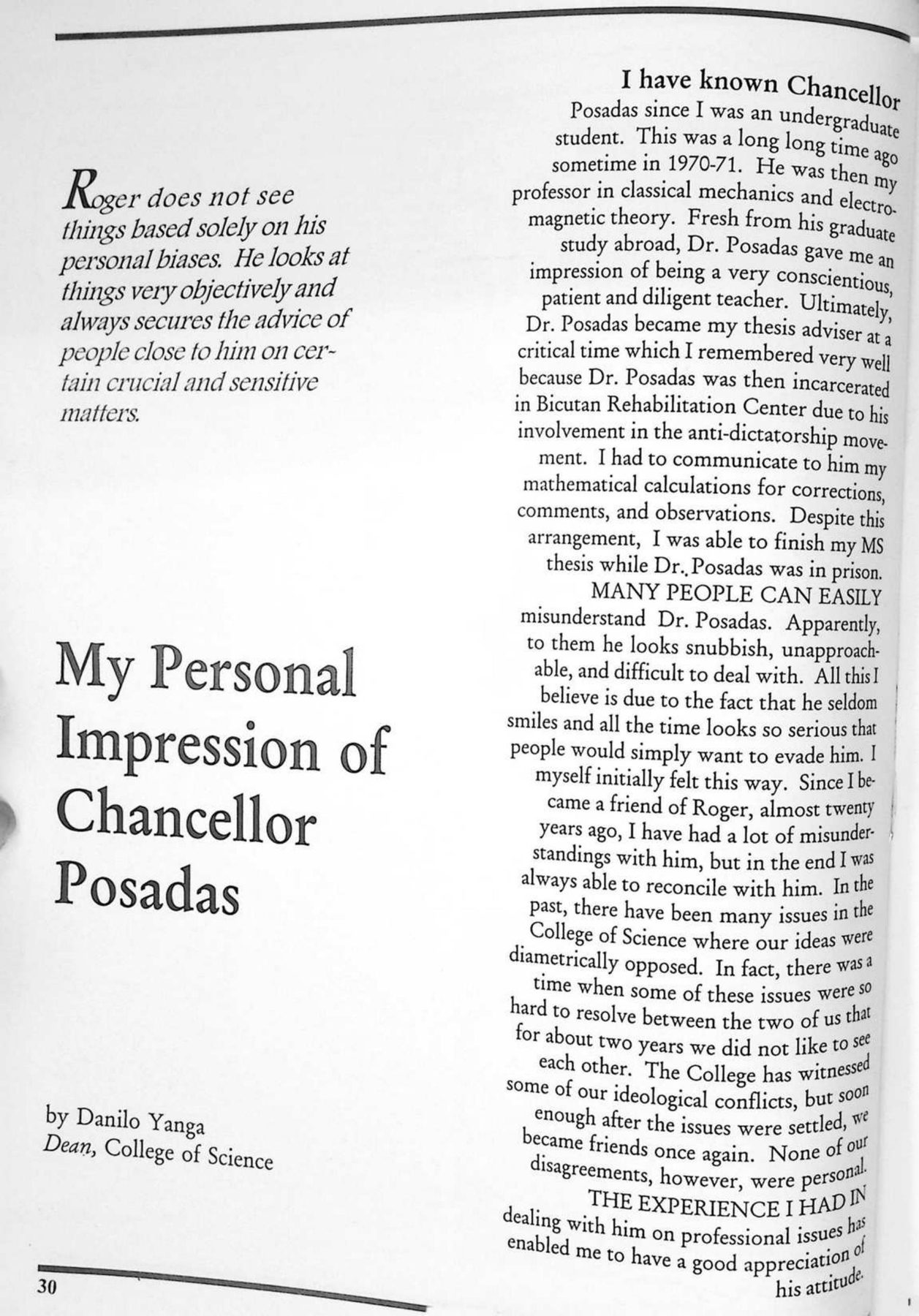
Danilo Yanga, his former student and successor as dean: “Roger does not see things based solely on his personal biases.” 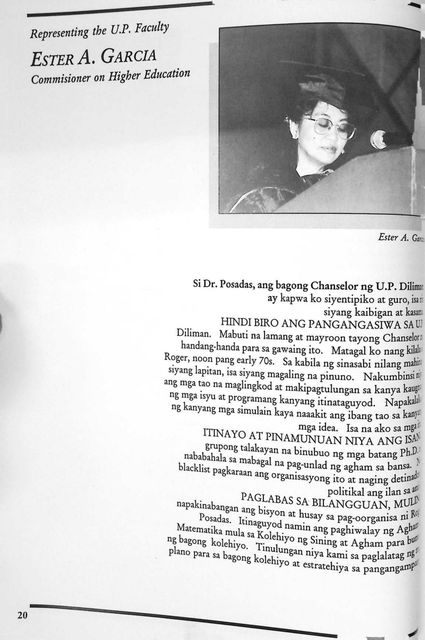
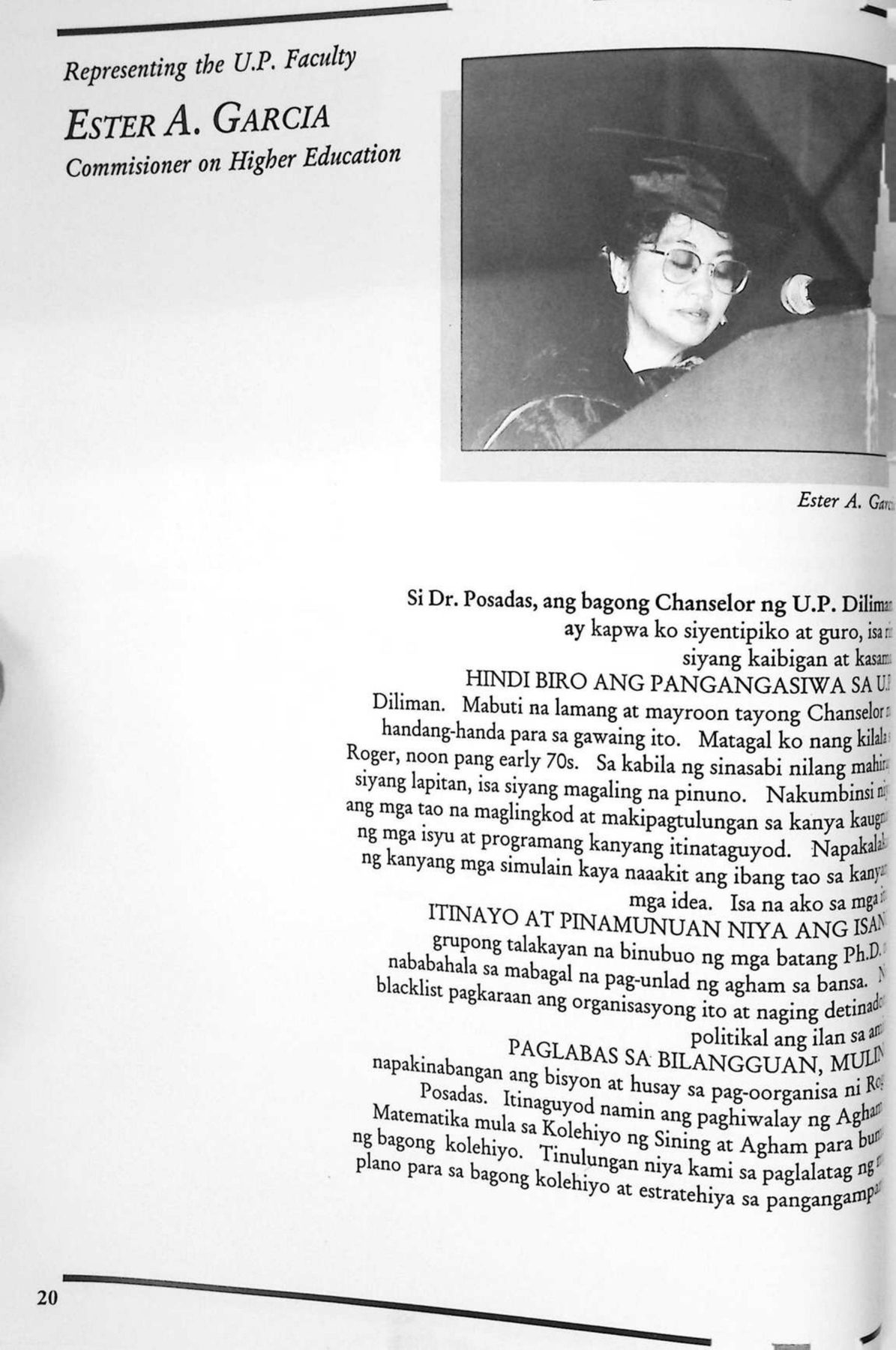
Ester Garcia's message for the faculty, in Filipino. She had known him since the early 1970s. 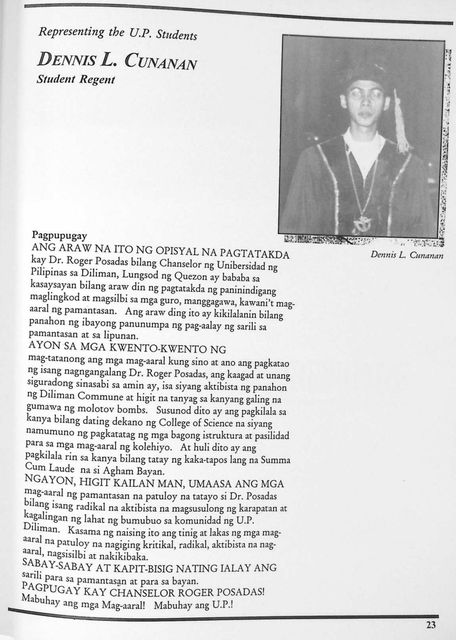
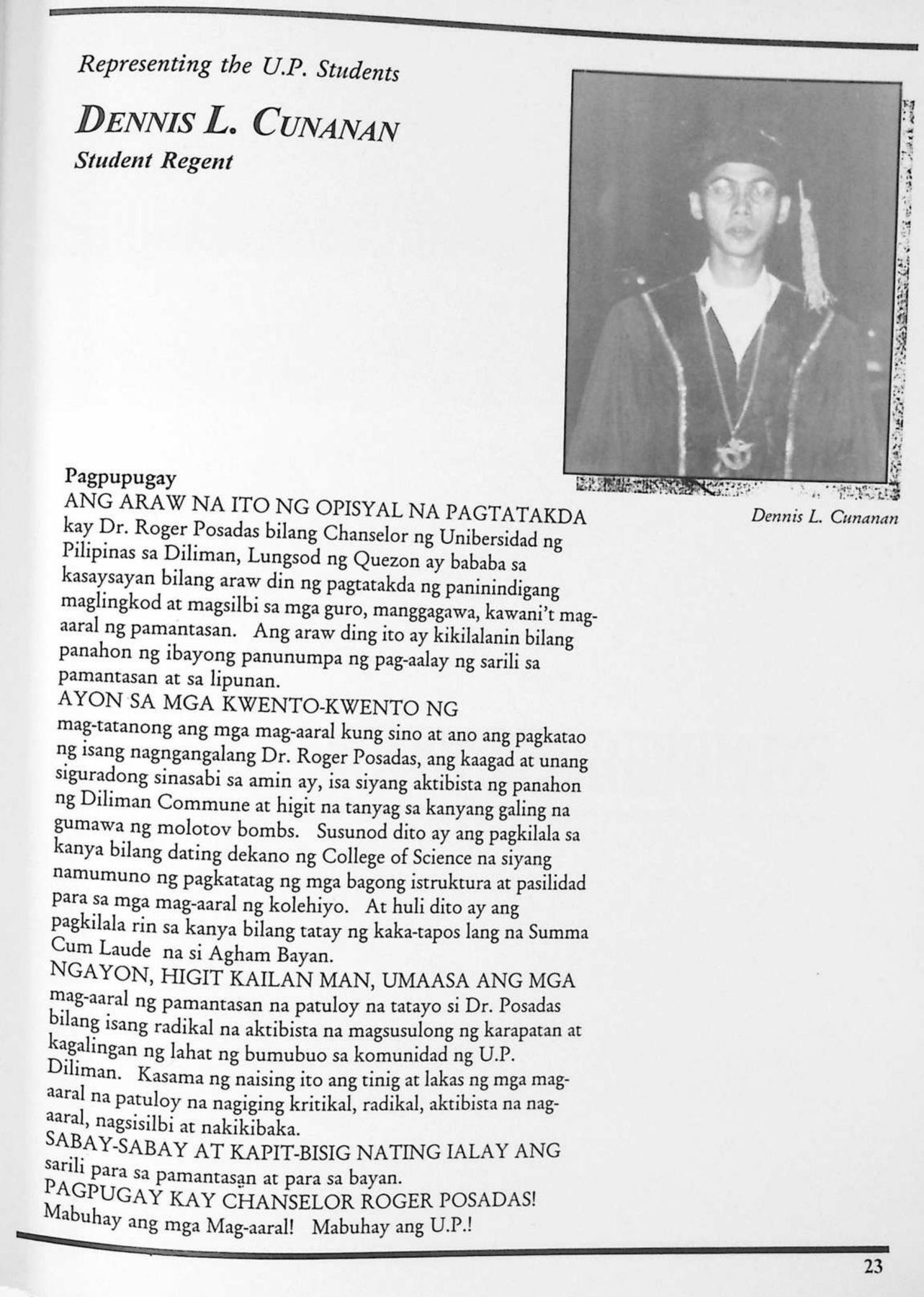
Student regent Dennis Cunanan's message, in Filipino: students first knew Roger from stories of the Diliman Commune and his molotov bombs. 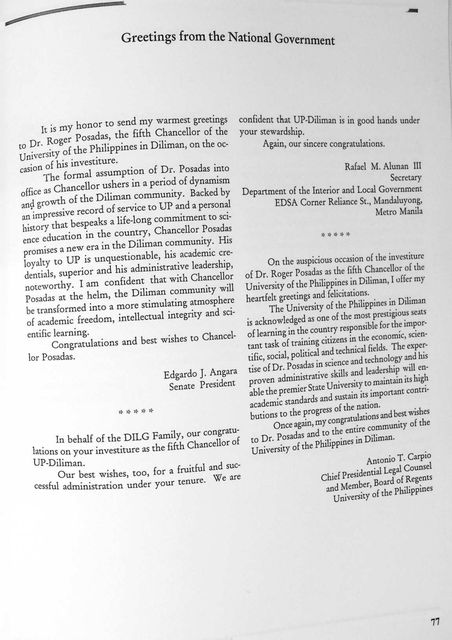
Greetings from Senate President Edgardo Angara, Interior Secretary Rafael Alunan III, and Antonio Carpio, then chief presidential legal counsel and a UP regent, later a Supreme Court justice. 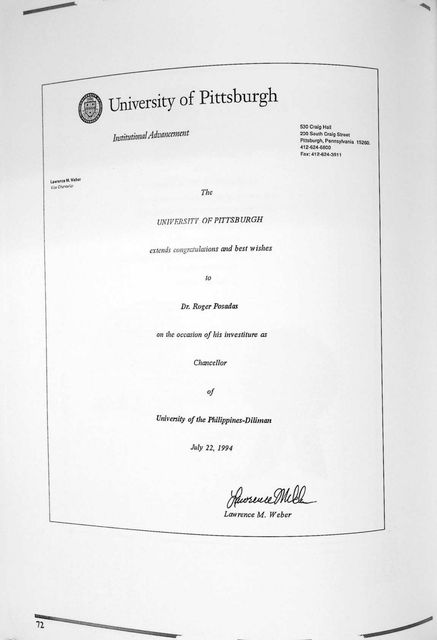
From the University of Pittsburgh, where he earned his Ph.D. 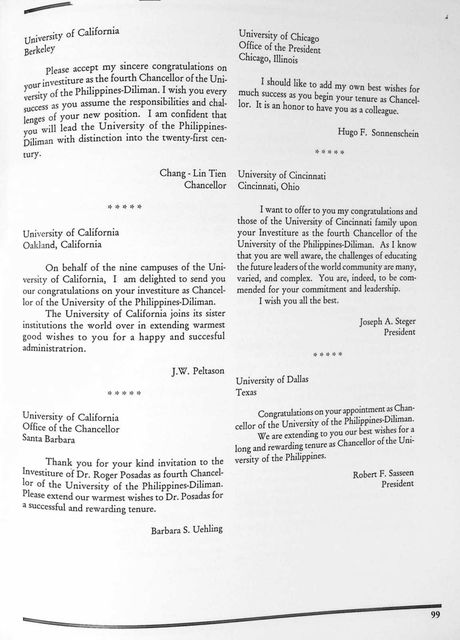
From UC Berkeley's chancellor Chang-Lin Tien and the University of California. Berkeley is where I study now.
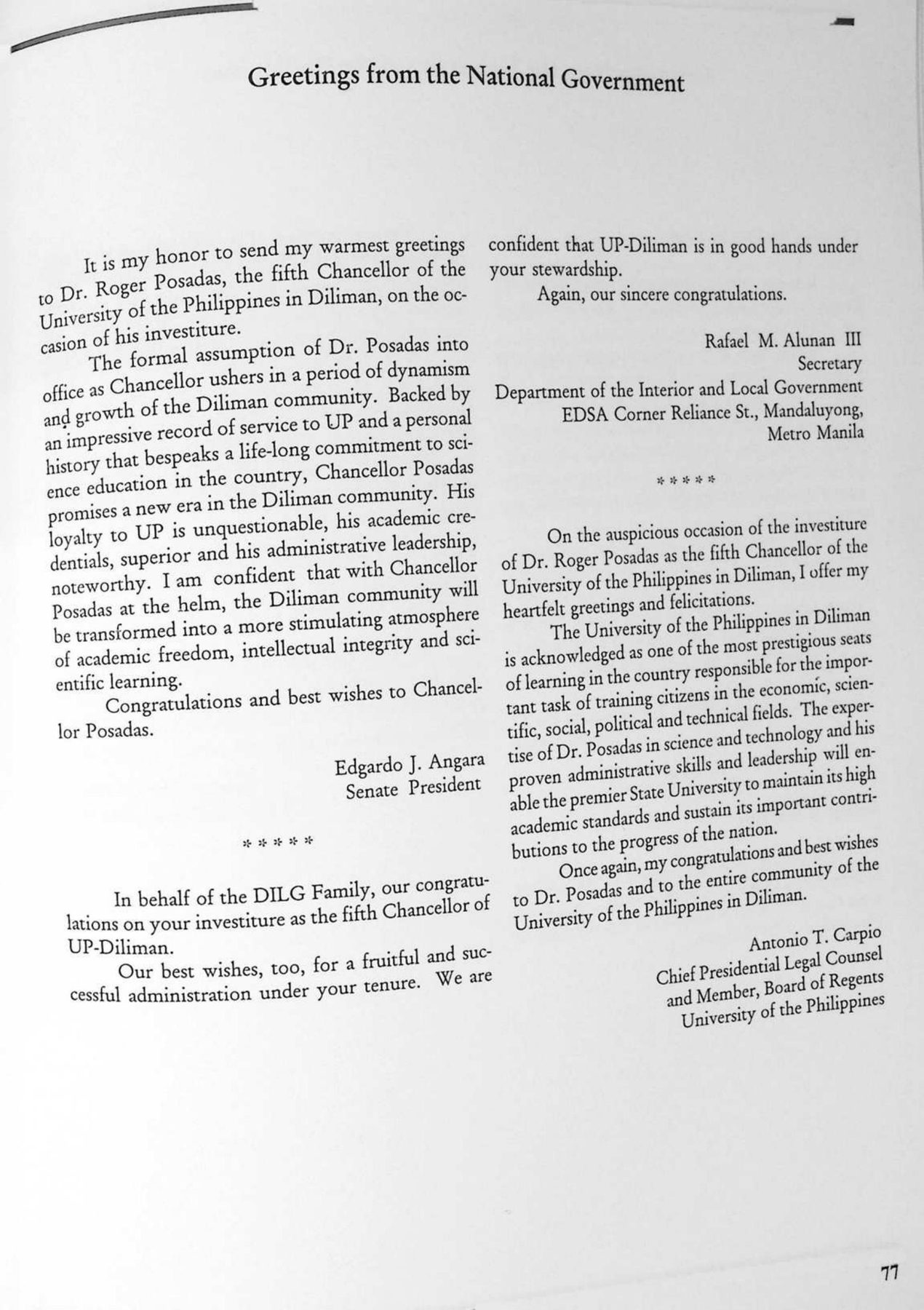
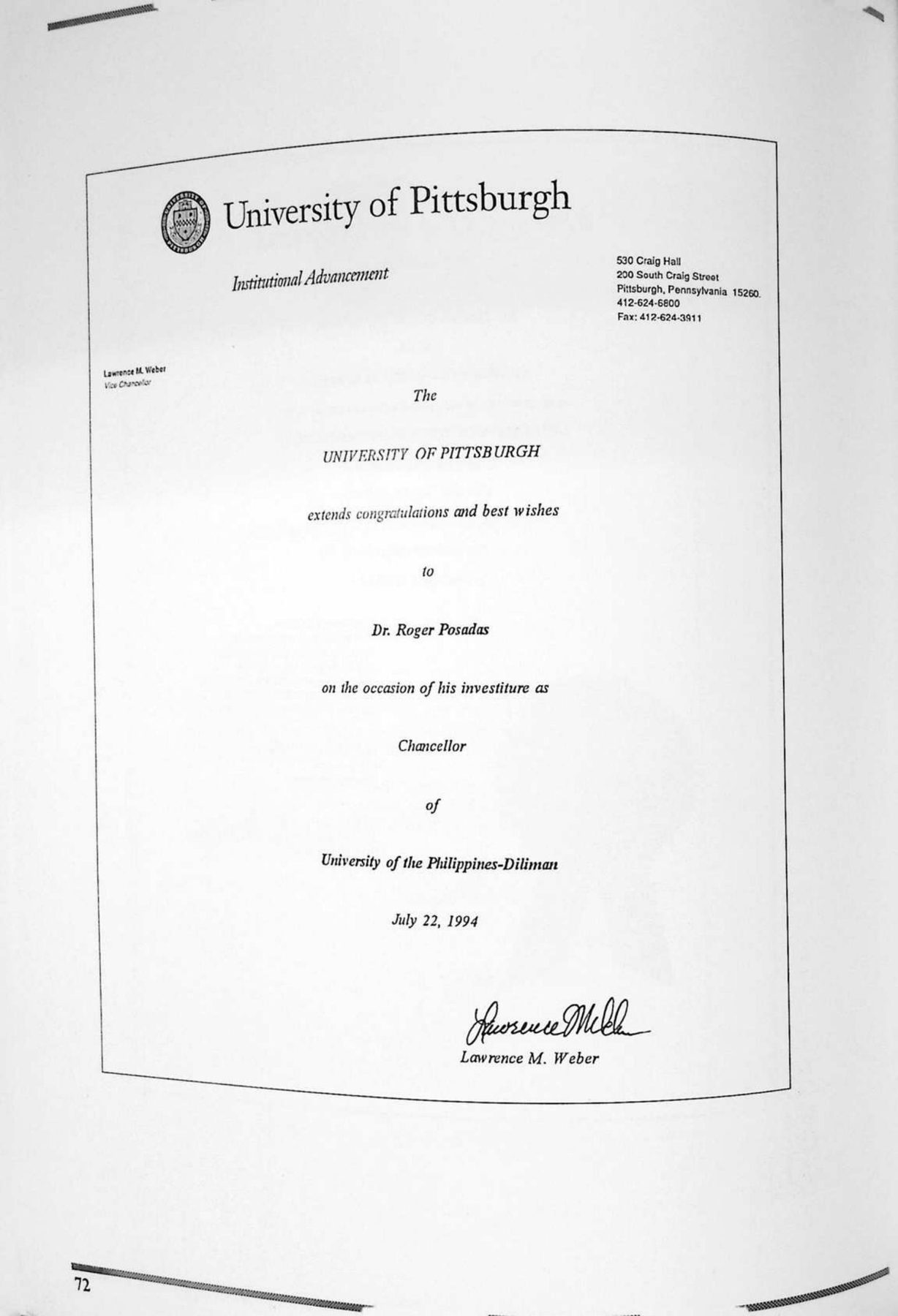
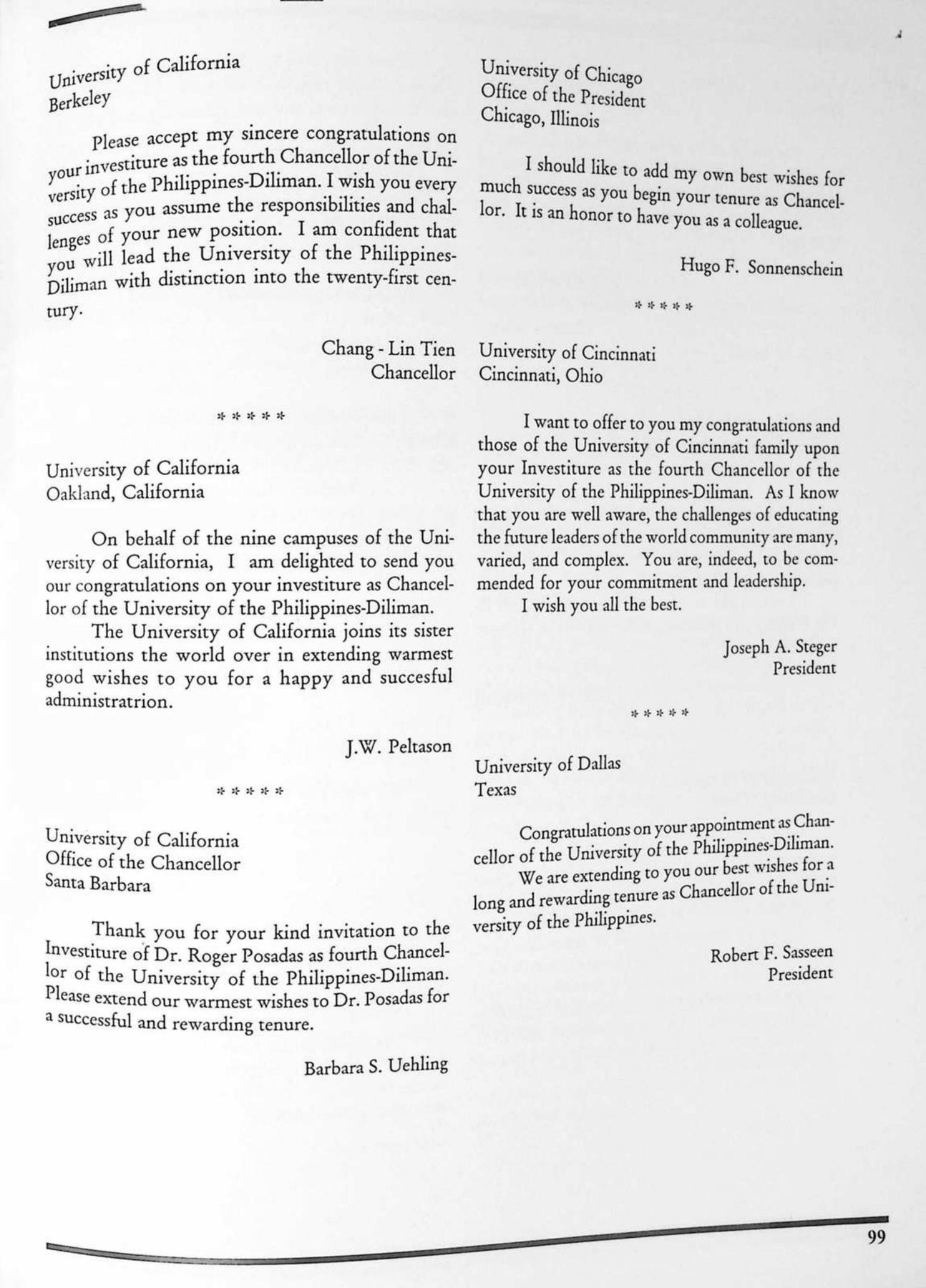
What is inside
| Pages | Section |
|---|---|
| 3 | Roger Posadas. A biography in Filipino, from his boyhood plans for the Philippine Military Academy to his ten years as dean. |
| 4–5 | Programa. The order of the ceremony and everyone who took part in it. |
| 6–16 | Inaugural address, printed in English and in Filipino, with photographs of the investiture. |
| 17–23 | Messages from former chancellor Emerlinda Roman, alumni regent Edgardo Espiritu, Ester Albano-Garcia, a Filipino chemist arrested in the same 1976 sweep as Roger. She later chaired the Commission on Higher Education (1999–2003) and was president of the University of the East. Learn more (opens in a new tab) for the faculty, Generoso Lopez for the administrative staff, and student regent Dennis Cunanan. |
| 24–31 | Articles and reprints: an essay by Filipino poet, essayist and cultural critic from Vigan, Ilocos Sur. Learn more (opens in a new tab) on his slogan, a profile of his career from his first physics class in 1970 to the College of Science, and a personal portrait by UP theoretical physicist who followed Roger as dean of the College of Science, from 1993 to 1999. Learn more (opens in a new tab). |
| 34–43 | Certificates from Philippine universities, among them Ateneo de Manila, Central Philippine University, Miriam College, Saint Louis University and the University of the East. |
| 46–76 | Certificates from foreign universities, about thirty, from McGill, Michigan State, the National University of Singapore, Pennsylvania, Pittsburgh, Queensland, Otago and Victoria University of Wellington, among others. |
| 77 | Greetings from the national government, including Senate President 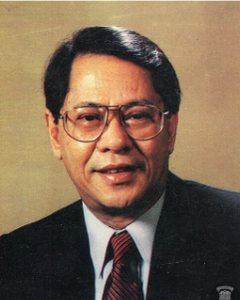 President of the University of the Philippines from 1981 to 1987, then a senator. He was Senate President from 1993 to 1995. Learn more (opens in a new tab)Photo: National Library of the Philippines (opens in a new tab) · Public domain (cropped) and Interior Secretary President of the University of the Philippines from 1981 to 1987, then a senator. He was Senate President from 1993 to 1995. Learn more (opens in a new tab)Photo: National Library of the Philippines (opens in a new tab) · Public domain (cropped) and Interior Secretary 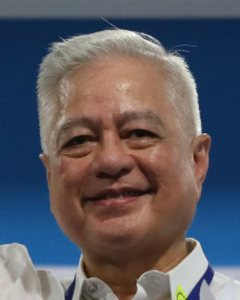 Secretary of the Interior and Local Government under President Fidel Ramos, from 1992 to 1996. Learn more (opens in a new tab)Photo: Avito C. Dalan, Philippine News Agency, 2018 (opens in a new tab) · Public domain (cropped). Secretary of the Interior and Local Government under President Fidel Ramos, from 1992 to 1996. Learn more (opens in a new tab)Photo: Avito C. Dalan, Philippine News Agency, 2018 (opens in a new tab) · Public domain (cropped). |
| 78–105 | Greetings from UP's own colleges, from Philippine universities, from dozens of foreign universities including Stanford, Johns Hopkins, Duke, Northwestern, Chicago and UC Berkeley, and from the Japan International Cooperation Agency and the Asian Vegetable Research and Development Center. |
His inaugural address
He framed his term around two milestones: the centennial of the The war for independence from Spain, launched in August 1896 by the secret society Katipunan. Its centennial fell in 1996. Learn more (opens in a new tab) that gave birth to the Filipino nation, and the year 2000, which he saw, after Alvin Toffler, as the gateway to a knowledge-based “Third Wave” civilization. Measured against both, he said, the country had fallen behind:
Our first 100 years as a nation have been a century of cultural deterioration and technological stagnation.
The Philippines, he pointed out, had “not even mastered some of the most basic technologies of the 19th century such as steel making, chemical production and machine tool making,” while its East Asian neighbors industrialized by mastering Western technology and keeping their own cultures. His answer was the slogan of his term, “Nationalistic Culture, Futuristic Technology”: UP Diliman should become the spearhead of both.
In practice that meant reviving general education as the heart of undergraduate study, adding a course on ethics and social responsibility, shifting undergraduate teaching from English to Filipino while strengthening the English department, building a 30-hectare Arts and Culture Complex, and drafting “U.P. Diliman 2008,” a plan running to the university's centennial. By October 1996 he promised a computerized, networked campus, modernized laboratories and libraries, and the start of a Technology Park and an Engineering Complex.
He closed with appeals. To the faculty, “underpaid and overworked” and expected to produce world-class work “with third-class facilities,” he asked for a culture of research and creativity. To the students, he asked them to “breathe life to the activism that once gave this campus the distinction of being the vanguard of the nationalistic commitment and idealism” UP was known for.
What others wrote
Jose Magpantay's profile of him in the Philippine Graphic, reprinted in the book, remembers his first class in June 1970: third-year physics majors waiting for a 25-year-old Pittsburgh Ph.D. who was, as they saw it, “a descendant—professionally, that is—of Albert Einstein.” No Filipino had published on Einstein's theory before him. It also recalls that the Samahan ng Makabayang Siyentipiko once raised funds by screening a racy “A genre of risqué Philippine films, most popular in the late 1960s and early 1970s. Learn more (opens in a new tab)” film, Sabrina, in The College of Music building at UP Diliman, named after Nicanor Abelardo, who composed the UP hymn. Learn more (opens in a new tab), “a fund-raising success.”
Ester Garcia, arrested in the same sweep in 1976 and by then a commissioner of higher education, wrote that he sacrificed his own research career to build physics in the country. Former chancellor Emerlinda Roman credited his ten years as dean with making the College of Science a national center of excellence. Danilo Yanga, whose master's thesis Roger supervised from prison and who became dean of the college after him, admitted that people found Roger aloof because he seldom smiled, and that the two of them had fought hard over the college's direction, but always made up.
Student regent Dennis Cunanan wrote that students first knew him as the Diliman Commune activist famous for his molotovs, and hoped he would stay a radical activist as chancellor. Senate President Edgardo Angara called his loyalty to UP “unquestionable,” and 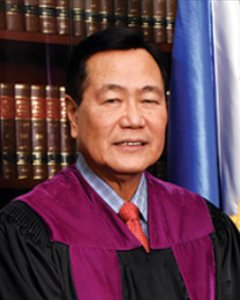 Lawyer who was chief presidential legal counsel under President Fidel Ramos and a UP regent, then an Associate Justice of the Supreme Court from 2001 to 2019. Learn more (opens in a new tab)Photo: Supreme Court of the Philippines, 2018 (opens in a new tab) · Public domain (cropped), then the President's chief legal counsel, sent his greetings too. Arnold Molina Azurin traced his slogan back to
 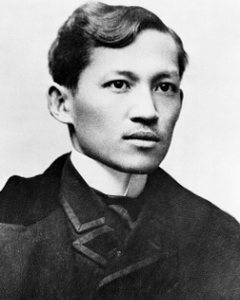 The Philippines' national hero, executed by Spain in 1896. In his 1889–90 essay “The Philippines a Century Hence” he speculated on the country's future. Learn more (opens in a new tab)Photo: Unknown photographer, 1890s (opens in a new tab) · Public domain (cropped)'s “The Philippines a Century Hence” and heard in it echoes of
 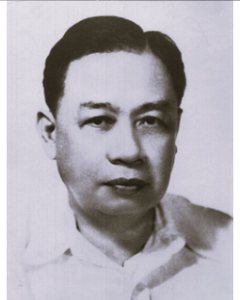 Nationalist senator (1890–1960) and president of the 1934 Constitutional Convention, a leading critic of American influence over the Philippines. Learn more (opens in a new tab)Photo: Presidential Museum and Library (opens in a new tab) · Public domain (cropped) and Nationalist historian (1919–1999), author of The Miseducation of the Filipino, who retold Philippine history from a Filipino rather than colonial point of view. Learn more (opens in a new tab).
Azurin's article in the Philippine Free Press, also reprinted in the book, has Roger explaining why the slogan mattered:
All these years our manufacturing levels have remained at the operative level. We know how to run the imported machinery, but we have yet to learn how to design them and make our own machines.
Among the letters from abroad is one from Mechanical engineer and chancellor of UC Berkeley from 1990 to 1997, the first person of Asian descent to head a major American research university. Learn more (opens in a new tab), then Chancellor of UC Berkeley, where I study now. Many foreign greetings called Roger the “fourth” chancellor; the editors added a note that he was the fifth.
The case, and the Supreme Court
In late 1995, while Roger was away on an official trip to China, the campus's officer-in-charge, Vice-Chancellor Rolando Dayco, appointed him project director of the Technology Management Center, the program Roger had conceived, at ₱30,000 a month and backdated to September. He also named Roger the project's local consultant. About a year later the government's resident auditor flagged the payments. ₱247,500 was disallowed and deducted from Roger's terminal leave pay, and in a separate administrative case UP's The highest governing body of the University of the Philippines, with government officials and representatives of the faculty, staff, students and alumni. Learn more (opens in a new tab) settled on a forced resignation with the right to reapply after a year.
Both men were then charged with graft under the Anti-Graft and Corrupt Practices Act and with violating the code of conduct for public officials. On June 28, 2005, the Sandiganbayan convicted them and sentenced each to up to 12 years in prison on the first charge and 5 years on the second, with perpetual disqualification from public office. In July 2013 the Supreme Court's First Division upheld the conviction, over a dissent by Justice 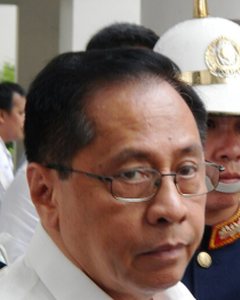 Associate Justice of the Supreme Court of the Philippines from 2009 to 2014. Learn more (opens in a new tab)Photo: Ramon F. Velasquez, 2013 (opens in a new tab) · CC BY-SA 3.0 (cropped).
On November 27, 2013, the same division reversed itself. It granted their motions for reconsideration and vacated the conviction because the State had failed to prove their guilt beyond reasonable doubt. Justice Abad, now writing for the Court:
All indications are that they acted in good faith. They were scientists, not lawyers, hence unfamiliar with Civil Service rules and regulations.
The Court also found no evidence that anyone better qualified had been passed over: “The fact is that he was the best qualified for the work.” The ruling came eighteen years after the appointment. Roger was 69.
At his memorial service in 2017, the sociologist Randy David said the vindication had come too late: by then Roger had lost his job, his career and practically everything else to the case. He closed with a charge to the university:
The highest tribute we could pay to Roger is to make sure that this form of malicious injustice will not have a place in the University of the Philippines. Never again.
His papers
Physics papers link to the publisher; his dissertation is hosted here. Open-access papers are hosted here or linked.
Physics
- 1969DOI
- 1969DOI
- 1970PDF
- 1970DOI
- 1971DOI
- 1982PDF
Spin-coefficient approach to electromagnetic multipole expansions I
1984From his CVSpin-coefficient approach to electromagnetic multipole expansions II
1984From his CVLiénard–Wiechert fields in the spin-coefficient formalism
1985From his CV
Science and technology policy
- 1989Open access
- 1999DOI
- 2006PDF
- 2009Open access
- 2015PDF
- 2015PDF
- 2015Link
With his students at the Technology Management Center and Lyceum
- 2015PDF
- 2015Open access
- 2015Open access
- 2016Open access
- 2016Open access
Also known from his own reference lists, with no copies online yet: a 1982 Kilusan ng mga Siyentipikong Pilipino report on developing the natural and mathematical sciences; "Leapfrogging the scientific and technological gap" (1986, UP Press); "An assessment of the state of science and technology in the Philippines" (2000); and "An alternative technonationalistic framework for Philippine S&T development" (2004).
Unpublished writing
From his last years, kept in our family's files and shared here for the first time.
A vision for the University of the Philippines, 2016
In August 2016, at 71, he was a nominee for president of the University of the Philippines. His vision statement, “Transforming the University of the Philippines into a Truly Great National University,” started from the 2008 law that made UP the national university and argued that UP had not yet lived up to it. He spelled out what it would take as an acrostic, TRULY GREAT.
Nuclear power and national industrialization
He spent his last years arguing that the Philippines could meet its Paris Agreement commitments and still industrialize only by going nuclear: recommissioning the A nuclear plant built in Bataan under Marcos and finished in 1984, but never switched on. The government shelved it after the 1986 revolution, amid safety and corruption concerns. Learn more (opens in a new tab) and building new reactors, including Nuclear reactors rated below 300 megawatts, designed to be built in factories as modules and assembled on site. Learn more (opens in a new tab), across Luzon, the Visayas and Mindanao. On September 6, 2016, he sent Energy Secretary 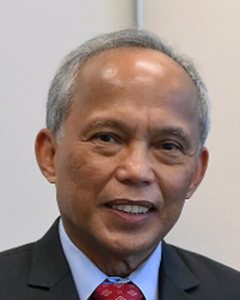 Secretary of Energy under President Rodrigo Duterte, from 2016 to 2022. Learn more (opens in a new tab)Photo: IAEA Imagebank, 2022 (opens in a new tab) · CC BY 2.0 (cropped) a first draft of a national nuclear energy policy. Its vision was a Philippine nuclear industry able to design and build its own reactors, not just buy them.
Before he turned to nuclear power, he made the same argument for solar and wind. In December 2015 he and the Australian scholar John A. Mathews wrote in the Philippine Daily Inquirer:
In a country with such abundance of renewable energy from the sun, the wind and the earth, it is madness to keep importing fossil fuels like coal, oil and gas, and to delay the inevitable shift to renewables that is already under way.
What mattered most to him was who would build the technology. Importing foreign-made turbines and panels, they warned, would only trade one dependence for another: imported fuel for imported equipment.
In a short note on the Bataan plant, he pictured it as the hub of an agro-industrial cluster in Bataan, Subic and Zambales, supplying cheap power, industrial heat and desalinated water, with a dedicated university and research institutes growing around it into a “Nucleopolis, a la Silicon Valley.”
A longer essay, “Why our country must go nuclear to comply with the Paris Agreement and achieve national industrialization,” is not posted, because his working draft quotes long passages from other authors' articles.
| Letter | Stands for |
|---|---|
| T | Treasury of intelligence and wisdom: the government's and the nation's think tank |
| R | Research university, with world-class science and Renaissance-like creativity in the arts |
| U | Upholder of an education that builds both competence and character |
| L | Leadership in “aretocracy,” the rule of excellence and merit, against mediocrity, inbreeding and cronyism |
| Y | Yardstick of quality for Philippine higher education |
| G | Global university, internationally ranked and engaged |
| R | Reformist and righteous: a social critic and watchtower, not an ivory tower |
| E | Entrepreneurial university that turns research into startups and jobs |
| A | Academic innovator with future-ready degree programs |
| T | Town-gown collaborator serving each campus's region |
In the press
Found through the Google News Archive and other public archives. Most links open a scan of the full newspaper page.
- 1967-04-06
- 1976-01-25
- 1976-09
- 1976-09-15
- 1976
- 1976-12-15
- 1984-12
- 1988-03-15
- 1988-03-19
- 1988-08-23
- 1988-11-20
- 1989-04-28
- 1989-09-17
- 1994-07-01
- 1995-03-30
- 2005-01-04
- 2005-02-23
- 2015-12-13
- 2017-08-22
- 2017-08
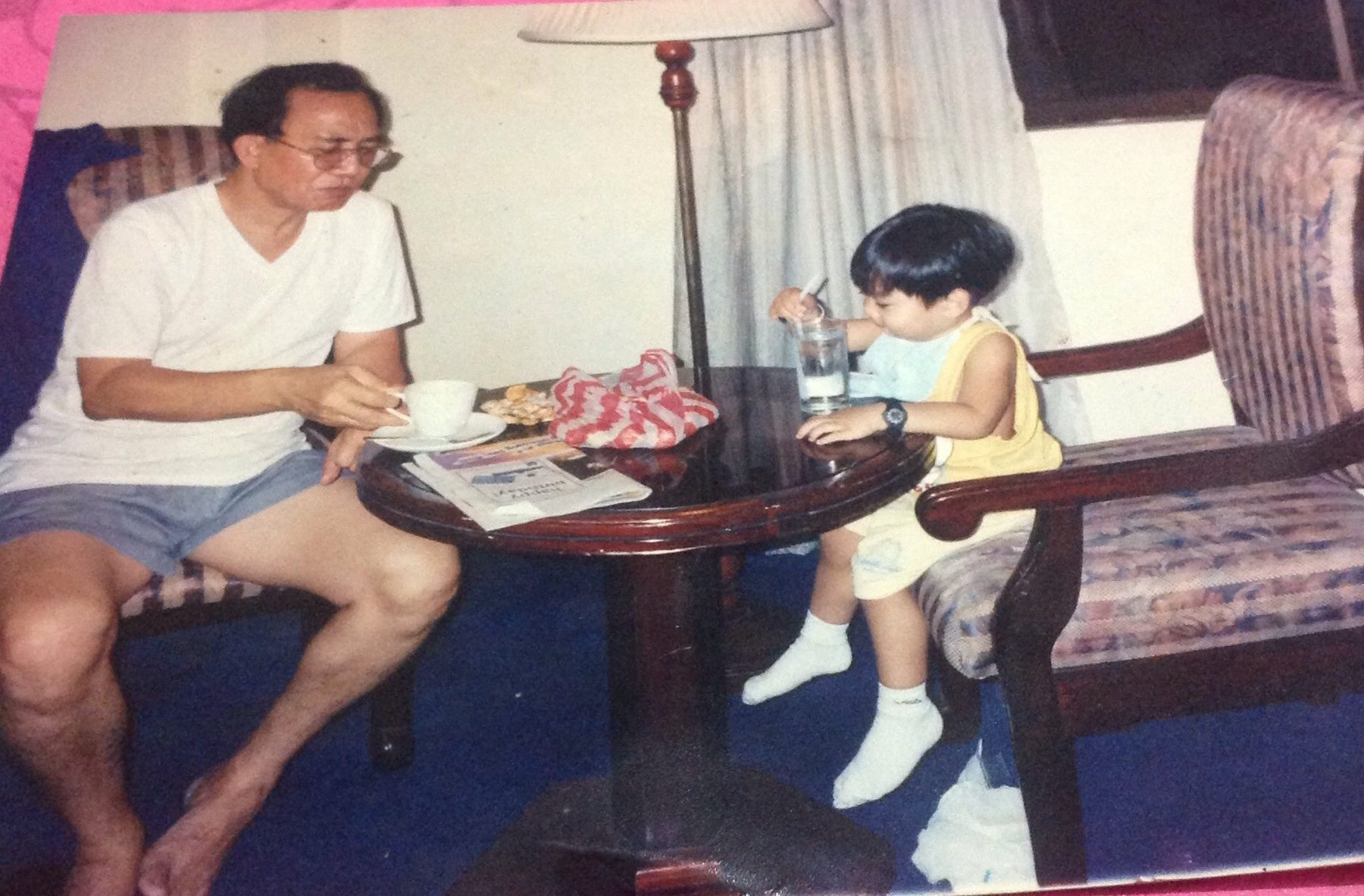
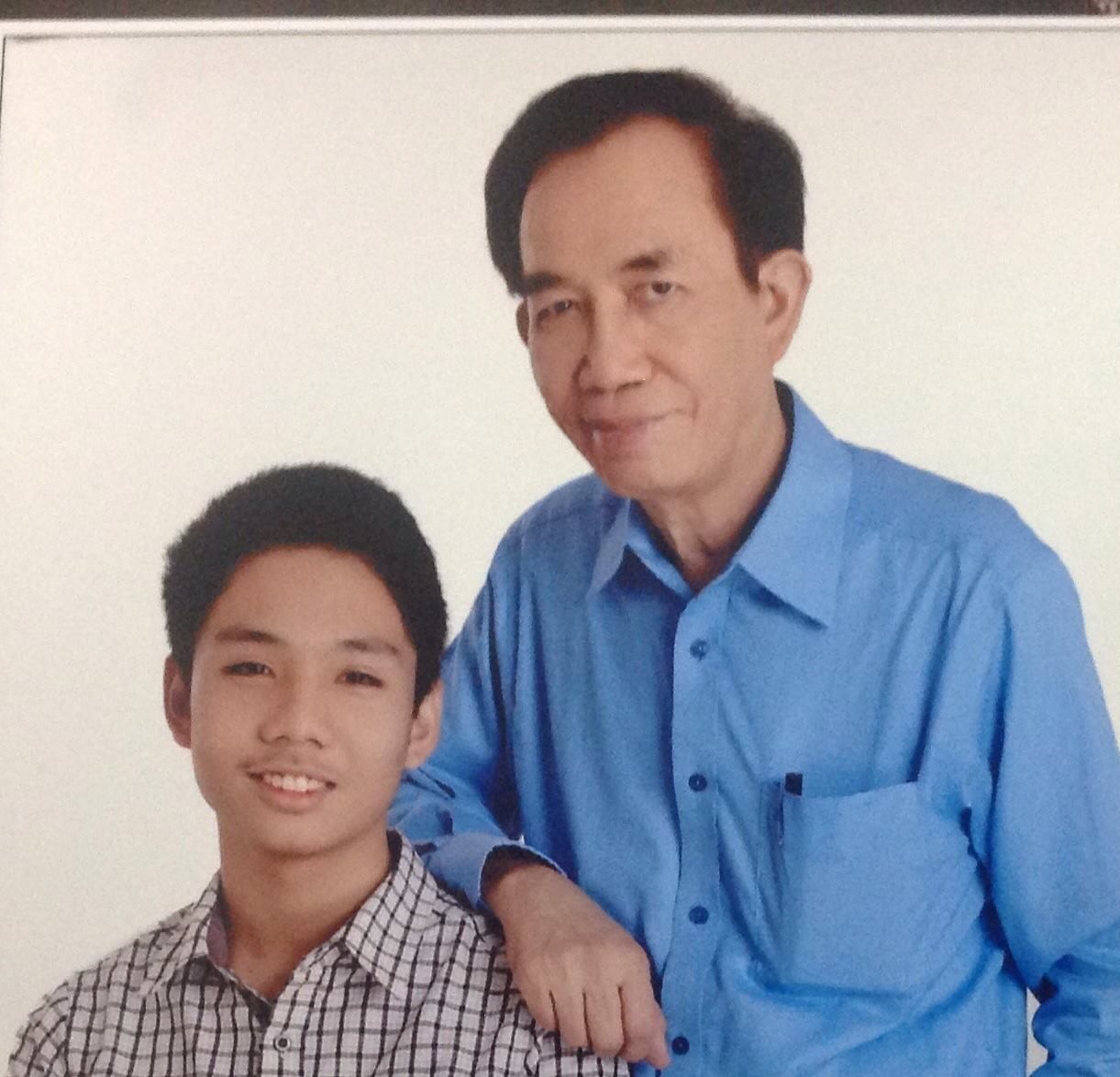
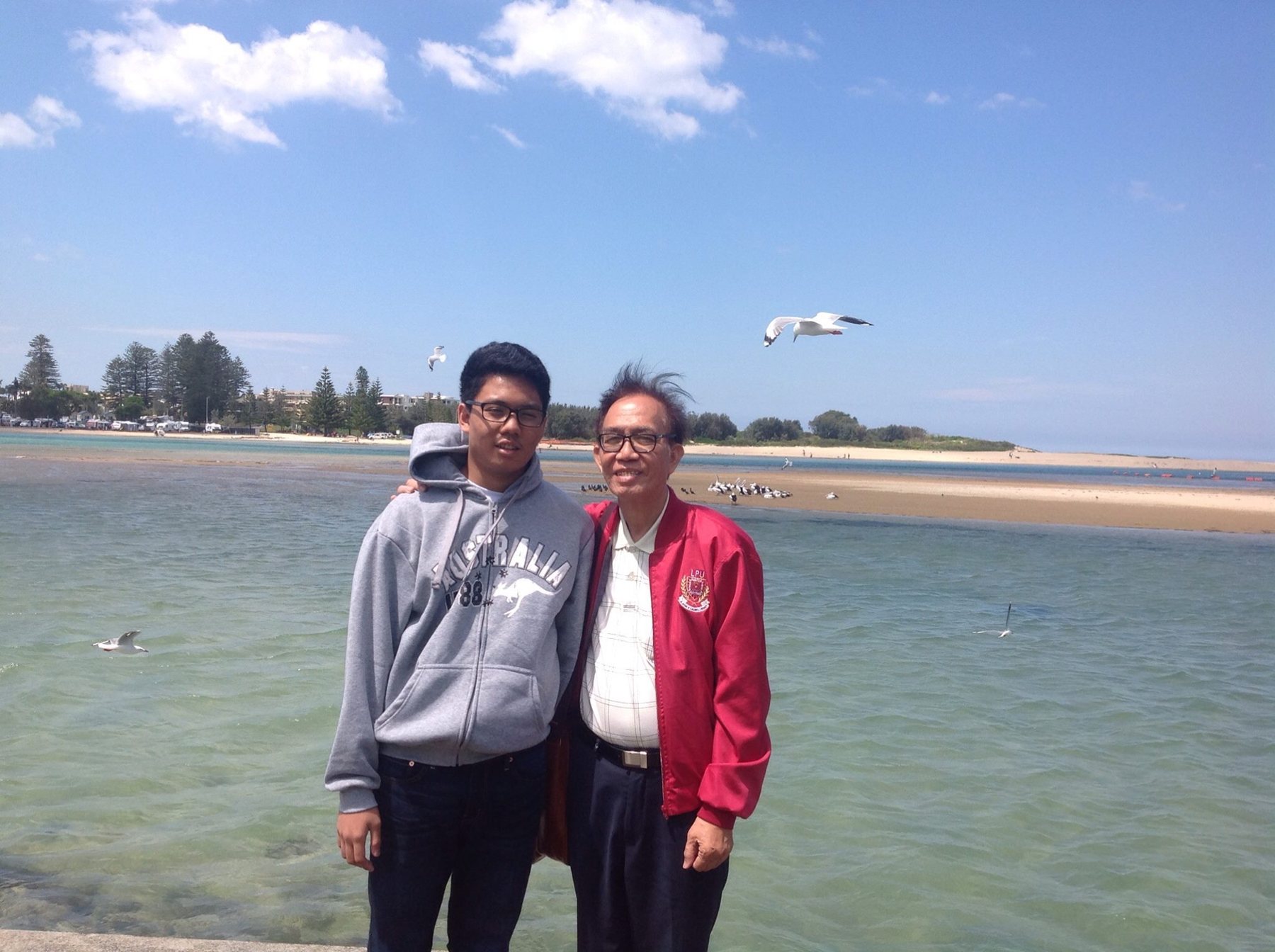
Dad and me
Read more about him
Also: Political scientist at the University of Maryland and founding editor of the journal Human Rights Quarterly. Learn more (opens in a new tab)'s 2002 course outline Science in the Service of Human Rights (PDF) (opens in a new tab), published by the American Association for the Advancement of Science, cites his jailing under Marcos as an example of how dictatorships persecuted scientists. Like the reporters, it calls him a nuclear physicist.